







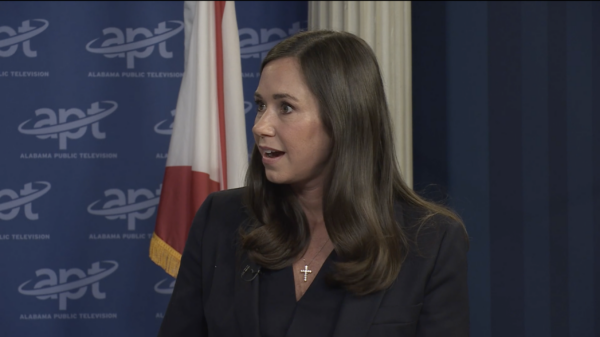













During a press call on Tuesday, Alabama Arise Senior Policy Analyst Carol Gundlach outlined the organization’s suggestions for how to make Alabama’s system of taxes more equitable.
Earlier this year, the organization released the third edition of The Alabama Tax and Budget Handbook, a document that collates data and policy proposals about the state of Alabama’s public finances.
“This is now the third edition this year and our goal now, as it was then, is to use this as a resource so the budget process is more understandable and accessible for everyone involved,” Alabama Arise Communications Director Chris Sanders explained during the call. “We also want to offer solutions to help make our state’s finances fairer, simpler, more transparent, and more adequate to meet our state’s needs.”
“There are some guiding principles that we pulled out of this research,” Gundlach added. “The first one is our tax system is upside down. That is, we tax the poorest more and we tax the richest the least. We do not generate enough revenue from those taxes to meet basic human needs.”
In Alabama, the taxes that bring in the most revenue for the state are the state income tax and the state sales tax, which respectively make up 41 and 21 percent of state tax collections. Because the income tax is very flat, with most taxpayers paying 5 percent on almost all of their income, this makes the state tax system as a whole relatively regressive.
As a result, the 2024 Who Pays? report, published by the Institute on Taxation and Economic Policy and cited in Alabama Arise’s new handbook, ranked Alabama as having the 12th most regressive tax system in the country.
The Alabama Tax and Budget Handbook reads:
All four legs of our state tax system need repair. Alabama made its income tax slightly less regressive in 2006 and 2022, but it remains mostly flat. While Alabama took historic steps to reduce the state grocery tax in 2023 and 2025, our sales taxes still remain high, taxing low-paid workers deeper into poverty. Our property taxes have changed little since the end of segregation and provide large tax breaks to wealthy owners of timber and agricultural land. And our corporate income taxes have numerous loopholes that allow many of the wealthiest corporations operating in Alabama to pay nothing.
The handbook also suggests several adjustments to the current tax system like making the income tax more progressive. “We have a model,” Gundlach explained. “We have the federal tax code which does have a progressive income tax. So do many other states and we could model it, so we make it a little more progressive.”
Another of the policies critiqued in the new handbook is the federal income tax deduction. Alabama is the only state that allows taxpayers to deduct all of their federal income tax for the purposes of calculating state taxes.
But because the federal income tax is relatively progressive, this policy provides the greatest benefits by far for high income families. Low income families, who may not pay anything at all in federal income taxes, receive relatively little if any benefits from the deduction.
Gundlach also explained during the press call that the state should consider reconfiguring its system of tax breaks for landowners, “particularly landowners of timberland,” because the benefits of those programs are very regressive and not necessary to enable homeownership.
“Sometimes, I think we treat taxes as if they were the equivalent of death,” Gundlach said. “That they are divinely ordained. Who in their right mind spends a lot of time trying to figure out tax systems. People just, they don’t think when you go to the store and you buy a pair of sneakers that you’re paying $10, $12 extra because you’re paying sales tax.”
What Alabama Arise is trying to do is “really educating the public,” she continued. “It’s educating the legislators. It’s recognizing that there are winners and losers, and focusing on who we want to be the winners who are the ordinary people of the state.”
“Even recognizing that, you know there may be some business losers, there may be some corporate losers, there may be some very wealthy people who are losers, who lose money, but what we’re trying to do is benefit ordinary people,” Gundlach stated.