














This week, the United States will mark 250 years since the Declaration of Independence announced to the world that a new nation had been born. There will be flags, fireworks, parades and speeches. There should be. A free people ought to remember the day it declared itself free.
But if we honor America honestly, we must remember more than the celebration. The history of this nation has been written in ink and blood—ink on parchment, blood on battlefields, words that declared liberty and lives sacrificed to defend it, expand it and make it real.
By the time the Declaration was adopted, the first shots of the Revolution had already been fired. Men had already fallen. Families had already been divided. The dream of liberty entered the world not as a finished achievement, but as a dangerous hope. Those who put their names to that cause did not know whether the republic they imagined would survive. They did not know whether a people could govern themselves without a king. They did not know how far the words they wrote would travel, or who would one day rise to claim them.
That is one of the great truths of America: The promise was larger than the men who first wrote it.
The Declaration spoke of equality while slavery remained. It spoke of liberty while Native people were being driven from their lands. It spoke of consent while women had no vote and no equal place in the public life of the nation. These are not comfortable truths, but a nation mature enough to celebrate 250 years should be mature enough to tell the truth about itself.
Patriotism cannot be built on pretending. A love of country that cannot bear the truth is not love. It is flattery, and flattery cannot sustain a republic.
The American story is not pure triumph, and it is not pure failure. It is the long and unfinished struggle to make noble words mean what they say. That struggle did not end at Yorktown. It did not end when the Constitution was ratified. It did not end at Appomattox, Seneca Falls or Selma. It passed through Loving and Stonewall, and through every fight to make dignity under the law more than a promise. It has moved across battlefields and bridges, through churches and courtrooms, through jail cells, union halls, voting lines and schoolhouse doors.
Again and again, those denied the full blessings of liberty became the ones who forced the republic to understand the meaning of its own creed. Black Americans fought for a country that enslaved them, then segregated them, then tried to silence their votes. Native Americans endured removal, broken treaties and generations of erasure, yet did not disappear. Women organized, marched and demanded the right to be counted as full citizens. Immigrants, workers, the poor and the marginalized all insisted, in their own time and place, that liberty could not be reserved for the comfortable and well-connected.
This, too, is America—not merely the founders in Philadelphia, but the freedman at the ballot box; not merely the soldier at Lexington, but the marcher on the Edmund Pettus Bridge; not merely the words written in 1776, but every generation that has bled, prayed, labored and suffered to make those words belong to more people.
Here in Alabama, we should understand this better than most. We live on soil where men too often used the language of liberty while denying it to others. We also live on soil where ordinary people crossed bridges, filled churches, stood in courthouse lines and forced the country to see what democracy required. Alabama has been home to some of America’s deepest sins and some of its greatest witnesses. That is not contradiction. That is the American story written close to home.
That is why the truth matters. Not the polished version. Not the marble-and-flags version. Not the schoolbook version scrubbed clean of suffering. And not the cynical version that sees only the suffering and forgets the courage of those who refused to surrender the country to its worst instincts.
Neither vision is honest. Neither is enough.
America has failed grievously. It has also corrected itself in ways that still give hope to the world. It has broken promises, and it has produced generations brave enough to demand that those promises be kept. That is the source of its greatness—not perfection, not innocence, not power, but the refusal of ordinary people to let the republic die from its own contradictions.
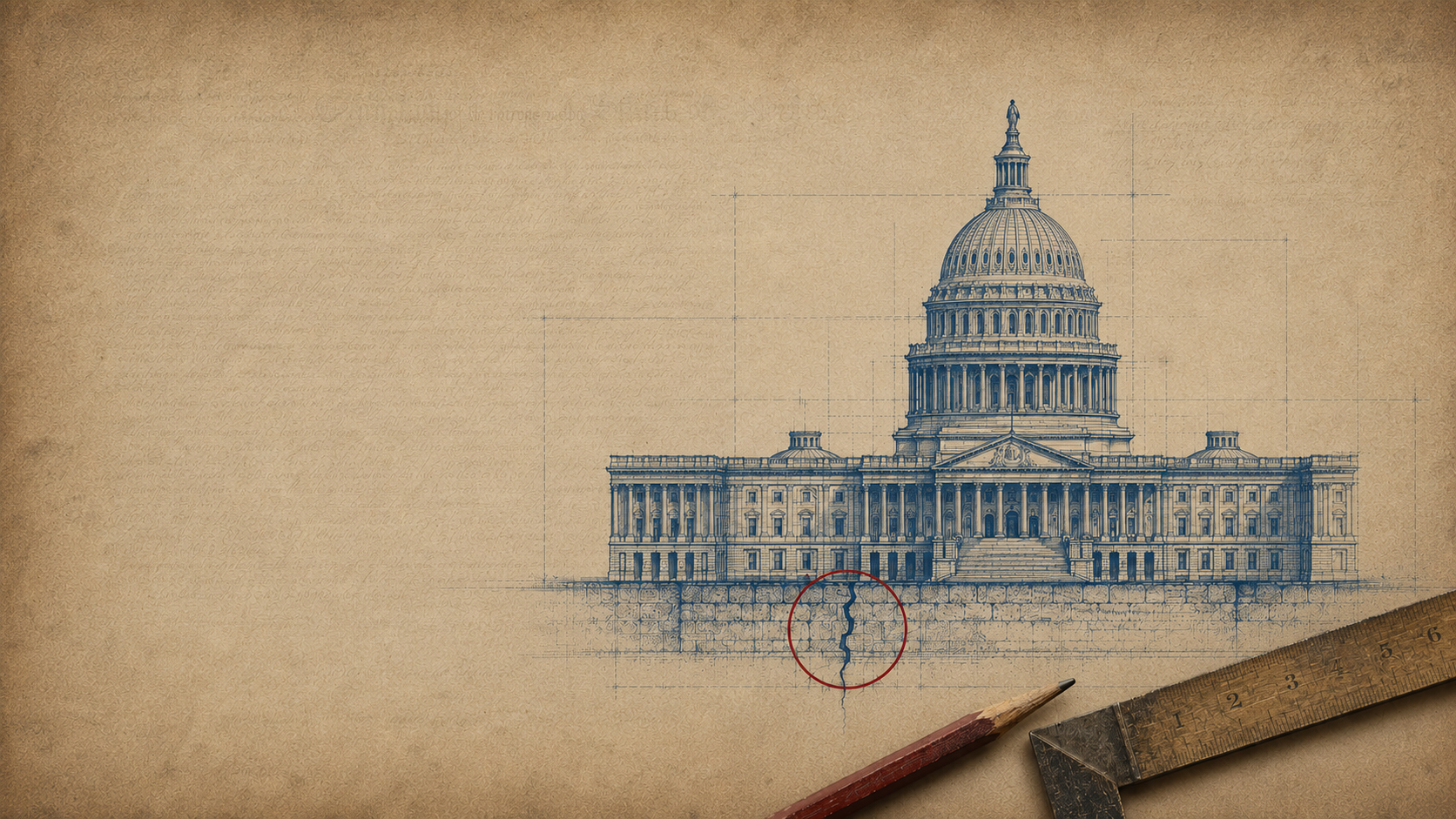
A constitutional republic is like an old house. It may have been built with strong beams and high hopes. It may hold memory, beauty and meaning. But no house stands for centuries simply because someone admires the blueprint. The roof must be mended. The foundation must be watched. The cracks must be named. The rot must be cut out before it spreads.
Every generation inherits the house, and every generation decides whether to repair it or let it decay.
That is where we stand now. We live in a time of stress and uncertainty. We do not merely disagree about taxes, spending or elections. Too often, we do not even agree on the same story of America. Some want history turned into propaganda. Others want memory turned into indictment. But a republic cannot survive on propaganda, and it cannot be repaired by despair.
The truth is harder, and better. America was born with contradictions. It has lived with contradictions. But it has also been changed by people who believed the country could be better than its worst moments and more honest than its myths.
The danger today is real. The temptation of monarchy did not vanish with King George III. It returns whenever power demands obedience instead of accountability. It returns whenever leaders place themselves above the law and citizens excuse it because the leader belongs to their tribe. It returns whenever truth becomes negotiable, cruelty becomes policy, and loyalty to one man is mistaken for loyalty to the country.
A republic rarely collapses in a single moment. More often, it decays by permission. Citizens look away from the leak because it is not yet over their own heads. They excuse the lie because it serves their side. They tolerate cruelty because it falls first on someone else. They let the law become a weapon for enemies and a shield for friends. By the time the walls begin to buckle, the rot has already spread.
That is not liberty. That is not patriotism. That is not self-government.
Self-government is harder than cheering. It requires citizens, not spectators. It requires memory, not myth. It requires law, not loyalty tests. It requires the humility to admit what has gone wrong and the courage to repair it. A republic does not need worshippers. It needs caretakers.
But this is not a counsel of despair. The miracle of America is not that the house was perfect. It never was. The miracle is that so many people who were denied shelter beneath its roof still believed it was worth saving. They believed when the law was against them, when the mob was against them, when the courts failed them, when politicians betrayed them and when history tried to forget them.
They kept marching, voting, teaching, organizing, praying, writing and standing. Because they did, the promise grew larger.
At 250 years, America does not need flattery. It needs fidelity. It needs citizens who love it enough to tell the truth, brave enough to face its failures and hopeful enough to keep repairing what others would let fall apart. We do not honor the founders by pretending their work was complete. We honor them by understanding that the republic they began placed a burden on every generation that followed.
The burden is ours now: to preserve self-government, defend the rule of law, protect the ballot, speak truth in a season of lies and remember that liberty is not the property of one party, one race, one religion, one region or one man. It belongs to the people—all of them.
That is why we celebrate. Not because the past was clean. Not because the work is finished. But because the work has been worth doing.
For 250 years, the long march of freedom has continued through grief and glory, betrayal and courage, ink and blood. The republic is still standing, not because it was perfect, but because generation after generation—Americans wounded by it, excluded from it and blessed by it—still reached for its promise and made that promise more real.
Now the work falls to us. The house is old, and the storms are gathering. But the foundation can still hold if we are willing to repair what has been damaged, cut out what is rotten and keep faith with those who carried freedom this far.
The question at 250 years is not whether America has been perfect. It has not.
The question is whether we still have the courage—and the character—to make it better.