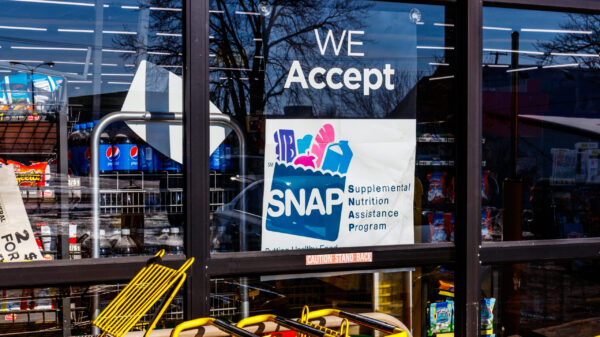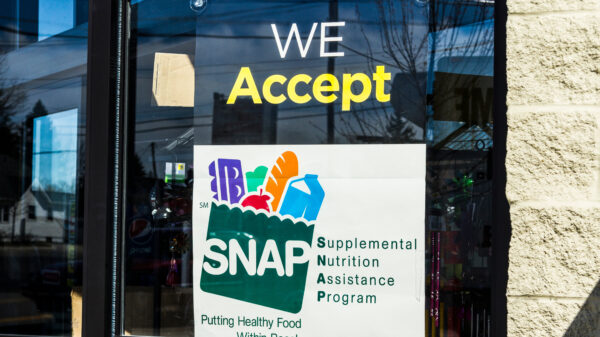
















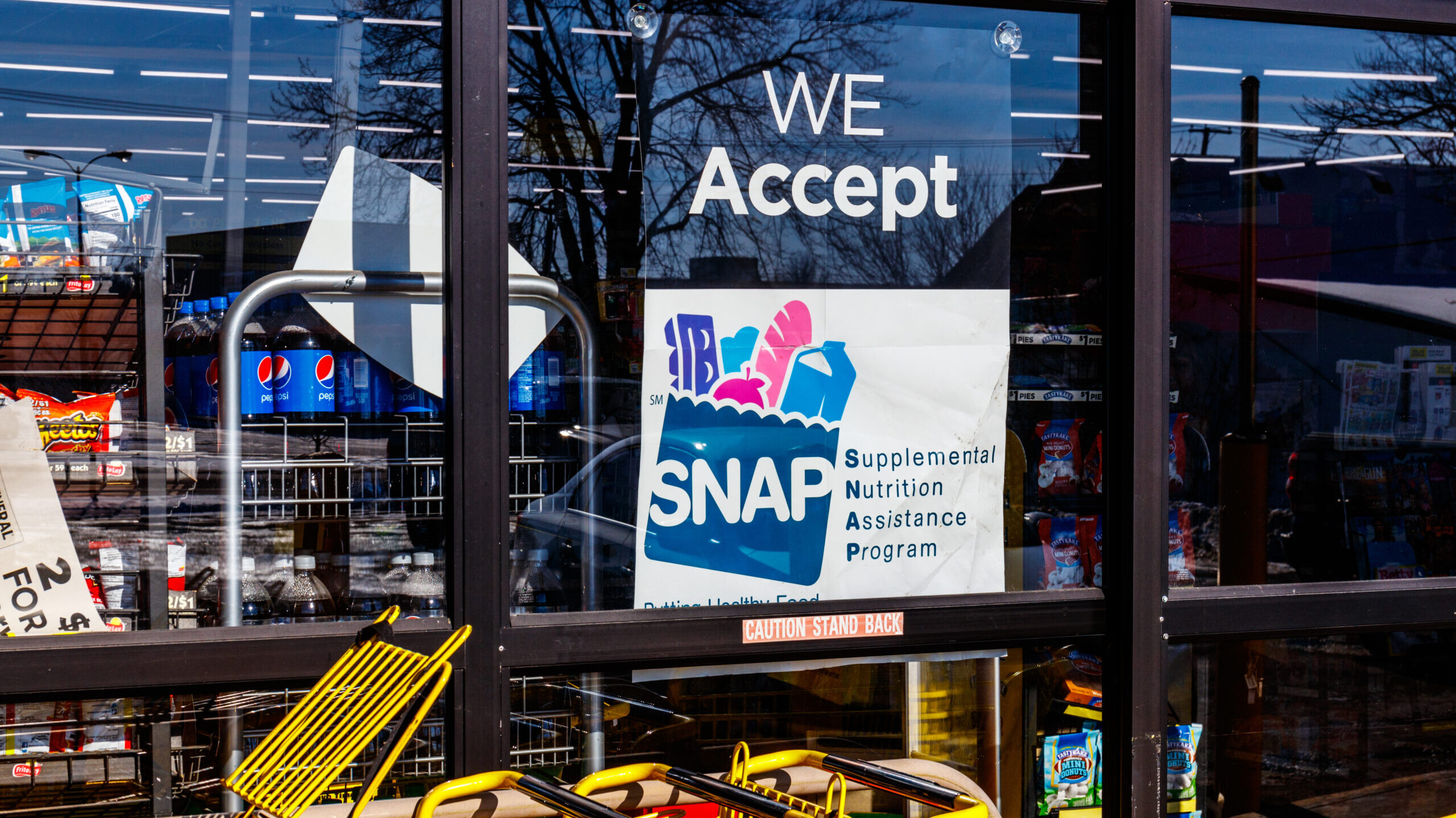
Since January 2025, 50,000 Alabamians have lost access to SNAP benefits, a result of the Trump administration’s so-called “Big Beautiful Bill” which instituted stricter eligibility requirements to the federal food assistance program.
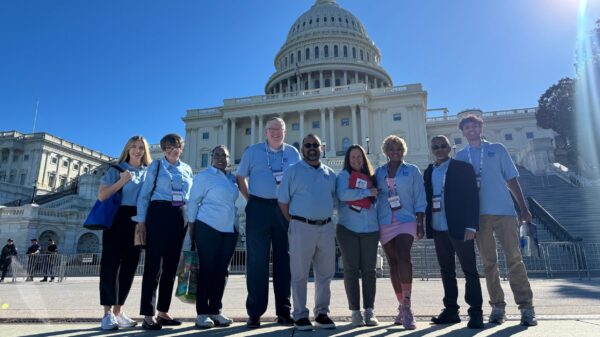
Alabama Arise Senior Policy Analyst Carol Gundlach explained how these new restrictions have resulted in decreased food assistance access in a recent phone interview with APR.
“It’s not that people are finding jobs and don’t need SNAP anymore, which of course is what we would all hope for, but that doesn’t seem to be what’s going on here,” Gundlach told APR. “And it’s not that people are self-selecting off of SNAP given what’s happening to inflation in the food market. Even people who are relatively marginal in terms of their need for SNAP are seeing an increased need now, just because food prices are so high. So it’s probably neither of those two things.”
“I think that probably there are two things that have happened that are kind of big deals,” she continued. “One is the shutdown last November when the federal government made a choice, probably an illegal choice, to not issue SNAP benefits. That sent, I think, a message to people that SNAP was not reliable. The other thing that has happened has been the imposition of the new time limits on people who cannot demonstrate that they are complying with work requirements.”
Prior to the passage of the Big Beautiful Bill, certain populations including veterans, homeless individuals, and young adults who recently aged out of foster care were exempt from SNAP’s work requirements. The same was true for any able-bodied adults over the age of 54 and adults with dependents younger than 18.
Now, however, only adults over the age of 64 and those with dependents younger than 14 are eligible for work requirement exemptions. All other SNAP recipients must work, participate in employment and training programs, or volunteer at least 80 hours per month if they hope to receive benefits for more than three months every three years. For some, the paperwork burden associated with meeting these work requirements can be enough to drive them off SNAP, even if they are already working.
“Those people now have to prove that they are exempt from the work requirements and the time limits,” Gundlach explained. “That makes it much more complicated to get onto SNAP and stay on SNAP. There’s a lot more paperwork, a lot more interviews. We can see some of those people simply getting lost in the shuffle.”
These changes have resulted in a 6.5 percent decrease in Alabama’s SNAP participation since last January, with experts now estimating that over 100,000 residents could lose access to the program by the end of 2026.
With decreased access to federal food assistance, many Alabamians are now turning to charitable food banks to meet their basic needs. However, as Feeding Alabama CEO Laura Lester recently told APR, pantries can only do so much to keep up with the rapidly increasing demand.
“We are absolutely hearing from people already, from seniors, from people who work with the homeless, about the number of people who have lost the only access to food they had,” Lester said. “All the new rules mean is that more people are going hungry. We have absolutely seen an increase in the number of folks who don’t have enough to eat coming into our pantries. Our food banks have told us they’re on track for their largest non-COVID year ever in terms of distribution.”
“When we look at the most effective and efficient ways to help people in need, SNAP is our best frontline defense, and we always tell people that for every one meal provided by a local charity, SNAP provides nine meals,” she continued. “So we work very closely with DHR and the SNAP program. Our goal is to try to shorten the line at the food pantries, and SNAP is the best way to do that.”
As more and more Alabamians drop from the state’s SNAP rolls, the pressure on food pantries across the state will only continue to build, leading Alabama and several other states into uncharted territory.
“Anytime there is even a small reduction in SNAP, we will see an increase in demand at our agencies,” Lester explained. “And we hear legislators talk about this a lot, about cuts to the SNAP program and that the charitable arm can help make up the difference, and we want everyone to know that we cannot do that. We cannot fix this. There is not a backup plan here.”
“SNAP brings in about $1.7 billion annually in nutrition assistance,” she added. “[Food banks] play a critical role, but we cannot make up that much food funds coming into our economy, helping hungry families eat. There is no backup plan for the scale that these cuts are creating.”
The other threat looming over Alabama’s SNAP program is the Big Beautiful Bill’s cost-shift provision, which will require any state with an error rate over 6 percent to fund its own SNAP benefits beginning in October 2027. And while some states with high error rates exceeding 13 percent have been given a two-year extension on this requirement, Alabama, which has one of the lowest error rates in the country at 8.3 percent, is set to be responsible for anywhere from $180 million to $250 million in additional SNAP expenses next year.
Gundlach told APR that Arise and other organizations are encouraging Alabama’s federal delegation to expand that two-year grace period to apply to all states in order to avoid a devastating cost shift to Alabama’s budget.
“We used to get financial awards from the USDA because our error rate was so low. Now they’ve taken away awards and instituted really draconian punishments,” Gundlach said. “Our error rate is relatively low, but we are still going to have to come up with significant amounts of money, as much as $178 million or more in order to comply with HR 1.”
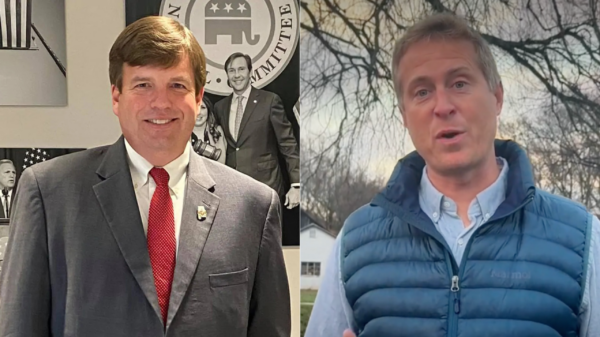
“Alaska, Florida, Georgia, and several other states got an extra two years. States like Alabama that run a good program did not get the extra two years,” she added. “So we feel like there is a fairness argument and there’s also just an argument about if we’re going to do this, let’s do it well. Senator Tuberville is on the Ag Committee in the Senate… We are asking them to suspend that cost shift.”
Even so, Gundlach and Arise are preparing for the worst, speaking with state lawmakers to form a plan in case Alabama is stuck footing a $200 million bill to maintain its SNAP program.
“We are talking to legislators about the looming $178 million-plus, to be thoughtful about what they’re going to do about this, because we don’t want to completely lose the SNAP program–which of course is a fear because we don’t know what’s going to happen if we don’t have that money,” she explained. “The USDA has not bothered to tell the states what is going to happen if they cannot come up with a cost share, so we could lose some of the SNAP program, we could lose all of the SNAP program. We don’t know because the feds have not bothered to tell us.”
Gundlach also noted that an increase in DHR staffing could also help address some of the issues facing Alabama’s SNAP program.
“The other thing that I think would really help both in retaining people and in reducing the error rate is to increase the number of people who work in the SNAP program,” said Gundlach. “One of the real challenges for Alabama, and probably for all states, is they’re understaffed… if they had more staff, they could spend more time with each recipient and still comply with the federally-mandated time frames for issuance of benefits. That would be a good step, but that means, again, that the Alabama legislature has got to increase funding for DHR. I’m not confident that’s going to happen next year or even optimistic.”
Without any assurances from the state or federal government, Gundlach again warned that Alabama could be at risk of losing its SNAP program in its entirety–a scenario with unknown consequences for many of the state’s most vulnerable residents.
“We’ve never been here. We’ve been here through emergencies, both in this last shutdown and during COVID we were kind of here. The food banks and other emergency food providers really stepped into the breach and the state was able to give some additional money to the food banks and lots of volunteer networks raised a lot of food, but you can’t do that on an ongoing basis,” Gundlach said. “So we don’t know.”
“I don’t know if you’ve seen pictures of Robert Kennedy Sr. talking to children in Mississippi back in the ‘60s before the SNAP program existed who had distended bellies, they looked like a third world nation, and that’s why we have the SNAP program,” she continued. “I don’t want to go back to those days, but there’s a real risk of that.”