














Alabama Republicans won Tuesday’s runoff. There is no honest way to tell the story otherwise.
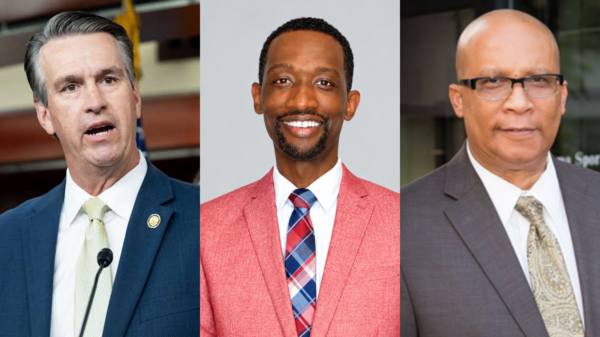
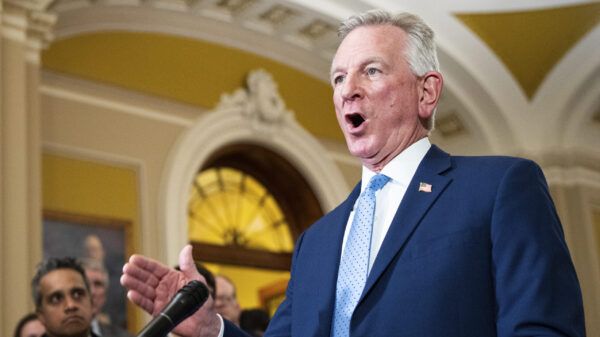
Barry Moore won the Republican nomination for U.S. Senate. John Wahl defeated Wes Allen for the Republican nomination for lieutenant governor. Katherine Robertson defeated Jay Mitchell for attorney general. Corey Hill defeated Christina Woerner McInnis for commissioner of agriculture and industries.
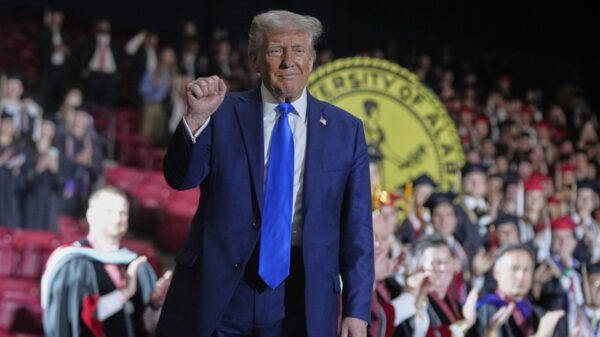
The outcomes were clear. Moore and Wahl, both backed by Donald Trump, won two of the most watched races on the ballot. Trump’s endorsement still carries weight in Alabama Republican politics, particularly in a low-turnout runoff where the most committed voters matter most.
So this is not a column about Trump’s influence fading in Alabama. It has not.
It is not a column about Democrats suddenly becoming competitive statewide. They have not.
And it is not a column arguing that the Republican winners did not earn their nominations. They did.
But elections tell more than one story. Tuesday’s runoff told the story of Republican victory. It also told the story of voter absence.
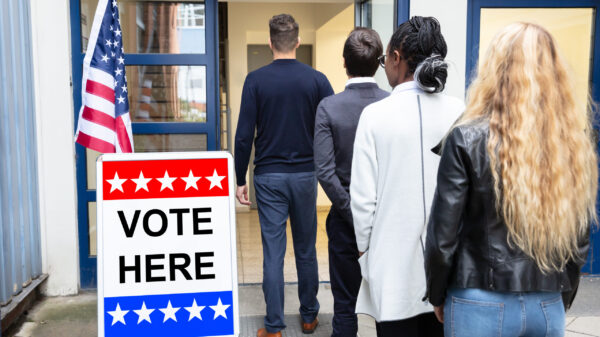
According to unofficial results from the Alabama Secretary of State, 408,740 ballots were cast in the runoff out of 3,812,426 registered voters. That is turnout of 10.72 percent. Nearly nine out of 10 registered voters did not participate.
That number should not be brushed aside simply because the winners were Republicans.
Runoffs are part of Alabama’s election system. The candidates knew the rules. Voters had the opportunity to participate. The winners won under the process that exists.
But legitimacy and broad enthusiasm are not the same thing.
A party can win an election and still have reason to worry about the voters who did not show up. A candidate can win a nomination and still have to ask whether the victory reflects broad public energy or the discipline of a small, committed electorate.
That is the question Alabama Republicans should be asking after Tuesday.
The Republican runoff for U.S. Senate drew 310,758 votes. The lieutenant governor’s race drew 308,349 votes. The attorney general’s race drew 305,836 votes. The agriculture commissioner’s race drew 296,501 votes.
In a state with more than 3.8 million registered voters, Alabama’s major Republican nominations were decided by roughly 300,000 people.
Moore won with 173,418 votes. Wahl won with 175,724 votes. Robertson won with 168,424 votes. Hill won with 158,033 votes. Each of those totals represents less than 5 percent of Alabama’s registered voters.
Republicans remain the dominant party in Alabama. The Republican label is still the most valuable political asset in the state. Democrats remain badly outmatched in statewide races. The GOP nominees will enter November with advantages that have defined Alabama politics for nearly a generation.
But dominance can conceal softness. It can make a party believe it is stronger than it is because the opposition is weak, the map is favorable and the party label still does much of the work.
That is where turnout matters.
Low turnout is easy to dismiss after a victory. Winners want to talk about winning. Losers want to talk about what went wrong. But turnout is one of the clearest measures of political energy. It shows whether voters believe a race matters enough to interrupt their lives.
On Tuesday, most did not.
Some of that is normal. Runoffs almost always draw fewer voters than primaries. Summer elections are difficult. Voters are busy. Many people assume the outcome is already decided before the polls open. Campaigns have to work harder to bring people back a second time.
But expected does not mean meaningless.
The warning for Republicans is that many voters who still prefer Republicans may not feel much urgency about Republican politics when Trump is not on the ballot and the race is about who will govern Alabama.
That is a different problem, and dominant parties are often slow to recognize it.
For years, Alabama Republicans have benefited from a simple political reality: they are not Democrats. In this state, that has been enough to win most statewide races before they truly begin. It still may be enough in November.
But being the alternative to Democrats is not the same as giving voters a reason to believe government is working for them.
Republicans control Alabama government. They hold the governor’s office. They hold every statewide constitutional office. They dominate the Legislature. They control most of the state’s congressional delegation. They write the budgets, pass the laws, set the agenda and decide which problems receive attention.
There are not many Democrats left to blame for the condition of Alabama.
That is the burden of power. It is easy to campaign against Washington. It is easy to campaign against the left. It is easy to tell voters who the enemy is. But in Alabama, Republicans are not merely the opposition to national Democrats. They are the government.
And government is eventually judged by what it delivers.
Families know what groceries cost. They know what insurance costs. They know whether their local hospital is secure. They know whether their child’s school is working. They know whether wages are keeping pace. They know whether roads are better, whether communities feel safer and whether state government seems connected to the pressures they face.
Those are not Democratic questions or Republican questions. They are governing questions.
In Alabama, they belong to Republicans because Republicans hold power.
Much of Republican campaign language remains built around enemies: Washington, the left, the media, the establishment and the next threat just over the horizon. That language still works with many Republican voters. No one should pretend otherwise. Fear, anger and resentment are powerful political motivators.
But they are not the same as confidence. They are not the same as hope. They are not the same as convincing an ordinary voter that a runoff for lieutenant governor, attorney general or agriculture commissioner will make life better.
That may be the gap Tuesday exposed.
The GOP won the runoff. Its candidates move toward November as favorites. Trump’s influence remains real. The party’s grip on Alabama politics remains strong.
But the turnout told another story.
It showed a party still powerful enough to win, but perhaps not compelling enough to inspire broad participation. It showed a political system in which major statewide nominations can be decided by a small slice of the electorate. And it showed that Alabama Republicans, for all their dominance, still face a question that cannot be answered by endorsements, slogans or attacks on the other side.
Can they make voters believe these elections matter enough to show up?
On Tuesday, most voters answered by staying home.