


























Perhaps the most dangerous idea in history was liberalism.
Not the liberalism of modern American politics. Not a party platform, a collection of government programs or another name for the political left.
The liberalism that changed the world.
The word has become so entangled in partisan warfare that we have nearly forgotten what it once meant. Before liberalism became a political label, it was a radical challenge to an old order built on monarchy, inherited privilege and obedience.
For most of human history, power flowed from the top down. Kings ruled by bloodline or divine right. Governments dictated religious belief. Ordinary people were subjects rather than citizens, and whatever rights they possessed were privileges rulers granted and could withdraw.
Then liberalism asked a simple but explosive question: What if government existed to serve the individual rather than the individual existing to serve the government?
What if people possessed rights before government recognized them? What if authority required the consent of the governed? What if the law bound the ruler as surely as it bound the ruled?
Those ideas grew out of centuries of conflict over monarchy, religion and arbitrary power. The English Civil War shattered the belief that a king answered only to God. When Charles I was tried and executed in 1649, Europe saw something almost unimaginable: a monarch called to account.
The monarchy returned, but the old certainty did not.
The Glorious Revolution of 1688 carried the argument further. Parliament removed James II and offered the crown to William and Mary under conditions that limited royal power. The king still ruled, but he no longer stood above the law.
John Locke gave that change its clearest expression. In his “Second Treatise of Government”, he argued that people possess natural rights simply because they are human. Government does not give people those rights. It receives limited power from the people to protect them.
Life, liberty and property did not belong to a king to distribute. They belonged to the individual.
That idea changed the source of power. Authority no longer descended from a throne. It rose from the people, and a government that violated their rights lost its claim to obedience.
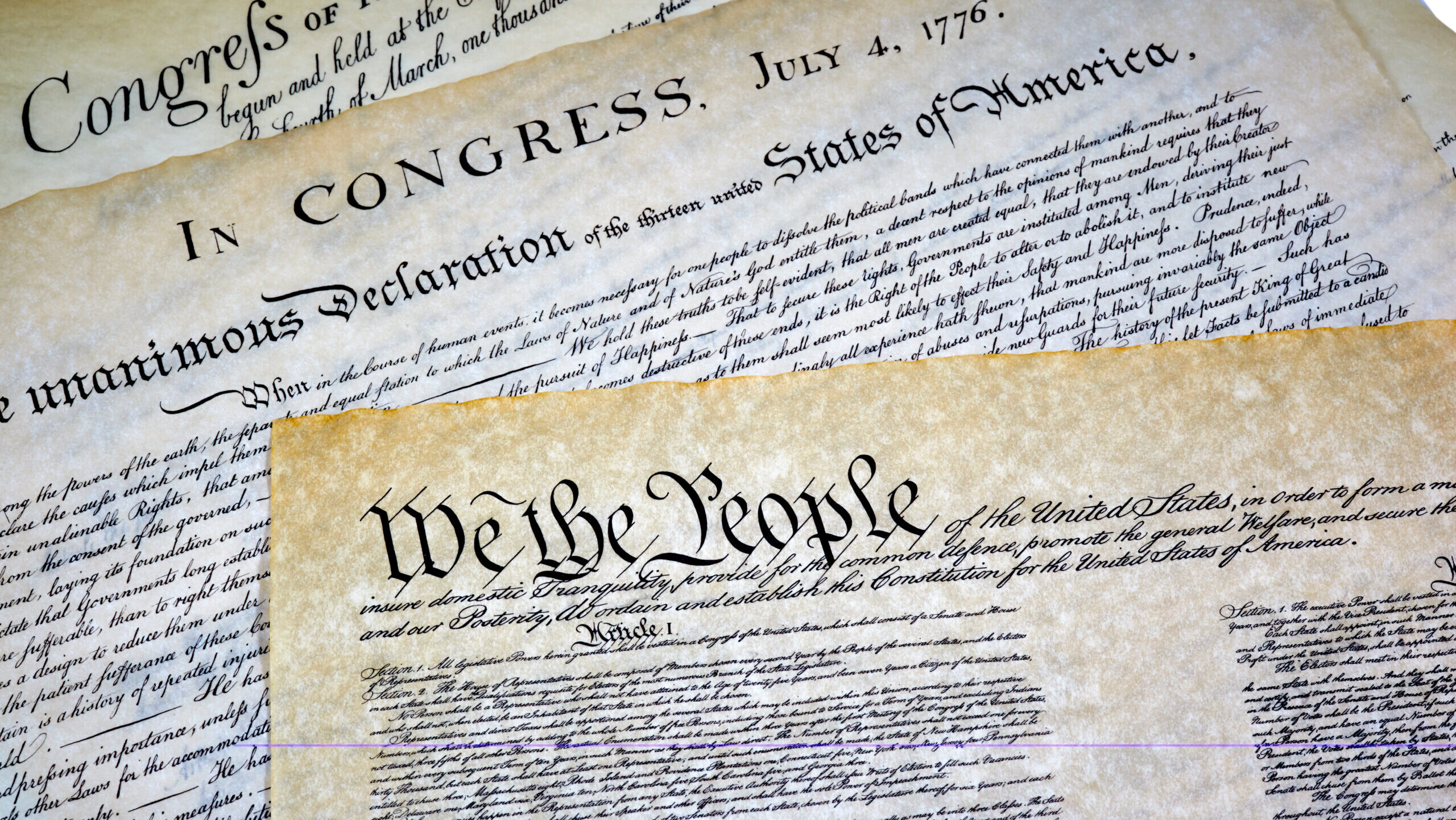
Those ideas crossed the Atlantic and found their most enduring expression in the Declaration of Independence. Thomas Jefferson did not invent them, but he gave them words that would outlive empires: All people are created equal, they possess rights that cannot rightfully be taken away, and governments derive their just powers from the consent of the governed.
The American Revolution was more than a revolt against taxes or British policy. It declared that government itself must answer to the people.
But declaring rights was easier than securing them.
James Madison and the Constitution’s architects faced the question that follows every revolution: What prevents a government created by the people from becoming oppressive in the people’s name?
Their answer was not to search for perfect leaders.
It was to distrust power.
They divided authority among branches and levels of government. They gave each branch the ability to resist the others. They protected speech, religion, assembly and due process because elected majorities could become unjust as surely as kings.
The Constitution was not built on faith that those in power would always remain good. It was built on the warning that no one is good enough to possess power without limits.
That is the heart of classical liberalism: Rights come before government, law stands above rulers and power must be restrained because no person, party or majority can safely be trusted with all of it.
In the broad historical meaning of the word, the American founding was liberal. Many principles modern conservatives defend—limited government, private property, religious liberty, free expression, due process and constitutional restraint—were once dangerously liberal ideas.
They became so deeply rooted in American life that we stopped recognizing where they came from.
We simply called them freedom.
America did not honor those principles equally at its founding. It proclaimed equality while preserving slavery. Women were denied political rights. Native peoples were displaced and subjected to power without meaningful consent.
But failing to live by a principle does not disprove it. It shows the cost of betraying it.
Abolitionists, suffragists and civil rights leaders did not ask America to abandon its stated ideals. They demanded that the country apply them more honestly and fully.
That remains our task.
We inherited the language of liberty but began to forget its discipline. We became skilled at claiming rights for ourselves while growing less willing to defend them for people we distrust, dislike or oppose.
That is where illiberalism begins.
Illiberalism is the belief that rights, laws and institutions may be pushed aside when they interfere with the will of a leader, a movement or a majority.
Classical liberalism asks how power will be restrained. Illiberalism asks who will control it.
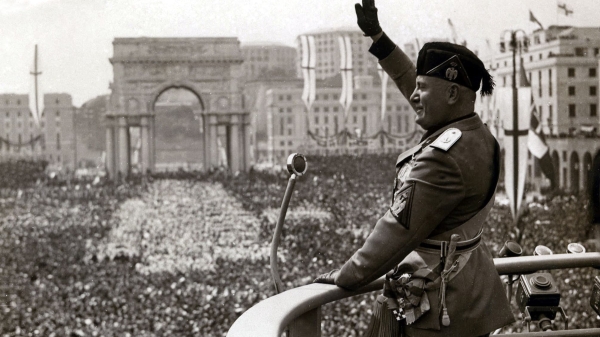
Illiberalism does not always abolish elections, courts or legislatures. More often, it changes their purpose. Elections become permission to exercise nearly unlimited power. Legislatures are expected to obey. Courts are respected only when they cooperate. The press is tolerated only when it does not challenge those in authority.
Political opponents are no longer fellow citizens who happen to be wrong. They become enemies whose rights and place in public life can be questioned.
Illiberalism is democracy stripped of the restraints that make democracy free.
The left has violated the liberal tradition as well. Too many have tried to silence offensive speech, enforce ideological conformity or treat disagreement as proof of moral failure. Those impulses matter, and they should be condemned.
But the most immediate danger comes when illiberalism gains control of government and begins weakening every institution capable of saying no.
That is the danger we face now.
A powerful movement on the American right speaks constantly of liberty while growing impatient with nearly every restraint liberty requires. Courts are legitimate until they rule against the movement. The law is sacred until it binds a favored leader. Journalists are defenders of freedom until they report something the movement does not want known.
Public servants are expected to serve a person rather than the Constitution. Political opposition is treated not as a necessary part of self-government but as sabotage. Loyalty to the movement becomes the measure of loyalty to the nation.
Many who support this movement are not plotting to destroy constitutional government. They believe they are saving it.
That is what makes the danger so difficult to see.
Illiberalism rarely arrives announcing its hostility to freedom. It comes carrying the flag, quoting the Constitution and promising to restore the country. It does not ask citizens to surrender liberty. It persuades them that liberty requires removing the institutions that restrain power.
Once that belief takes hold, constitutional limits begin to look like obstruction. Checks and balances become sabotage. Independent judgment becomes betrayal. Opposition itself becomes illegitimate.
People can sincerely believe they are defending freedom while tearing down the institutions that keep them free.
Illiberalism keeps the appearance of democracy while stripping away the limits that make democracy free. It teaches citizens to resent every institution that restrains the power of their own side.
But liberty is not the freedom of our side to do whatever it desires.
Liberty is the presence of restraints on every side.
The test is not whether we defend courts when they agree with us, speech when it pleases us or elections when they produce the result we want. The test is whether we defend those principles when they stand in our way.
That is when liberty proves whether it is a conviction or merely a slogan.
Every movement is tempted to believe its cause is unusually righteous, its enemies uniquely dangerous and its moment too urgent for the normal restraints of constitutional government. Classical liberalism answers with a warning learned through centuries of bloodshed: Those most certain of their virtue may be least able to recognize the danger of their own power.
We do not need to recover liberalism as a partisan identity. We need to recover the liberal tradition that made constitutional self-government possible.
That means defending rights for people we oppose, speech we find offensive, courts that rule against us, elections we lose and laws that bind leaders we admire. It means accepting that constitutional government will sometimes prevent our own side from accomplishing everything it desires.
That frustration is not a failure of freedom.
It is the price of freedom.
Liberalism was dangerous because it told kings they were not masters and ordinary people they were not subjects. It remains dangerous because it tells every leader, every party and every movement the same thing.
You may govern.
But you may not rule without restraint.