



































Alabama’s congressional delegation has thrown its full support behind legislation that would make daylight saving time permanent.
The U.S. House voted 308-117 on July 14 to pass the Sunshine Protection Act, which would eliminate the twice-yearly clock changes.
The bill received unanimous bipartisan support from Alabama’s House delegation, with every member voting in favor.
Although prominent senators have expressed doubts that the bill will receive similar support in the Senate, Alabama’s senators have remained vocal supporters of the legislation.
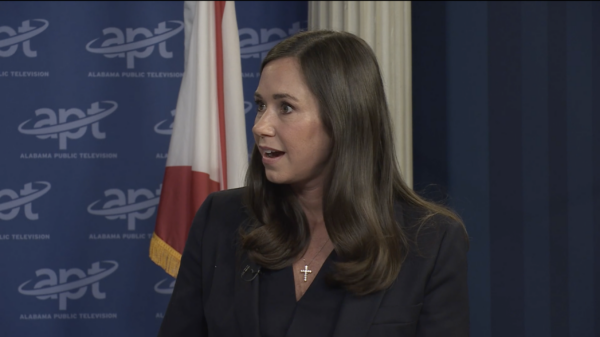
U.S. Senator Katie Britt, R-Alabama, a cosponsor of the bill, expressed hope Monday that the Senate would pass it. She described the clock changes as an unnecessary burden on Americans.
“Twice a year, families are forced to adjust their clocks and lose precious sunshine for an antiquated practice that began decades ago. Alabamians want daylight saving time made permanent,” Britt said. “I’m pleased to see the House pass the Sunshine Protection Act to lock the clock, and I hope the Senate follows suit to get this to the President’s desk.”
U.S. Senator Tommy Tuberville, R-Alabama, who has cosponsored the Senate version of the legislation since 2024, urged the Senate to vote on the measure in a social media post last week.
“Glad to see the House pass my bill to lock the clock,” Tuberville wrote. “President Trump supports it. So what’s the hold up in the Senate?”
During a news conference Thursday, Tuberville again highlighted President Donald Trump’s support for the bill and criticized House members who voted against it.
“Out of all the legislative efforts I have been a part of, this is one of the top things that I hear from people back in Alabama,” Tuberville said. “I’m glad to see over 300 House members voted for this bill. It’s a shame that even a single person voted against it.”
Tuberville argued that the Sunshine Protection Act would allow Americans to spend more time outdoors during winter evenings.
“A lot of Americans are taking their health more seriously thanks to RFK Jr. and his efforts with HHS. The current system is broken, and it’s the opposite of being healthy—this daylight saving time nonsense of going back and forth,” Tuberville said.
U.S. Representative Barry Moore, R-Alabama, and U.S. Representative Robert Aderholt, R-Alabama, have also publicly urged passage of the legislation.
“President Trump supported it, and I was proud to vote yes,” Moore wrote in a social media post after the House vote. “It’s time to stop the confusion and make life a little easier for American families.”
Aderholt, who released a statement last week supporting the act, raised concerns about its potential effects on students’ morning routines. Permanent daylight saving time could require students to travel to school before sunrise during the winter.
“In December and January, permanent Daylight Saving Time would mean the sun would not rise until nearly 8:00 a.m. in much of North Alabama,” Aderholt said. “That means many students would be standing at bus stops or walking to school before sunrise. As a father and soon-to-be grandfather, that’s something I take seriously.”
Aderholt said schools could adjust their policies so Americans “can enjoy the benefits of ending the clock changes while also making sure student safety remains a priority.”
Despite the bill’s bipartisan support in the House and the president’s endorsement, its potential effects on students’ morning routines and safety have emerged as prominent concerns among Republicans and Democrats who oppose ending the clock changes.
Opposition in the House was concentrated among representatives from northern states, which have fewer daylight hours during the winter.
New York representatives cast the most votes against the bill of any state. Fourteen of the state’s 26 representatives opposed it.
Prominent Republicans, including Senate Majority Leader John Thune, R-South Dakota, and U.S. Senator John Kennedy, R-Louisiana, have said the legislation faces a difficult path in the Senate.
“It’s going to be a dog fight,” Kennedy told Reuters.
Thune, who opposed the 2025 version of the bill, noted that Congress enacted permanent daylight saving time for two years in the early 1970s but reversed the decision in 1974 before the two-year period ended.
“I just don’t think we want a mandate, and that was tried once before and repealed, but we’re looking at it,” Thune told NBC News. “You know, the House had a big vote. There’s a lot of interest in it from members on our side over here. Some for, some against. But we’ll see.”
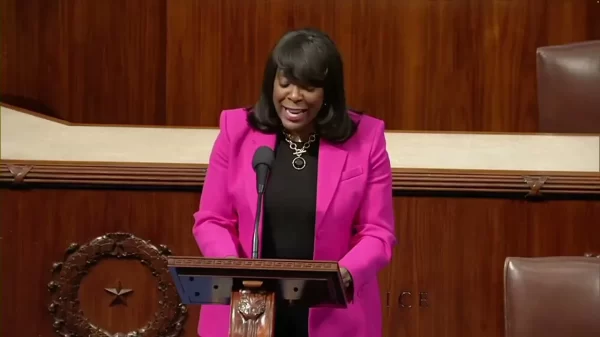
Messages requesting comment were left with the offices of U.S. Representative Terri Sewell, D-Alabama, and U.S. Representative Shomari Figures, D-Alabama.