



































Amid increased government buy-in in crisis pregnancy centers in Alabama and nationwide, a national reproductive health nonprofit has called for further staff disclosure requirements for the facilities.
Crisis pregnancy centers, which offer services such as free pregnancy tests, pregnancy counseling and material support, seek to steer expecting mothers away from receiving an abortion.
Many of the centers are affiliates of Heartbeat International and Care Net, associations which support networks of pregnancy centers opposed to abortions.
A June report released by Reproductive Health and Freedom Watch has called for greater transparency measures to ensure public accountability and confidence in crisis pregnancy centers.
Of the 56 crisis pregnancy centers operating in the state, the organization identified six publicly disclosed medical directors working at five centers, despite more than 80 percent of the centers promoting obstetric ultrasounds.
Of the Alabama crisis pregnancy center medical directors identified by Reproductive Health and Freedom Watch, all were licensed OBGYNs with employment other than at their respective pregnancy center.
Reproductive Health and Freedom Watch Executive Director Debra Rosen wrote that the report raises “questions about supervision of clinical staff, availability/pregnancy center patient priority in the event of emergency, timeliness of ultrasound diagnostics, and accountability.”
The report recommended three policy changes that the organization said would “improve transparency and strengthen patient confidence” in pregnancy centers.
The recommendations are to require disclosure of crisis pregnancy center medical directors, the public disclosure of medical director credentials, as well as “transparency as a condition of government referral.”
The centers, which are now promoted federally through the U.S. Department of Health and Human Services website, Moms.gov, receive a mix of public and private funding in Alabama through the Choose Life license plates available in the state and donations from individuals and businesses which may receive tax credits for donating to crisis pregnancy centers.
“Organizations listed on federal and state referral platforms such as Moms.gov should meet minimum transparency standards regarding medical leadership,” the Reproductive Health and Freedom Watch report reads.
Reproductive Health and Freedom Watch in 2024 tracked $35 million in revenue flowing through Alabama’s crisis pregnancy center industry.
Mika Matsuno, Reproductive Health and Freedom Watch director of research and strategy, told APR that despite rising public investment, finding publicly available information on pregnancy centers’ medical directors and staff has proved difficult.
“When you try and figure out who’s providing the healthcare at these places, it becomes very tricky,” she said.
The research and strategy director described legislators’ rising support for the facilities on a national level as responses to legitimate challenges to maternal health access, while calling into question lawmakers’ reasoning for supporting crisis pregnancy centers over other maternal healthcare providers.
“They’re advocating a special protection for these centers. They’re advocating extra money to advertise these services,” Matsuno said. “More and more they are citing maternal health disparities. They’re citing maternal mortality; they’re citing a real need to show up for women and families, and that is absolutely true.”
“Often the states that are funding these centers are states that have really high disparities,” she added. “It’s a little bit unclear why legislators would push these centers without real clear evidence that these centers are meeting those demands.”
Matsuno called for further investments in free clinics, rural hospitals and Federally Qualified Health Centers, which are subject to more direct oversight from state health departments.
“I think those kinds of investments have shown to be more fiscally responsible, fiscally effective,” she said. “It’s really unclear why you wouldn’t invest in those versus a [unlicensed pregnancy center] if that’s your goal—is to really help people who are pregnant in Alabama.”
The director of research and strategy cited a 2023 study conducted by Reproductive Health and Freedom Watch that measured two Florida and Indiana pregnancy centers’ per-client spending against nonprofit free health clinics’ expenses in the same states. The report found that while the pregnancy centers offered fewer services than health clinics, the two pregnancy centers’ spending per-client was more than three times that of nonprofit health clinics.
Ryan Easterling, director of the Alabama Department of Public Health Media and Communications Division, told APR that while the department “does not have specific rules for crisis pregnancy centers and does not issue licenses permitting those facilities to operate,” facilities that provide diagnostic physiological services including ultrasounds must obtain a license from the department to operate as an Independent Physiological Laboratory.
“An exception is made for private physician offices that perform such diagnostic physiological services exclusively for their own patients,” Easterling stated. “Every IPL is required, among other things, to employ or have under contract a physician who serves as the medical director of the laboratory. Said medical director must be a physician licensed to practice in Alabama.”
APR contacted crisis pregnancy centers across the state that offer limited ultrasound services and do not publicly disclose their medical directors, requesting statements disclosing the centers’ medical directors and how often they are present at the facility.
A response was received by representatives of Her Choice Birmingham, a Heartbeat International affiliate. Her Choice Birmingham Director Joy Pinto argued against the need for further staff disclosure requirements for crisis pregnancy centers in Alabama, describing critiques of facilities such as hers as based on the facilities’ opposition to abortion.
“It’s not like we’re hiding anything, and the people who don’t like us call us fake clinics because they would rather we didn’t exist, because we are having an impact on the lives of women who are in an unplanned pregnancy, who might be thinking, ‘I want to have an abortion,’” she said.
According to Pinto, Dr. Delbert Hahn, a radiologist, serves as Her Choice Birmingham’s medical director, and gynecologist Dr. Michele Christine serves as the center’s medical director assistant.
Pinto said Hahn is present at the facility at least once a week to oversee ultrasound referrals, and the facility provides referrals to Dr. Rebecca Newton, the obstetrics director at Christ Health Center in Birmingham.
Pinto added that with each visit expecting mothers make to classes operated by Her Choice Birmingham, they earn and may redeem credits for children’s supplies.
“They’re not only getting empowered with information, but then they’re going to be able to receive all the resources that they’re going to need like a crib, a car seat, a stroller, diapers, wipes, baby clothes, formula, all of the necessary things to take care of a newborn baby,” Pinto said.
Pinto argued that abortion is “not women’s healthcare,” in opposition to the perspective of the American College of Obstetricians and Gynecologists and the World Health Organization.
The Reproductive Health and Freedom Watch report comes on the heels of increased state and federal promotion of crisis pregnancy centers.
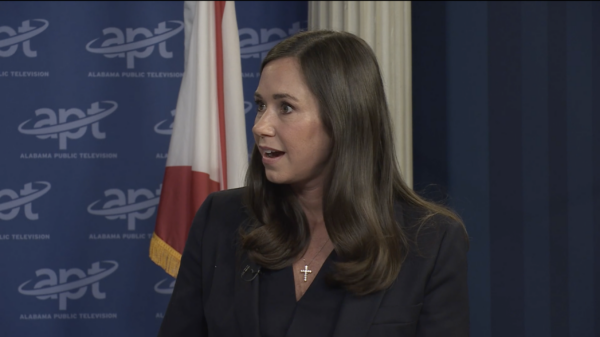
Federally, U.S. Senator Katie Britt, R-Alabama, has been a leading voice of support for establishing Moms.gov.
The website provides contact information for crisis pregnancy centers through Option Line, a confidential contact center listing U.S. pregnancy centers’ contact information, operated by Heartbeat International.
“President Trump knows that, and he’s made sure that we have created a comprehensive culture of life. That’s what you see with Moms.gov,” Britt said during a Mother’s Day White House press conference detailing the site’s launch.
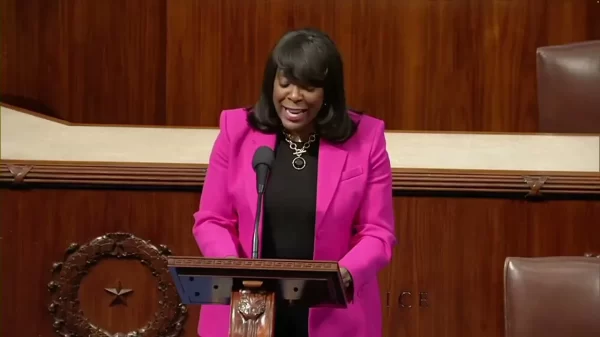
Support for the centers has remained strongest among Republican lawmakers, with U.S. Representative Terri Sewell, D-Alabama, last January speaking against a bill that would have granted Temporary Assistance for Needy Families, TANF, funding for crisis pregnancy centers.
“If we divert limited TANF funds to these so-called crisis pregnancy centers that do not provide comprehensive, hands-on healthcare for women, then states like Alabama will continue to bypass providing families living in poverty with needed assistance,” the congresswoman said. “We must ensure that the funding we are responsible for overseeing solves the problem that it intends to address when Congress created the program.”
The Pregnancy Resources Act, passed during the 2025 Alabama Legislative Session, allocates up to $10 million in annual tax credits to individuals and businesses that grant donations to crisis pregnancy centers.
During state lawmakers’ debate of the legislation in 2023, the legislation drew opposition from the Yellowhammer Fund, a reproductive health advocacy nonprofit which provides Alabamians with information on receiving abortion services out of state.
“Anti-abortion centers are coercive, and their services are stigmatizing and harmful,” said Heidi Miller, development manager at Yellowhammer Fund. “Pregnant people and parents should be able to access basic necessities without fear of judgment or shame, and that’s why YHF provides supplies like diapers, wipes, household supplies and more via our Family Justice outreach.”
The state also offers grant opportunities, funded through Alabama’s Choose Life license plates, for “adoption agencies, crisis pregnancy centers, baby safe havens and shelters, and other pro-life organizations.”
Abortions were made illegal in almost all cases in Alabama in 2022, following the U.S. Supreme Court’s verdict in Dobbs v. Jackson Women’s Health Organization. Alabama’s anti-abortion law does not provide exceptions for rape or incest, and abortions are only legal in the state through limited exceptions in cases where a pregnant person’s life is at risk or carrying the pregnancy to term would result in severe physical health impairments.