






















A newly released state audit shares a look at how the Alabama Department of Corrections handles its finances, documenting the agency’s accounting practices, internal controls and compliance with state law during the period under review.
Audit report 26-251, issued by the Alabama Department of Examiners of Public Accounts, is part of the state’s regular oversight of executive agencies.
The Examiners of Public Accounts conduct independent financial audits to determine whether public funds are properly recorded, safeguarded and spent in accordance with Alabama statutes and generally accepted accounting principles.
In this review, auditors examined the department’s financial statements and tested transactions to verify accuracy from October 2018 to September 2024. That process typically includes evaluating how revenue and expenditures are recorded, whether bank accounts are reconciled on time and whether controls are in place to prevent errors or misuse of funds. Auditors also review compliance with state laws governing purchasing, contracting and reporting.
Financial audits do not measure prison safety, staffing levels or inmate conditions. Instead, they focus on the agency’s financial management systems. Lawmakers rely on these audits when evaluating budget requests and long-term spending commitments, particularly as corrections remains one of the largest draws on the state’s General Fund.
One of the most significant findings involves the state’s Community Corrections Program. Alabama law requires annual evaluations of participating community corrections organizations to ensure compliance and effectiveness.
Auditors found that only two evaluations were conducted during the audit period, and neither met the statutory annual requirement. The report notes this was a repeat finding from prior audits, meaning the issue had already been flagged and not corrected.
The audit also found the department charged a “bad check” fee without formally establishing the amount through an administrative rule, as required under the state’s Administrative Procedure Act. Without a properly adopted rule, the fee lacked legal grounding.
In another instance, the department failed to submit a required report detailing fiscal year 2023 expenditures on inmate health care and mental health services. The General Fund Appropriation Act requires that the report be filed with legislative budget committees and the Legislative Fiscal Officer. Auditors found it was not submitted as mandated.
Beyond statutory reporting failures, examiners cited weaknesses in routine financial controls. At multiple facilities, bank reconciliations were not performed on time. At two facilities, reconciliation records were unavailable altogether. At seven facilities, auditors reported missing or incomplete documentation, including checks, deposit records, bank statements and receipts. State law requires agencies to maintain those records as part of standard public financial management.
The timing of this report adds weight to its release. Legislators have expressed growing frustration with ongoing problems inside Alabama’s prisons with billions of dollars committed to prison construction and ongoing operational costs.
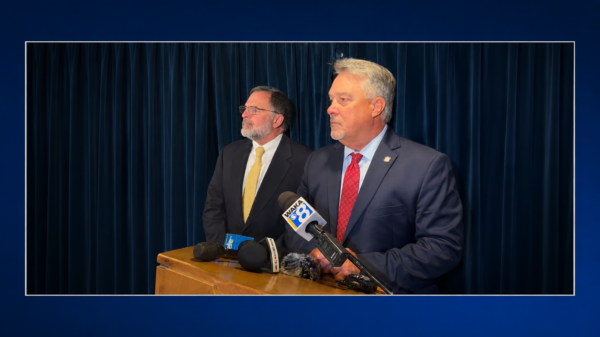
During the 2026 Legislative Session, Senator Larry Stutts, R-Tuscumbia, sponsored Senate Bill 316, a bill that would have allowed the Alabama Department of Examiners of Public Accounts to investigate the behaviors and treatments of people housed in the state’s prisons.
SB316 did not pass, but some of its provisions are still moving forward. ADOC and the Alabama Department of Examiners of Public Accounts came to an agreement. The agencies say they will begin by investigating conditions at one prison, a step that could inform future oversight efforts.