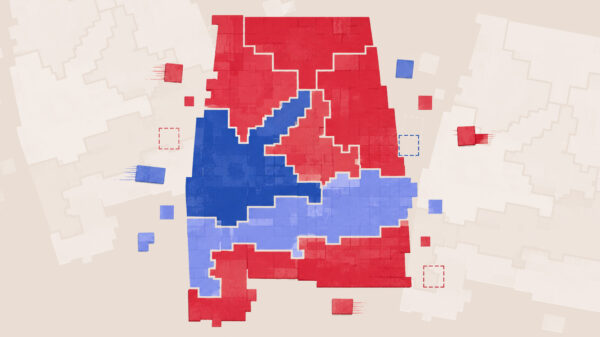














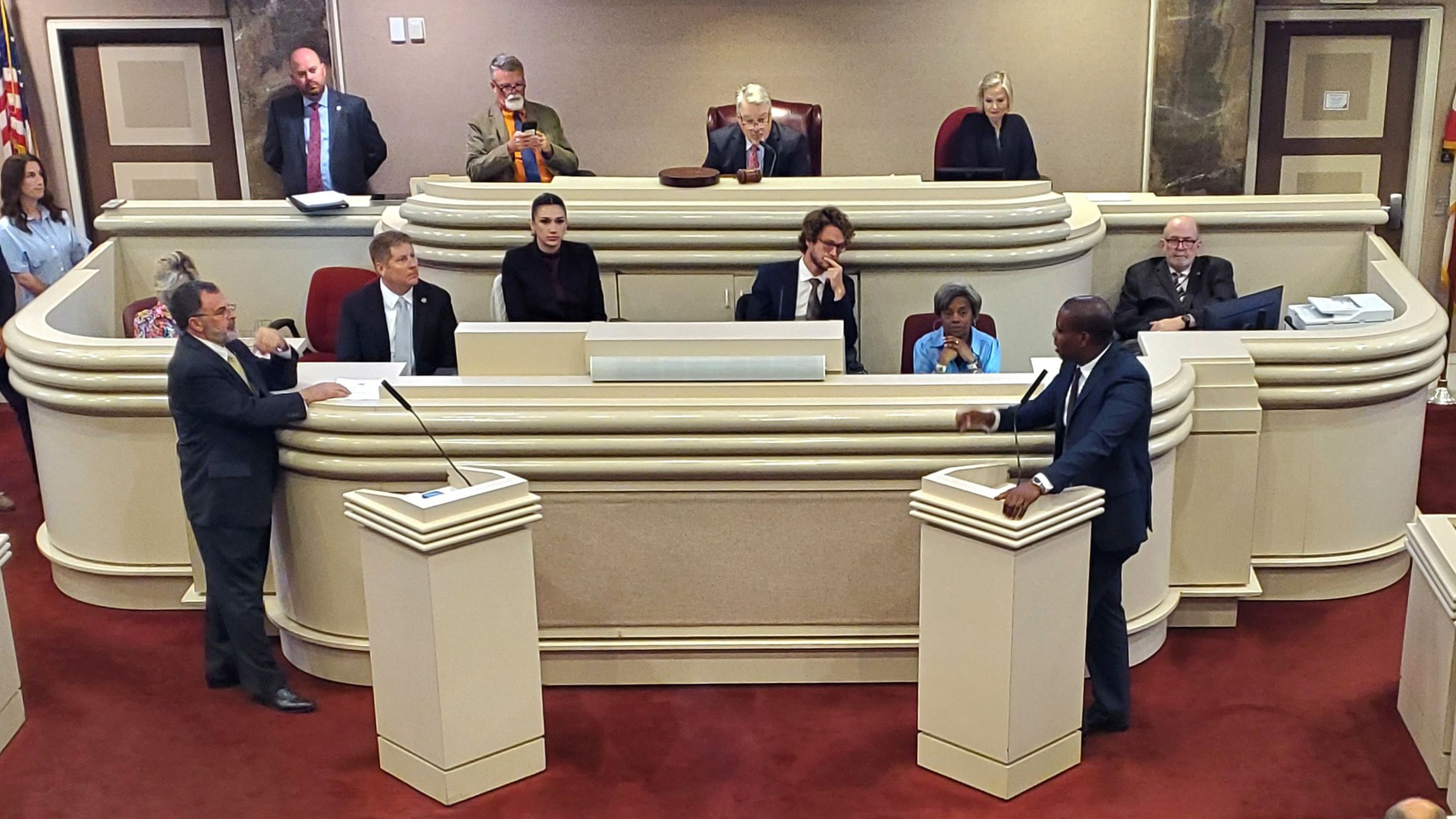
The Alabama House of Representatives voted along party lines Wednesday in favor of a bill that would trigger special primary elections if a federal court allows the state to use a previous iteration of its U.S. Congressional districts.
Democrats railed against the bill, which would allow an election to be held based on maps that federal courts have declared racially discriminatory. The maps would likely flip at least one seat to Republicans and could put all seven Congressional districts in play.
House Majority Leader Anthony Daniels, D-Huntsville, wondered aloud whether the state is in contempt of the court injunction against it, which prohibits the state from attempting to alter the Congressional map until after the 2030 Census.
The state signed an agreement with the federal courts not to appeal that injunction, but the state has changed its tune after the U.S. Supreme Court’s ruling in Callais.
“After Callais, we believe we’re basically on the right side,” Pringle said. “We have the right to appeal.”
“You do not have the right to appeal something that’s already been in the order—you signed an agreement not to appeal,” Daniels responded. “Do I need to fill an injunction on all parties involved? We’ll do that then. Since one has been filed against the Secretary of State, I’ll file one against everyone else involved … and we’ll let you deal with it in court.”
Rep. Chris England, D-Tuscaloosa,, likened the state’s position to bad behavior while on probation.
“Essentially Alabama’s on four years of probation, and instead of honoring that four years of probation, we’re in this session trying to go on a bender,” he said. “And there will be consequences to that, because to my estimation and many others, we are in contempt because we said we weren’t going to do anything like this.”
The sudden attempt to get back to the previous Congressional maps just two weeks before the May primaries has brought an uproar from civil rights activists, spurring a protest on the seventh floor of the statehouse outside the Senate chamber later in the afternoon. Critics say this is the latest salvo in Alabama’s longstanding war against the voting rights of Black citizens.
“This moment does not exist in a vacuum. This is a moment in a long line of history,” Daniels said, walking through Alabama’s sordid history of racial discrimination at the polls. “It’s up to us as a body not to fall to the pressures from the national level. I’ve been seeing other states falling in line, but we’ve always been an independent body. I think this particular legislation is going to drive us apart more than together.”
The Senate passed a similar bill to hold special primary elections for State Senate districts that would be affected if that map is reverted. The two chambers will now swap bills and have public hearings on each this morning, setting up a final floor debate on Friday.