

















A federal court on Friday effectively told Alabama officials that the fight over the state’s congressional map now belongs entirely to the U.S. Supreme Court.
In a blunt order denying Alabama Secretary of State Wes Allen’s emergency request to halt Alabama’s court-ordered congressional map, the three-judge panel said it lacks the authority to intervene while the case remains pending before the nation’s highest court.
“Only the Supreme Court has the authority to address the substance of those arguments and resolve them,” the panel wrote.
The order, signed by U.S. Circuit Judge Stanley Marcus and U.S. District Judges Anna Manasco and Terry Moorer, leaves Alabama’s current congressional map fully in place unless the Supreme Court intervenes.
Allen had argued that the Supreme Court’s recent decision in Louisiana v. Callais fundamentally changed the legal standards governing Section 2 Voting Rights Act claims and justified revisiting Alabama’s long-running redistricting litigation.
The state asked the court to stay the permanent injunction blocking Alabama’s 2023 congressional map.
But the panel refused to reach the substance of those arguments.
Instead, the judges concluded they no longer have jurisdiction because Alabama’s appeal is already pending before the Supreme Court.
Citing long-standing appellate precedent, the court explained that once an appeal is filed, jurisdiction over the issues involved in that appeal transfers to the higher court.
The judges emphasized that Alabama’s current court-drawn congressional map is already the legal “status quo” because it has remained in place since both the district court and Supreme Court declined to stay it in 2023.
That map was used during the 2024 congressional elections and is being used for the 2026 election cycle already underway in Alabama.
“Accordingly, a stay would upend Alabama’s status quo,” the court wrote.
The panel also questioned the timing of Alabama’s request.
The judges noted Allen filed his third appeal to the Supreme Court nearly a year ago but “did not seek a stay then,” even as Alabama proceeded through the 2024 election cycle using the court-ordered map.
Now, with the 2026 election cycle already in motion, the court suggested granting emergency relief would destabilize the electoral framework already governing the state’s congressional races.
The order also revealed how quickly the legal battle is moving at the Supreme Court.
Shortly after the district court issued its ruling, plaintiffs notified the court that Alabama had formally filed an emergency application for a stay with the Supreme Court in the Milligan, Caster and Singleton cases.
According to that filing, Alabama requested a decision from the Supreme Court by May 14 at 10 a.m. EDT.
Associate Justice Clarence Thomas, who handles emergency matters arising from the 11th Circuit, ordered the plaintiffs to respond by Monday, May 11, at 5 p.m. EDT.
The move places the future of Alabama’s congressional map—and potentially the future scope of Section 2 enforcement itself—before a Supreme Court that has already shown growing division over race-conscious redistricting.
Thomas dissented in the Supreme Court’s original Allen v. Milligan ruling and has long argued for a narrower interpretation of Section 2 of the Voting Rights Act.
The underlying litigation stems from Alabama’s repeated losses in federal court after judges found the Legislature failed to draw a congressional map that gave Black voters a fair opportunity to elect candidates of their choice in a second district.
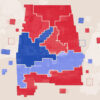
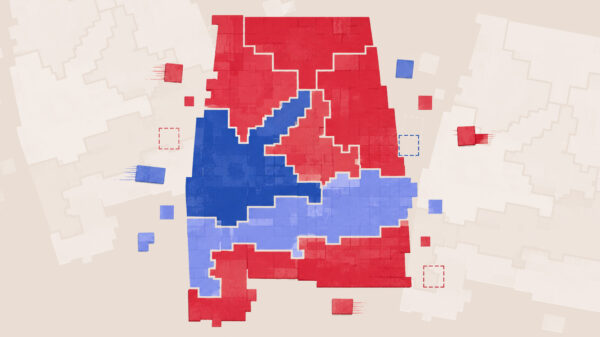
After lawmakers enacted a revised congressional map in 2023 that the panel again found likely violated federal law, the court imposed a remedial map creating a second district in which Black voters have a substantial opportunity to influence elections.
That map ultimately led to the election of Democratic U.S. Representative Shomari Figures in Alabama’s 2nd Congressional District in 2024.
Friday’s ruling does not resolve Alabama’s broader challenge to the map or the future interpretation of Section 2.