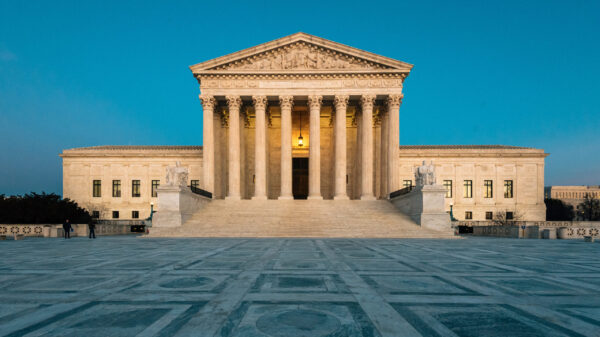


















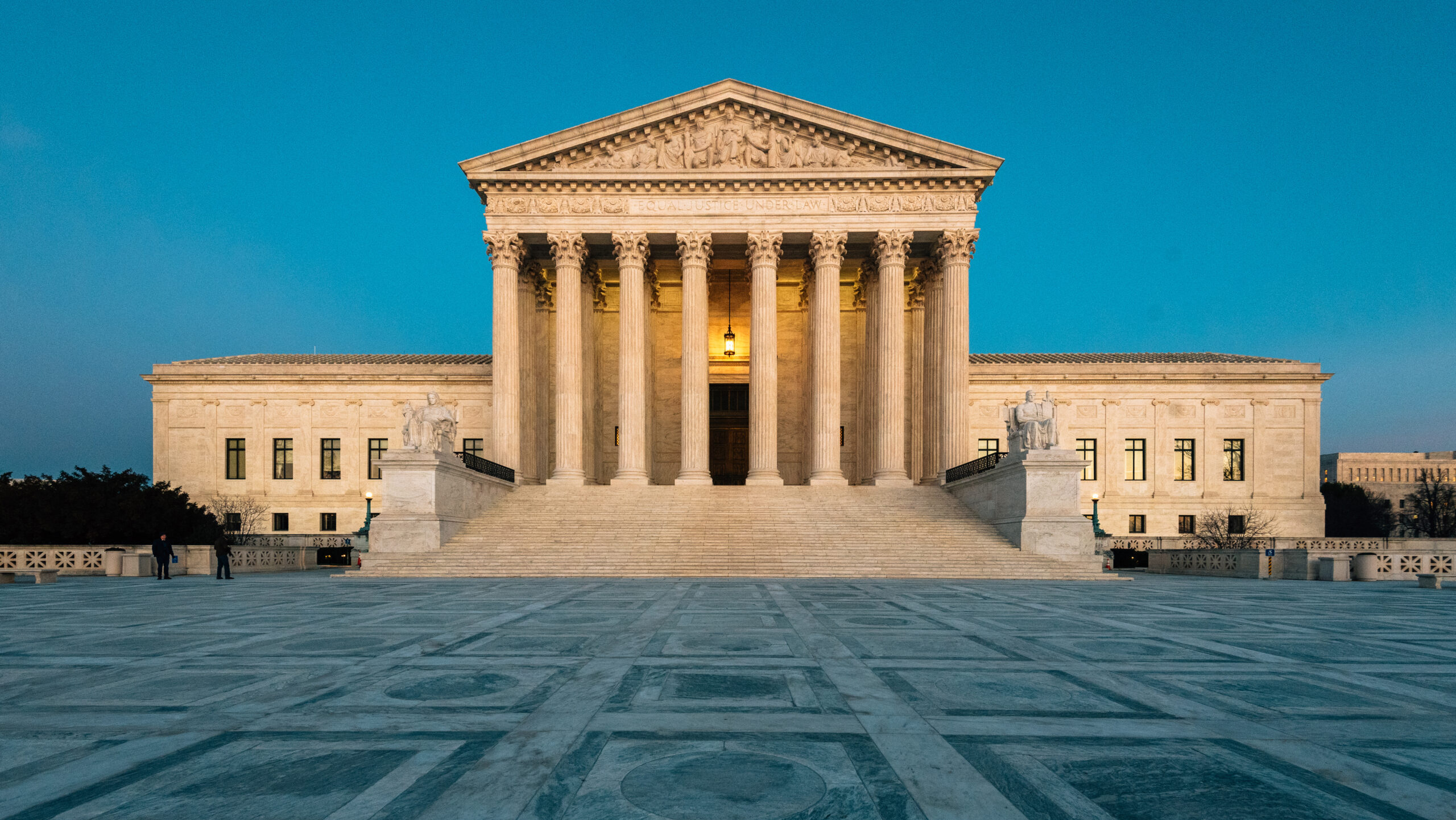
There’s no reason to take the U.S. Supreme Court seriously anymore.
Unless some changes are made, the current incarnation of the court has removed all appearance of apolitical adherence to the law and has become nothing more than another partisan government tool available to shift the balance of power depending on the party that controls the selection process of the majority.
Monday’s decision – another cowardly, ludicrous shadow docket act – is one of the worst in the history of the American legal system. Because of its blatant, inexplicable partisan tilt and unjustifiable departure from the precedent this same court set just a few days earlier.
Let’s run through a few facts.
- A three-judge panel in a lower court ruled in 2021 that maps created by the Alabama Legislature were “illegal racial gerrymanders.” (Their words.)
- The panel ordered Alabama lawmakers to redraw the maps.
- The lawmakers appealed.
- This same Supreme Court heard the case. It agreed in 2023 with the lower court: The maps created by the Alabama lawmakers illegally diluted the Black vote.
- The three-judge panel again ordered Alabama lawmakers to redraw the maps and create a second congressional district in which minority voters had an opportunity to select a candidate of their choice.
- Alabama lawmakers defied the court, choosing instead to draw up an even more racist map.
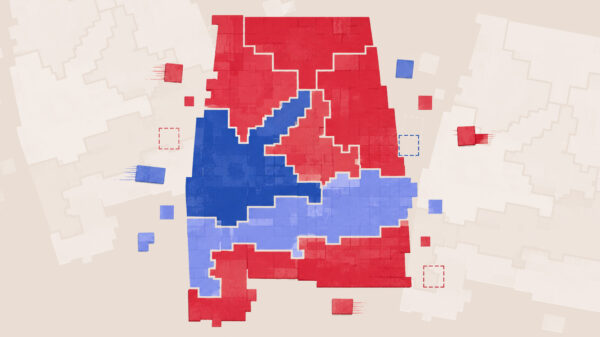
- The federal court refused to accept that map and ordered a special master to draw the new map. It created a new CD2, which wasn’t a majority-Black district but did allow Black voters an opportunity to elect a candidate.
- Alabama challenged that map.
- This same Supreme Court said that map was good, that it did not rely too heavily on race.
- The lower court agreed. Eventually, even the state of Alabama agreed that the new map was not an illegal racial gerrymander. The maps were used in the 2024 elections.
That brings us to last week and the decision by the Supreme Court in Louisana v. Callais. That case dealt with a challenge by Louisiana Republicans that said a federal court’s redrawing of a congressional district in that state was unconstitutional because it relied too heavily on race when attempting to correct the original racial gerrymandering that had occurred. (If that hurts your brain, it should. Because none of this is being done in good faith by decent people. It’s all a shell game meant to get us to a point where white Republicans have power.)
Anyway, none of that case involves any of the specific points of contention in the Alabama case decided back in 2023. Alabama had illegally racial gerrymandered its congressional districts – remember, everyone agreed on that, including the Supreme Court – and a special master appointed by the court had redrawn those maps in a manner which didn’t constitute an improper racial gerrymander – again, everyone also agreed on that.
And then there was this one other issue.
Back in 2022, after the federal court had initially found that Alabama’s voting maps were illegal and ordered new maps to be drawn, the first action at the Supreme Court was an emergency stay request. It sought to halt the order, in part, because the new maps would be put in place too close to an upcoming election. That argument relied on something called the Purcell principle, and it basically says that federal courts are not to intervene substantially in a state’s elections too close to the election date. Justice Brett Kavanaugh actually cited Purcell in his concurring opinion in the case.
Because the Supreme Court did block the new maps, allowing Alabama to use maps deemed illegal racial gerrymanders in the 2022 election cycle. That ruling came down in February. The state’s next elections that couldn’t be disturbed were scheduled for June.
Now, remembering all of the bullet points from above and the Purcell explanation, let’s run quickly through what the Supreme Court did on Monday.
It overruled itself, tossing out a map drawn by a federal court-appointed special master that the Supreme Court – with all the same justices – had said did not rely too heavily on race and was actually a model for how efficiently districts could be drawn. It allowed Alabama to reimplement maps that it has already itself ruled were illegal racial gerrymanders and that improperly dilute the Black vote. And it did all of that less than two weeks from statewide elections in Alabama.
As I type this late on Monday evening, no one in this state knows how we’re going to handle this. What it means for the new districts. What it means for the candidates involved. What it means for the thousands of ballots that have already been cast.
But we all do know one thing for damn sure: The John Roberts Supreme Court, with its conservative majority, has proven itself to be nothing more than an arm of the Republican Party, perfectly willing to overlook all precedent, ethics and judicial norms to ensure that the GOP retains power by any means necessary.
And unless we make significant changes to the makeup of the highest court, the damage done is deadly. It will begin a cycle in which the party that manages to appoint the majority will have a green light to shape American law on the basis of political beliefs instead of legal doctrine.
In which case, there’s no reason to even have a supreme court.