










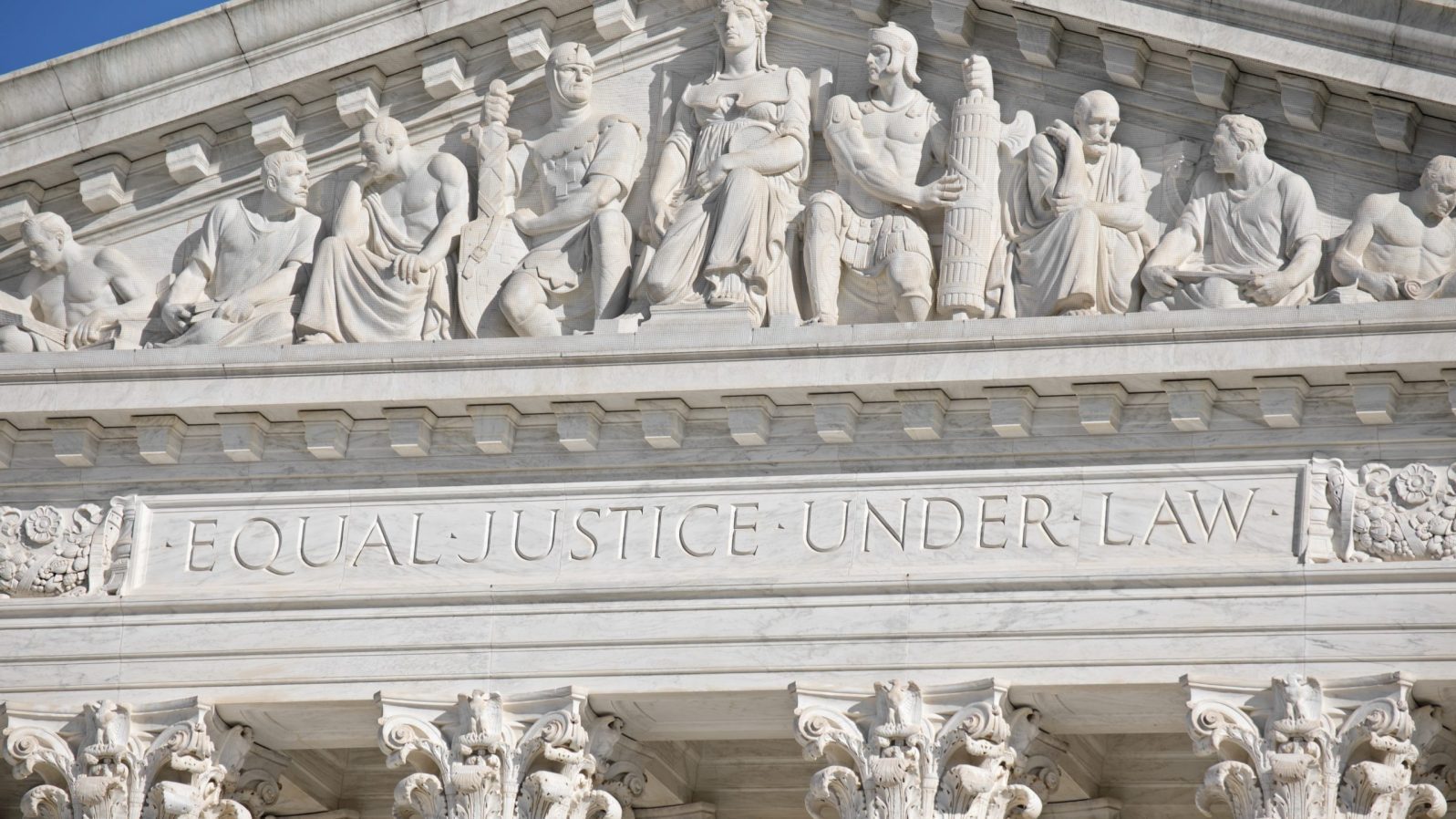
Congressional candidates and representatives both praised and denounced the U.S. Supreme Court’s Monday ruling, which reversed prior rulings and injunctions against Alabama’s congressional maps.
The court granted the a lower court authority to rehear Allen v. Milligan, the case that struck Alabama’s proposed 2023 congressional district map for racial gerrymandering, in light of the high court’s Louisiana v. Callais decision.
Unless the three-judge panel rules again rules against Alabama’s proposed map, the 2021 districts drawn by the Legislature will be used for 2026 congressional elections.
In response to the verdict, Gov. Kay Ivey on Tuesday set special primary dates for districts impacted by the decision for Aug. 11, 2026.
The court’s decision, which was met with celebrations from multiple state Republican leaders, has already directly impacted the placement of candidates in Alabama’s southernmost congressional districts, should the federal court rule in favor of the state’s 2021 map.
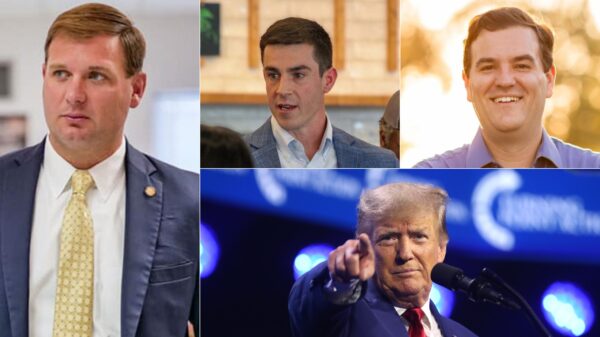
State representative and congressional candidate Rhett Marques, who on Monday described the verdict as delivering “a victory to Alabama voters,” announced that under the 2023 maps, he will now be a candidate for the state’s 2nd Congressional District.
Marques, who until now has run a 2026 campaign for the District 1 congressional seat set to be vacated by U.S. Rep. Barry Moore, R-Ala., celebrated that the court’s ruling will place him back in District 2, if the lower court upholds the map it has previously struck as lawful.
“Under the new maps, I am a candidate in District 2, and I am running hard to be the next Congressman from this district to deliver President Trump’s agenda by supporting Senator Britt and the rest of the Alabama delegation in making life more affordable for hardworking Alabama families and fighting tirelessly for our Christian conservative values,” Marques wrote.
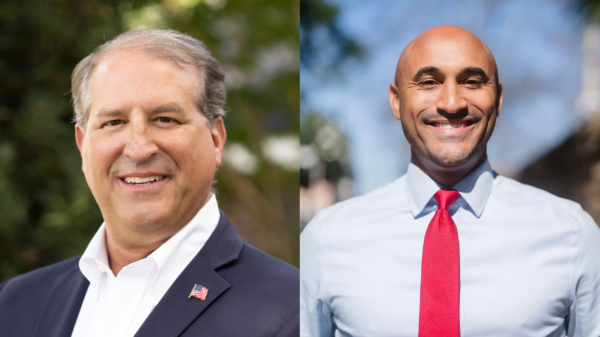
Former U.S. representative and District 1 candidate Jerry Carl also championed the Supreme Court ruling in a statement released on Tuesday, calling the ruling “a massive victory for the State of Alabama as a whole.”
“Following yesterday’s HUGE decision by the Supreme Court of the United States, I will continue to be a candidate for the Republican nomination in Alabama’s First Congressional District,” Carl wrote. “I will continue to campaign on my conservative record, my resume, and my commitment to serving you in Washington to help pass President Donald Trump’s America First agenda!”
Since the Callais verdict, both Marques and Carl have issued calls on social media for Alabama to enact a 7-0, all Republican congressional map.
The court’s verdict, meanwhile, was met with immediate opposition from the state’s two Democratic U.S. lawmakers, U.S. Rep. Shomari Figures, D-Ala., and U.S. Rep. Terri Sewell, D-Ala.
Figures, whose district conservatives have called to be returned to Republican leadership, described the decision as setting the stage for the state’s Black political representation to be reduced to pre-VRA levels.
“This is an incredibly unfortunate decision by the Supreme Court that not only continues their trend of breaking from the norms and precedents set by the Court, but also sets the stage for Alabama to go back to the 1950s and 60s in terms of Black political representation in the state,” wrote Figures.
“The conservative justices on the Supreme Court just literally substituted themselves in to be the defense lawyers for the State of Alabama,” the representative continued. “The Court just gave the state the benefit of an argument the Supreme Court acknowledged just a week ago that the State did not even present in defending its maps.”
Figures emphasized that litigation of the case will continue, as well as his hope that the panel will again find the state’s congressional map proposal to be discriminatory.
“My hope is that this is a temporary setback and that three-Republican appointed judges will again find what they found the first time: that the State of Alabama intentionally discriminated against Black voters in drawing its congressional district lines,” he wrote.
“I ran for this seat to be a voice for all of Alabama, and I’m not backing down from that mission now. The fight must and will go on. Beyond the courts, we know what has to be done. We will organize, we will register, and we will turnout people in record numbers at the polls,” Figures added.
U.S. Rep. Terri Sewell, D-Ala., described the verdict as “a stunning departure from legal precedent and another direct attack on Black voters in Alabama.”
Sewell condemned the verdict’s impact on Alabama’s primary dates on Tuesday, a week before the state’s originally scheduled May 19 primary elections.
“We are one week away from Alabama’s primary elections. Numerous voters have already cast absentee ballots,” Sewell wrote. “Yet the State of Alabama is charging ahead with NEW ELECTIONS, sowing confusion among voters and wasting taxpayer dollars in their effort to suppress Black representation. The people of Alabama deserve better!”
Following the verdict on Monday, the representative condemned the Supreme Court as having “injected needless chaos and confusion into an election that has already begun while rewarding state officials who openly defied court orders in bad faith.”
“This fight is not over. Black Alabamians have fought too hard and sacrificed too much to be dragged backward by extremist politicians and an activist Court,” Sewell stated.
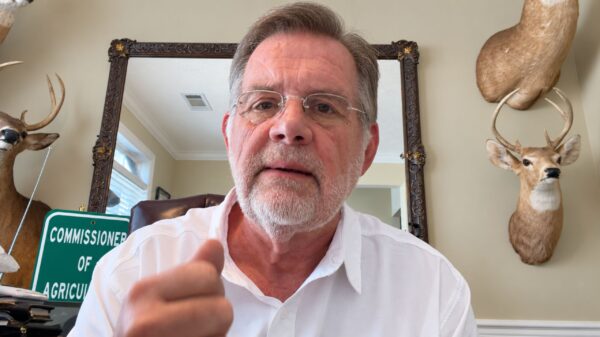
The decision has received additional opposition from Alabama Democratic congressional candidates, including District 5 hopefuls Andrew Sneed and Jeremy Devito, as well as District 3 candidate Lee McInnis.
“There is no precedent in this country. This doesn’t happen in a nation with a robust democracy,” wrote McInnis on Tuesday.
“Today’s ruling by the Supreme Court is grievous and indefensible, which may explain why the Court gave no rationale or justification for their decision,” Sneed said in a statement sent to APR on Tuesday.
“The dissenting opinions show clearly why the injunction should not have been vacated. The Court’s prior decisions have eviscerated Section 2 of the Voting Rights Act and now guarantees that we will see ongoing efforts to racially gerrymander districts across the nation,” the candidate added.
Sneed described the verdict as demonstrating the need for congressional reform and new legislation to reinforce the protections of the VRA.
“But that’s exactly why I’ve said we need Congress to be Congress again, and for Representatives to have the courage to stand up for their constituents- all of them,” he stated. “Congress must take immediate action and pass legislation to strengthen the Voting Rights Act, especially Section 2, to ensure that Black voters have equal opportunity to elect the candidates of their choice.”
Sneed vowed to fight for legislation to ensure “the vote and voice of every group is protected,” should he be elected to Congress.
“That is the spirit and function of the Voting Rights Act. We must honor it and its champions by voting and striving for a more perfect union every day,” the candidate added.
Devito similarly condemned recent gerrymandering debates, describing rhetoric surrounding redistricting as “the clearest evidence yet that institutional racism still exists in this country.”
“These power structures were never designed to willingly give up control. They are not going to do the right things for the right reasons — they will have to be challenged, legislated, and held accountable,” Devito wrote.