
























The U.S. House of Representatives passed the 2026 Farm Bill on Thursday, with Alabama lawmakers splitting on the measure along party lines.
The $390 billion measure, which reauthorizes major food and agriculture programs for the next five years, saw all of Alabama’s Republican U.S. representatives vote in its favor Thursday morning, while receiving “nays” from the state’s two congressional Democrats.
The successful vote marks the farthest the Farm, Food, and National Security Act has advanced since Congress passed its last farm bill in 2018. The legislation, which has historically been bipartisan and released every five years, has stalled in recent years due to debates surrounding issues including environmental and hemp product regulations, as well as Supplemental Nutrition Assistance Program funding.
Following the vote, U.S. Representative Barry Moore, R-Alabama, celebrated the bill’s passage in the House over social media, highlighting constituent farmers’ calls for updates to the 2018 version.
“The farmers are hurting, and so, for us to get a farm bill done is quite incredible,” said Moore. “As an ag committee member, I’m excited to see we’ve got this in place for five years to help our farmers.”
Moore highlighted and expressed support for the bill’s addition of rotisserie chickens to foods eligible for purchase with SNAP benefits and the removal of certain environmental regulations on tractors and other heavy equipment.
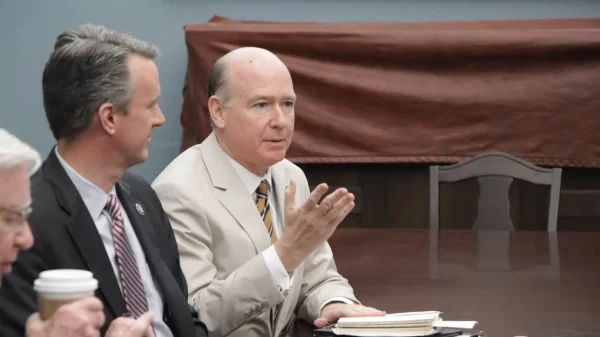
“Proud to have voted ‘Yes’ for the Farm, Food, and National Security Act of 2026. The Farm Bill delivers real wins for America and Alabama’s farmers and rural communities,” wrote U.S. Representative Robert Aderholt, R-Alabama
U.S. Representative Dale Strong, R-Alabama, described the legislation is “grounded in the real needs of farm country and delivers the certainty and modern policy our producers deserve.”
“Farmers and ranchers have been clear: we need a new farm bill,” Strong stated. “I am proud that this bill will restore certainty and stability for farmers, ranchers, and rural communities. For too long, producers in North Alabama have faced rising costs, volatile markets, and outdated policies that no longer reflect the realities of modern agriculture.”
“This bill strengthens risk management tools for specialty crop producers, expands access to credit, and promotes precision agriculture that reflects how farming is actually done today—the kind of forward-looking, practical policy our farm families need to stay competitive,” the representative continued.
U.S. Representative Terri Sewell, D-Alabama, alongside U.S. Representative Shomari Figures, D-Alabama, in statements explaining their votes against bill, both cited its failure to restore $187 billion in SNAP funding cuts made by the One Big Beautiful Bill Act and their concerns the legislation doesn’t do enough to assist farmers being impacted by inflation and tariffs.
While voicing support for the inclusion of rotisserie chickens as SNAP-eligible items, Sewell decried the legislation as failing Alabama families by allowing the U.S. Department of Agriculture to move ahead with cuts and reforms made to SNAP by the OBBBA.
“Despite our successful efforts to secure provisions that would benefit rural Alabama, House Republicans have made it impossible for me to support this Farm Bill by continuing their cruel cuts to SNAP,” Sewell said. “At a time when so many Alabama families are already struggling with rising grocery costs, I cannot support a bill that would continue [to] take food out of the mouths of hungry children, seniors, and veterans.”
The representative went on to condemn the bill for not taking steps to address inflation or support farmers who have suffered financially because of Trump administration tariffs.
“This version of the Farm Bill rubberstamps Trump’s reckless tariffs and his war on Iran which are hurting Alabama farmers and contributing to the soaring price of food, energy, fertilizer, and farming equipment,” Sewell stated. “I hope that my Senate colleagues will remove these cruel cuts to food assistance so that I can support a strong, bipartisan Farm Bill that meets the needs of Alabama’s farmers and working families.”
Farm bill provisions secured by the representative include the Rural Decentralized Water Systems Reauthorization Act, introduced in March by Sewell and U.S. Representative Mike Rogers, R-Alabama The act would reauthorize a USDA grant program Sewell originally secured in the 2018 farm bill, providing funding to help low- and middle-income families install or upgrade their wastewater systems in areas where connecting to a municipal line is not feasible.
The 2026 version of the act would expand access to the grant program, allowing those who earn up to 80 percent of the Median Non-Metropolitan Household Income level to be eligible for the grants, instead of the previously enacted 60 percent or lower eligibility requirement.
The bill included Sewell’s SAWMILL Act, which the representative’s office wrote “will bring more resources for rural forestry processing to Alabama’s 7th Congressional District.”
The farm bill also includes provisions expanding research funding at 1890 Land Grant universities, reauthorizing scholarships for land grant institution students, and authorizing expansion of the institutions’ agriculture and food sciences programs.
“I could not a support this Farm Bill because it doesn’t do enough to help our farmers or rural communities,” Figures told APR in a written statement following the House vote. “While farmers in Alabama are struggling to keep up with input costs and make ends meet, the Trump administration has driven fuel prices up for farmers due to their unnecessary war in Iran, crippled farm country with the Trump tariffs, and gave Argentina $20 billion bailout, while leaving American farmers out in the cold.”
“Republicans could’ve addressed all of these things in this Farm Bill but chose not to. I am disappointed that this bill is not as strong as it could be because we have an obligation to protect and support our farmers and rural communities. Instead, this farm bill largely ignores the pressing needs of farmers and rural America,” the representative continued.
The 2026 Farm Bill will now advance to the U.S. Senate.