



















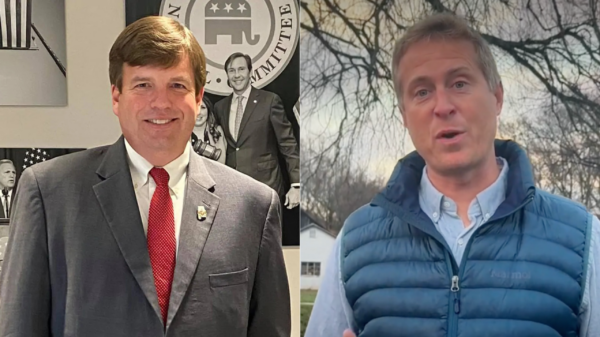

Alabama’s political and legal battle over race, representation and redistricting intensified Monday after a federal judge refused Secretary of State Wes Allen’s emergency attempt to halt the court-ordered State Senate map currently governing Alabama’s 2026 elections.
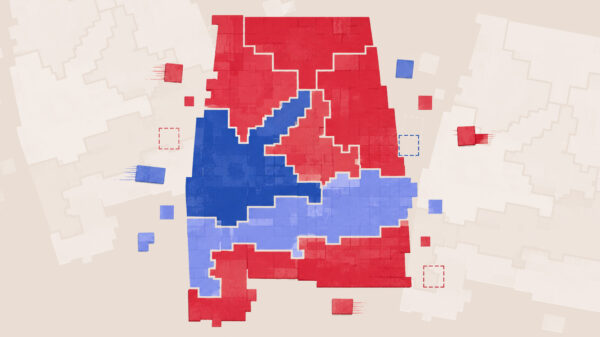
The ruling by U.S. District Judge Anna M. Manasco leaves in place the remedial Senate map imposed after the court determined Alabama’s 2021 Senate redistricting plan unlawfully diluted Black voting strength in the Montgomery area.
But the decision reaches far beyond two Senate districts in Montgomery.
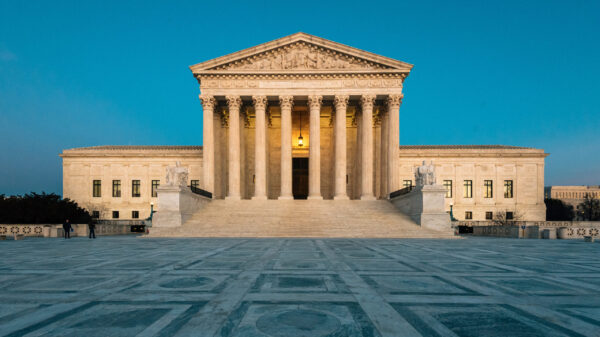
It arrives as courts across the South grapple with the fallout from the U.S. Supreme Court’s recent ruling in Louisiana v. Callais, a decision widely viewed as potentially reshaping how Section 2 Voting Rights Act claims are evaluated nationwide.
Allen argued the Supreme Court’s Callais ruling significantly altered the legal framework governing racial vote dilution claims and justified immediate intervention by the district court. In filings, Allen contended the Supreme Court had “update[d] the Gingles framework” and “realign[ed] it with the text of §2 and constitutional principles.”
For many conservative legal advocates challenging race-conscious districting remedies, Callais represents an opportunity to revisit years of Voting Rights Act precedent that produced court-ordered districts designed to protect minority voting strength. For civil rights organizations, however, the ruling has intensified fears that longstanding federal protections against racial vote dilution are steadily narrowing under an increasingly conservative Supreme Court.
Manasco, however, did not directly address whether Allen’s legal arguments would ultimately succeed.
Instead, the ruling focused almost entirely on jurisdiction and the limits of the district court’s authority once a case is under appeal.
Under longstanding federal precedent, district courts generally lose control over matters already before appellate courts once an appeal is filed. Because Allen previously appealed the injunction to the Eleventh Circuit Court of Appeals, Manasco ruled the district court no longer possesses authority to vacate or stay the order.
“As things now stand,” Manasco wrote, “only the Eleventh Circuit can address the merits of the Secretary’s arguments for vacatur or stay.”
The opinion repeatedly emphasized preserving the “status quo,” a principle courts often rely upon when elections are already underway.
In practical terms, Manasco’s ruling reflects a reality courts are typically reluctant to disturb: Alabama is already conducting elections under the remedial map. Candidates qualified under it. Campaigns organized around it. Voters are preparing to cast ballots under it. Altering district lines now could inject confusion and instability directly into an active election cycle.
That concern closely parallels the Supreme Court’s so-called Purcell principle, which discourages courts from making major election changes close to elections because of the risk of voter confusion and administrative disruption. While Manasco did not formally base her decision on Purcell, the reasoning underlying the opinion strongly reflects those concerns.
The remedial Senate map itself was narrowly tailored.
According to earlier findings by the court, the revised plan redraws only Senate Districts 25 and 26 in the Montgomery area while leaving “97.6 percent of Alabama voters in the same districts” established under the 2021 map.
The court previously described the remedial plan as a “race-blind court-ordered map” while emphasizing that it respected traditional districting principles, remained reasonably compact, split fewer municipalities than Alabama’s original plan, and corrected what the court determined was unlawful dilution of Black voting strength.
That distinction has become increasingly important as redistricting fights across the country evolve into broader constitutional battles over the role race can play in drawing political boundaries.
The ruling now shifts attention squarely back to the Eleventh Circuit, which had earlier paused Allen’s appeal pending the Supreme Court’s decision in Callais before later returning limited jurisdiction to the district court to consider Allen’s emergency request.
Ultimately, Manasco concluded the district court could not interfere with an appeal already actively moving through the federal appellate system.
“This Court does not understand that any procedural rule permits it to interfere in the merits of a pending appeal in this way,” she wrote.
For now, Alabama’s 2026 State Senate elections will proceed under the court-ordered map.
But beneath the procedural fight lies a much larger question — one federal courts increasingly appear divided over:
How far can states go in drawing political power before race, representation, and the Voting Rights Act collide with a rapidly changing constitutional doctrine?
The final answer may ultimately come from a U.S. Supreme Court that continues reshaping the rules governing American democracy itself.