
















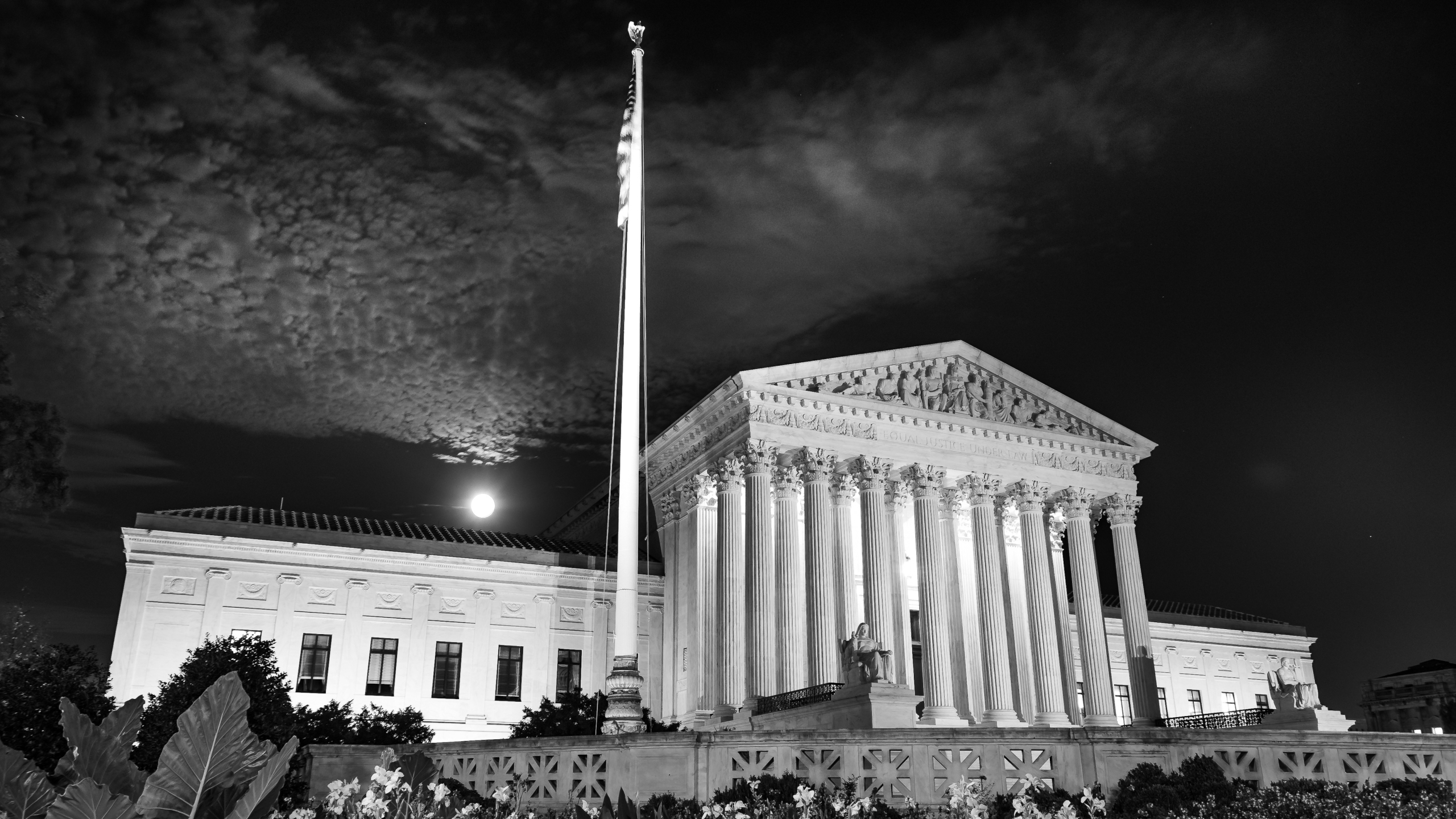
Following the U.S. Supreme Court’s Tuesday ruling allowing Alabama to use a congressional map that eliminates a Black opportunity district, Southern voting rights advocates hosted a national press call Wednesday decrying recent redistricting battles across the region as threats to minority representation.
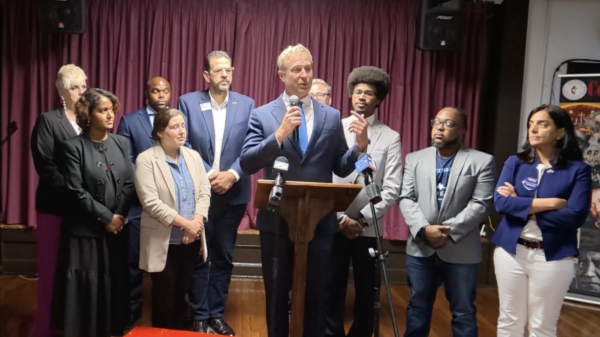
Southern Leadership for Voter Engagement, or SOLVE, hosted the panel in partnership with Groundwork Project. The panel brought together voting rights advocates from across the South to discuss recent redistricting battles following the Supreme Court’s ruling in Louisiana v. Callais.
The Callais ruling required lawsuits challenging district maps under Section 2 of the Voting Rights Act to prove intentional discrimination. Previously, plaintiffs were required to show that a state’s districting diluted minority voting power in practice.
The Supreme Court and the Northern District of Alabama previously ruled in Allen v. Milligan that Alabama’s 2023 Legislature-drawn congressional map intentionally diluted Black voting power in the state and that the state’s Black population required at least one Black majority district and one Black opportunity district. But the Supreme Court’s Tuesday decision will allow Alabama to proceed with the 2023 map for its 2026 elections.
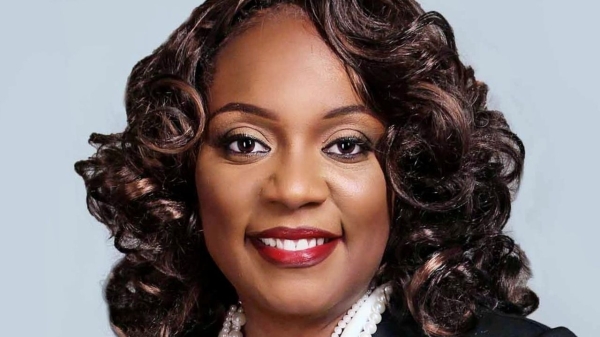
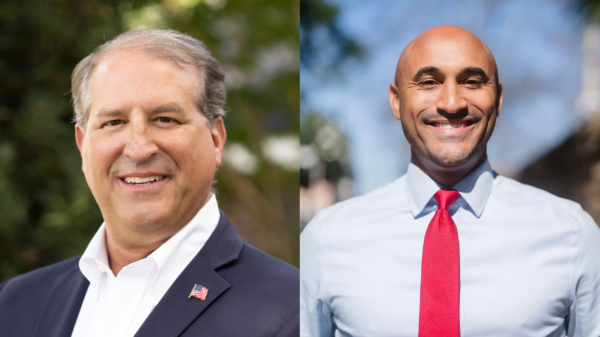
Joe Kennedy III, founder of the Groundwork Project, moderated the event. Panelists included Anneshia Hardy, executive director of Alabama Values; Jaunica Fernandes, executive director of State Voices Florida; Nsombi Lambright, executive director of OneVoice; Matia Powell, executive director of Civic Tennessee; and Cree Matlock, director of government affairs and policy at Power Coalition for Equity and Justice.
“The stakes here are not political. They are deeply human,” Kennedy said of Southern redistricting battles.
“The states that these leaders represent, their regions where Groundwork operates, they face the highest rates of poverty, incarceration, oppression,” he said. “The consequences of failing to protect justice, equity and democracy, they are not theoretical in these communities. They are lived every single day, into what makes this fight so critical.”
Hardy opened the panel discussion by arguing that redistricting debates in Alabama are “not simply a fight over maps” or purely partisan conversations.
“This is a fight over power, over our humanity, over representation,” Hardy said. “Whether Black communities in Alabama can really turn our numbers, our civil participation, our organizing, our lived experiences, you know, into real representation.”
Hardy described the Republican push to enact the state’s 2023 map, which features a Republican-majority 2nd Congressional District, as a contemporary iteration of ruling state politicians’ “white supremacy and anti-Blackness.”
“When I say white supremacy, I want to be clear that I’m not talking about the narrow, mainstream definition that focuses only on individual acts of hatred and extremist groups,” Hardy said. “I’m talking about white supremacy as a system, as an ideology, and a culture—one that has shaped institutions, policies and political decisions, and, you know, in ways that consistently concentrate power and resources while limiting the political voice and representation of Black communities.”
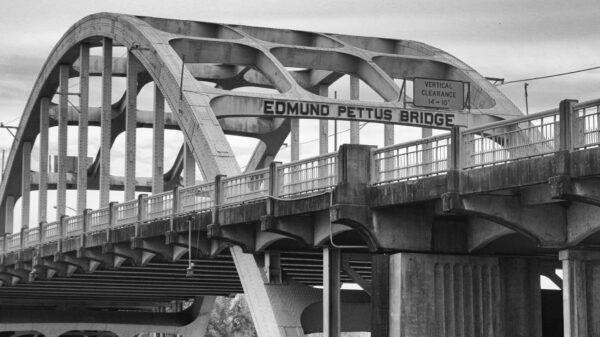
Hardy pointed to Alabama’s 1901 constitutional convention, held after Reconstruction, when state leaders declared their intent to restore political power to white Alabamians.
“It’s important for us to understand that the methods have changed over time. But the patterns remain familiar,” Hardy said. “And that is the through line from Jim Crow, to Shelby, to Milligan, to Callais.”
Hardy emphasized that while the Supreme Court allowed Alabama to use its Legislature-drawn 2023 map, the unsigned majority opinion did not refute the arguments of the Milligan plaintiffs.
“It’s important to name for folks what the court did not do. The court did not say that the Milligan plaintiffs had no valid Section 2 claim. The court did not say that there’s no 14th Amendment concern,” Hardy said. “It did not erase the lower court’s findings. It did not erase the evidence. It did not erase the years of testimony, and litigation and just documentation showing how Alabama has continued to dilute Black voting power.”
“And that should trouble every person who claims to care about democracy, because when courts begin treating state power as more trustworthy than people harmed by that power, we are in a dangerous territory,” Hardy said.
Alongside the immediate impacts of the Supreme Court’s Callais and Milligan rulings on states such as Alabama, Tennessee, Louisiana, Mississippi and Florida, panelists discussed their programs to educate and engage voters as mid-cycle redistricting has caused uncertainty for many citizens across the South.
Panelists, including Hardy and Matlock, described redistricting special sessions across the South as creating voter confusion in an attempt to suppress minority voter turnout.
“It was just a mass confusion, amounting, in my opinion, to voter suppression,” Matlock said of Louisiana’s 2026 special session and congressional primary elections, which she said were upended for absentee voters by the Legislature’s redistricting push.
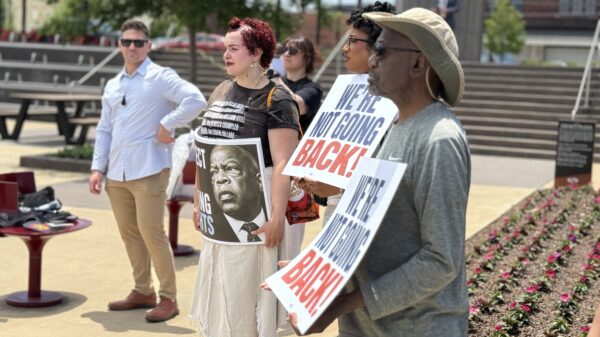
Speakers said demonstrations in Alabama and Louisiana drew large crowds to the state capitols, and Black voter engagement has increased since the Callais ruling.
Hardy said Alabama Values, in partnership with nonprofit organizations such as Alabama Forward, has attempted to drive voter registration through programs like Alabama Forward’s Rapid Response Voter Engagement Program.
The program will seek to reach 600,000 Alabama voters over the next two months with information about registration and elections.
Hardy also said Alabama Values will begin hosting a community education event series called “Power on the Line” across Alabama, culminating in Power on the Line Weekend, beginning Saturday, August 15, in Huntsville.
Fernandes also argued for the importance of voter education initiatives and coalitions in light of redistricting efforts, emphasizing that many citizens in the South are unaware of the real-life impacts of emerging court decisions and redistricting pushes.
“[Floridians] all have a lot of different needs, but one thing that they all have in common is that most people are not sitting around reading court opinions,” Fernandes said. “They might not even know about the redistricting cases, or election law, or the hundreds of pages of legislation. They’re really busy raising their children, their working jobs.”
Fernandes said that although many Americans will hear about important court decisions such as the Supreme Court ruling on Alabama’s maps, voting rights advocacy groups must help communities affected by the decisions learn how to remain engaged in advocating for their interests.
“Civic engagement should not be reserved for people with law degrees and unlimited free time. Democracy works best when everyday people can participate,” Fernandes said. “And so, the recent decisions coming out of Alabama are a perfect example.”
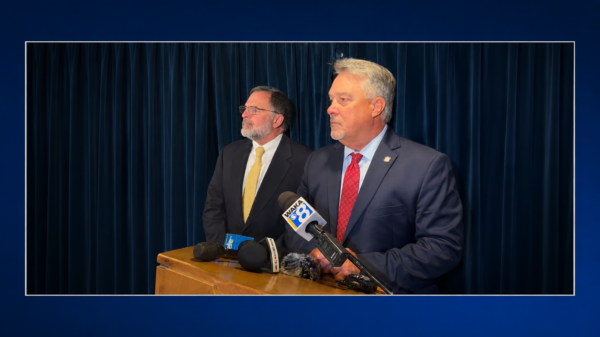
While panelists condemned the Supreme Court and state leaders for allowing the elimination of Black majority or opportunity districts, including the court-mandated version of Alabama’s 2nd Congressional District, Alabama Attorney General Steve Marshall and Secretary of State Wes Allen have argued redistricting efforts following Callais are attempts to enact “race-neutral” districts.
In their arguments to the Supreme Court, Allen and Marshall condemned the state’s court-mandated congressional map, which followed the Northern District of Alabama and Supreme Court’s previous rulings in Milligan, as an instance of racial gerrymandering.
Asked to respond to claims that Callais will allow race-neutral districting, panelists emphasized that while states may argue their proposed districts do not consider race, the states’ arguments are ultimately less important than the real-life impacts of districts that dilute minority representation.
“A policy can be race neutral in language and still produce racially unequal outcomes in practice,” Hardy said. “A country that was built on racial inequality. That inequality does not disappear because we stopped naming race. And I think that is what we need to make sure that we hit on.”