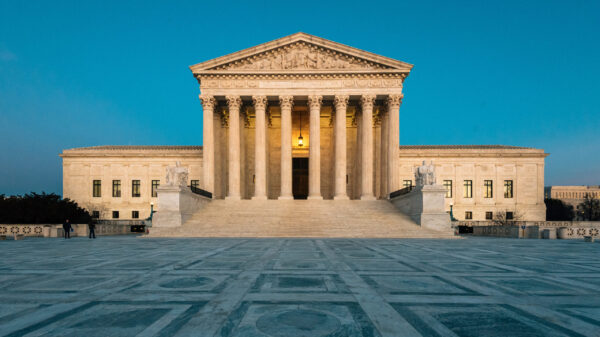















With a federal court poised to rule again on Alabama’s congressional map, the head of a national voting rights initiative has raised an alarm regarding recent Supreme Court decisions’ impacts on minority voters and democratic integrity.
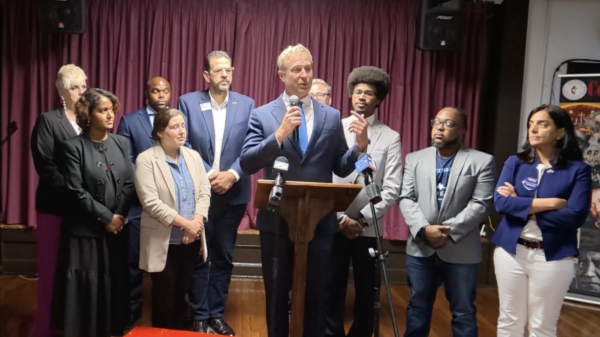
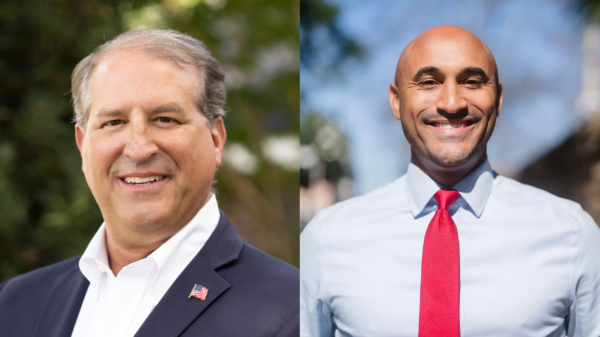
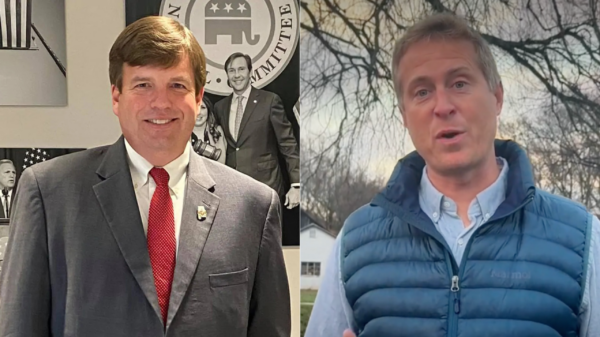
Robert Weiner, national director of the Lawyers’ Committee for Civil Rights Under Law’s Voting Rights Project, told APR in an interview last Friday that the Supreme Court’s Louisiana v. Callais verdict and resulting redistricting battles threaten to diminish minority representation across the U.S. and will make partisan gerrymandering more difficult for individuals to challenge in court.
As ordered by the Supreme Court, the Northern District of Alabama will reconsider its ruling in Allen v. Milligan in light of Callais on May 22.
The court previously blocked Alabama’s use of the legislature’s 2023 congressional map, declaring that the districts dilute Black voting power in the state and that the map was racially discriminatory.
Despite the court drawing distinctions between the facts of Callais and those of Milligan in its majority opinion and clarifying that it did not overrule Milligan, the court called on the lower court to reconsider its previous rulings against Alabama’s congressional maps last Monday.
Weiner, describing the impact of the Callais verdict, argued the decision is a continuation of the Supreme Court’s weakening of the VRA, highlighting the court’s 2013 ruling in Shelby v. Holder, which struck down federal preclearance requirements for jurisdictions with a history of racial discrimination to change their voting laws.
“Now the other shoe is dropped in Section 2, 13 years later,” he said.
Prior to the Callais decision, Section 2 held that VRA complaints were required to demonstrate that a map undermined equal voting power, whether or not states intentionally discriminated against a particular group. Weiner described the Callais verdict as making it more difficult for organizations and individuals challenging district maps in court to prove a map is discriminatory.
“You can’t just show a denial of equal opportunity, you have to show that it was done with intent, right, to discriminate,” he said. “It’s important in voting rights litigation because proving intent in court is hard.”
“It’s very hard, and proving that something is not partisan is also hard. There are ways to do it,” Weiner added. “We’ve done it with statistical analysis, but, you know, it makes it much more difficult for us to protect the voting rights of people around the country.”
When asked to describe his organization’s concerns about the verdict’s potential impacts, the Voting Rights Program head said that placing additional burdens of proof on those who bring VRA suits has already had real-life impacts on how maps are drawn and will continue to fuel partisan gerrymandering battles.
“I think our ultimate concern is it makes it more difficult to protect voting rights for people of color and really for everyone,” he said.
“I can’t predict the politics of it,” Weiner added. “It gets, you know, very complicated in partisan issues, which we don’t get involved with, but I do think that the rush to redistrict shows that a lot of jurisdictions think they can get an advantage, at the expense of Black and Hispanic populations.”
Weiner went on to describe the ruling as undermining past congressional action to ensure voting rights suits were not required to prove discriminatory intent to successfully challenge a jurisdiction’s maps.
While the Supreme Court previously ruled in the 1980 case Mobile v. Bolden that VRA complaints must show intent of discrimination, Congress in 1982 passed legislation making it illegal to enforce voting practices that have a discriminatory effect, removing the requirement to prove purposeful discrimination.
Weiner described the Callais ruling as undermining Congress’s role in shaping voting rights protections, while calling on the federal and state legislatures to again consider ways to strengthen the protections of the VRA.
“The court is not providing a balanced view—a view that I think is consistent with its role as a protector of rights in a democratic system. In fact, I think the court is eroding the democratic system,” Weiner said.
“I do think it’s important to look at the full range of legislative and constitutional options to ensure that the court is fulfilling its right-protecting function,” he added.
He further described the ruling as part of the Trump administration’s “overall effort to disrupt or discredit, or undermine, the 2026 election.” Weiner explained mid-cycle redistricting efforts, such as those that have sprung up in states such as Alabama, Louisiana and Tennessee following Callais, are historically rare.
”[Mid-cycle redistricting] happened when a court had ruled that people needed to redistrict,” he said. “But, you know, this redistricting as a result of the president’s effort to get more seats for his party in Congress—I think is not healthy.”
“I hope we come out of it as a healthy democracy in the end, but it’s going to take a lot of people fighting to preserve values that are important to us,” the Voting Rights Project director added.
The Supreme Court’s decision to remand Milligan back to the Northern District has led to delayed congressional primaries in four of seven Alabama congressional districts. The state is currently under the legislature-drawn map, previously struck by the federal courts, and unless the Northern District panel again rules against it, that map will stay in place for the 2026 election cycle.
Discussing the Northern District’s upcoming reconsideration of Alabama’s congressional map, Weiner described arguments set forth in a plea for an injunction to keep the court-appointed map in place last week as “well done and reasonable,” adding that he believed the Trump-appointed panel’s previous decision finding Alabama’s congressional map was discriminatory was “very detailed and fact-based.”
Plaintiffs calling for the injunction, beyond citing the courts’ previous rulings against the legislature-drawn map, have highlighted that Alabama’s 2022 constitution bars the state from election law changes within six months prior to an election—a deadline the state legislature had passed when it began its special session, which set 2026’s delayed primaries.
“I think there’s a persuasive argument that Callais does not affect the prior ruling with regard to Alabama districts, or it ought not to affect it,” Weiner added, when asked to describe his thoughts on the court’s upcoming rehearing.
In Justice Samuel Alito’s majority opinion on Callais, he wrote, “contrary to the dissent’s assertion, we have not overruled Allen.”
While Weiner described the Callais verdict as undermining fair districting and elections, Alabama Republican leaders such as Attorney General Steve Marshall have argued that the decision will allow Alabama to enact its legislature-proposed congressional map. Marshall and state Republican lawmakers have described the remedial map that was implemented after Alabama again failed to produce a map with a Black majority and Black opportunity district in 2023 as ordered by the federal courts as instances of racial gerrymandering themselves.
The legislature-drawn map includes one Black-majority district, Alabama’s 7th Congressional District, while all other districts contain white majorities.
Before Callais, the Northern District and Supreme Court ruled that Alabama’s map needed to include an additional Black opportunity district, as Black voters in Alabama make up roughly 26 percent of the state’s voting population.
Republicans such as Marshall have now called for the state to enact a 7-0 Republican only congressional map, despite the federal courts’ previous rulings that, because of racially polarized voting, Alabama must have at least one Black majority and one opportunity district in order for the state’s Black electorate to be counted fairly.
When asked for his takeaways from recent demonstrations in response to redistricting efforts across the South, Weiner expressed support for public outcry against efforts to implement more Republican seats in light of the decision.
“People want a fairly representative democratic system,” he said. “They want to choose their representatives and not have a system that is jerry-rigged, to favor one party or another.”
The attorney urged citizens to stay informed on rulings that impact voting policies and their representatives’ stances on voting rights and to continue exercising their right to vote.
“Whether you’re liberal or conservative, Republican or Democrat, you deserve to have your vote count equally with everyone else,” he said. “I think it’s up to the American people to make sure that—and the people of Alabama—to make sure that happens.”