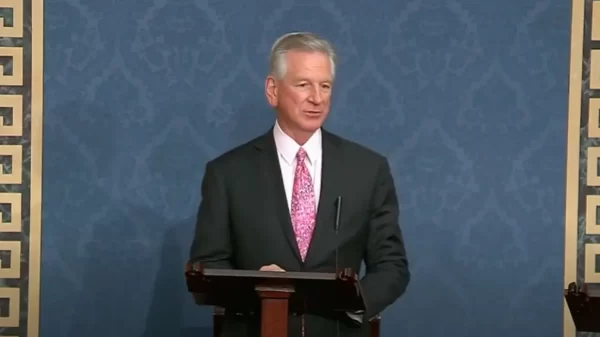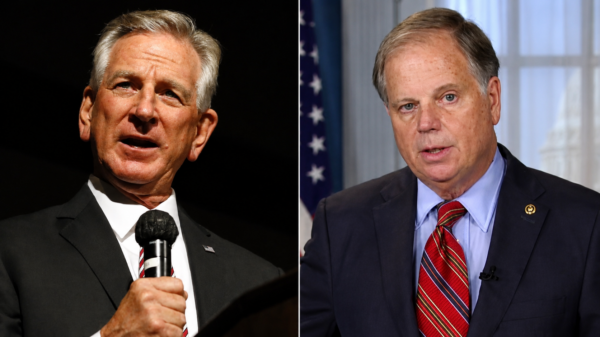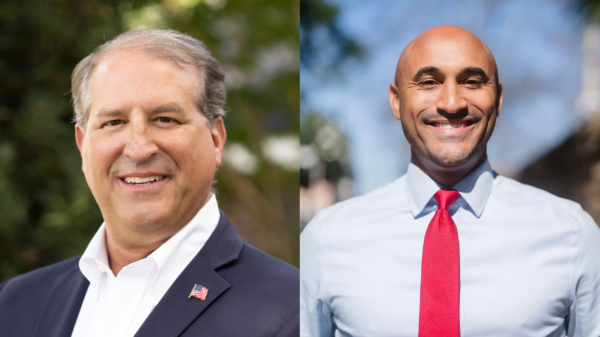






















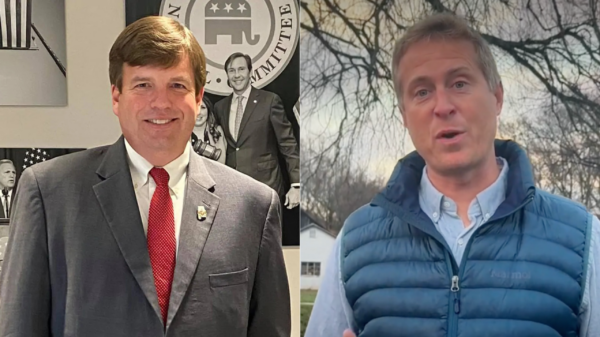

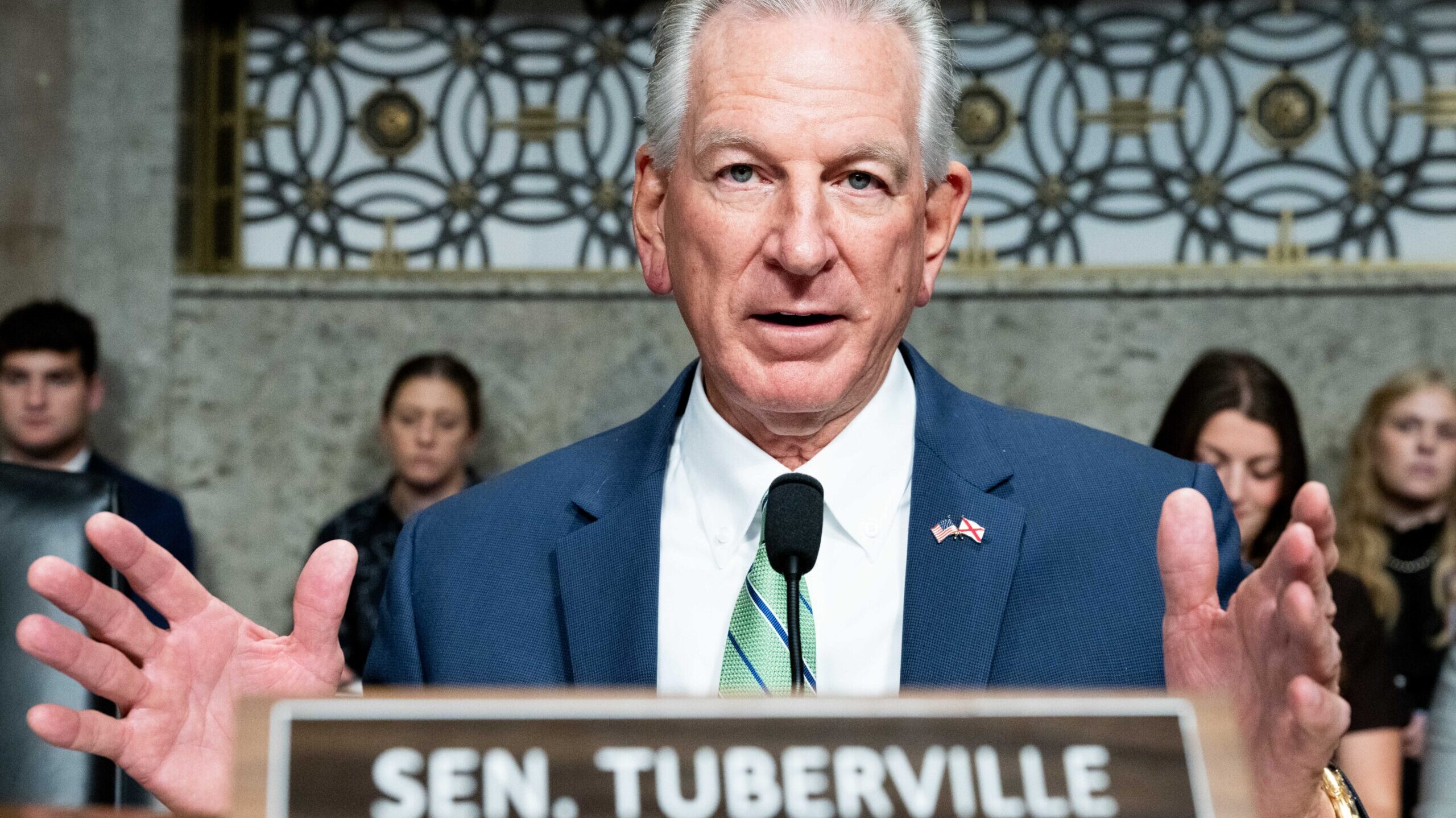
The final brief in the legal fight over Tommy Tuberville’s eligibility for governor leaves the Alabama Supreme Court with a question that reaches beyond this campaign:
Does Alabama’s Constitution have force before an election—or only after it may be too late to matter?
The answer should be simple. Legally, it is not.
Attorneys for Brooke Lynn Dorgan and Justin Jude LeBlanc filed their 23-page reply Thursday, completing the scheduled briefing. They want the justices to reverse Montgomery County Circuit Judge Brooke Reid and return the case for further proceedings, including possible discovery and a trial.
A reversal would not mean Tuberville has been found ineligible. No court has heard the residency evidence or decided whether he established an Alabama domicile by November 3, 2019, the beginning of the seven-year period required by Article V, Section 117 of the Alabama Constitution.
Reid dismissed the case on procedural grounds. The question now is whether Alabama law provides a courtroom in which the evidence may be heard.
When both sides say too much
Tuberville’s brief called the appeal “preposterous.” The challengers answer with rhetoric of their own, calling his ineligibility an “obvious and very inconvenient truth” and again describing the Republican Party proceeding as a “show trial.”
Neither side helps its case by pretending an unsettled question has already been answered.
Because Reid dismissed the lawsuit before trial, the complaint’s well-pleaded allegations generally must be viewed in the challengers’ favor at this stage. That means the court considers whether those allegations could support a claim if proven. It does not mean they have been proven.
Tuberville’s November 2018 vote in Florida after representing himself as a full-time Florida resident is significant. It makes the Republican Party’s finding that he moved to Alabama sometime in 2018 difficult to understand without further explanation.
That is not a minor discrepancy.
But the constitutional deadline is November 3, 2019. Evidence that Tuberville remained legally tied to Florida in 2018 does not establish where he was domiciled one year later. Asking him to prove his eligibility is not the same as declaring him ineligible.
The legal door the court left open
The challengers brought a quo warranto action, the procedure traditionally used to determine whether someone has the right to hold public office. Tuberville’s strongest argument is straightforward: He does not hold the office of governor. He is the Republican nominee.
Alabama’s quo warranto statute applies when someone usurps, intrudes into or unlawfully holds or exercises a public office. Tuberville says those words do not describe a nominee.
The challengers answer that a certified nominee is not simply another private citizen. Alabama courts have called the holder of a certificate of nomination a “quasi-officer.” That certificate carries a state-recognized right to appear on the general election ballot.
The Alabama Supreme Court has encountered this issue before without deciding it.
In State ex rel. Norrell v. Key, the court recognized a nominee’s quasi-officer status but declined to decide whether quo warranto could be used against one. In Johnson v. Roberson, the court again left the question open but described quo warranto against a purported nominee, combined with a petition against the appropriate election officials, as a “safe practice” for a pre-election challenge.
Later, in King v. Campbell, the court said a certificate holder’s quasi-officer status required such an action to be filed before the election.
Those decisions do not establish that quo warranto applies to a nominee. The discussion in Johnson appeared in a footnote, and King addressed when an action should be filed, not whether this particular action is authorized.
But the cases show that the challengers’ position is not preposterous. If the procedure can never be used before an election, it is difficult to explain why the court discussed bringing it against a nominee before the election.
The challengers also cite the Florida Supreme Court’s 1932 decision in State v. Fernandez, which allowed quo warranto to test a party nomination. It does not bind Alabama, but it offers a reasoned path forward.
Did the primary contest end the matter?
Tuberville’s next argument may be his strongest path to victory.
Section 6-6-598 says the validity of an election that may be contested under Alabama law cannot be tried through quo warranto. Tuberville’s eligibility was raised in a Republican primary contest, and the party found him eligible. Tuberville says that should end the matter.
The challengers do not dispute that he won the primary or that the party certified him. They ask a different question: Does the nominee satisfy the Constitution’s qualifications to be elected governor?
Winning a party nomination does not answer that question. A political party may choose its nominee, but it cannot change Section 117.
Dorgan and LeBlanc also could not have brought the Republican contest Tuberville says they should have used. Alabama law limits such contests to party members who participated in that primary. They did not.
That distinction matters, but it may not control. Section 6-6-598 asks whether the election “may be contested.” It does not say quo warranto becomes available to someone who personally could not bring that contest.
The court must decide whether this lawsuit attempts to undo the primary or separately challenges the constitutional eligibility of the nominee who emerged from it. The challengers have a credible argument that those are different questions.
The lawsuit plainly affects the election
Tuberville also relies on Section 17-16-44, which limits the power of courts to interfere in elections unless the law specifically authorizes them to act.
The challengers argue that their lawsuit does not challenge the primary or control the general election. That goes too far. If a court declares the Republican nominee ineligible, it will affect the election.
Of course it will.
Their better argument is that quo warranto provides the authority Section 17-16-44 requires.
In Veitch v. Vowell, the court permitted a constitutional challenge affecting future ballot placement. But Rice v. Chapman shows that Section 17-16-44 can apply before an election when a lawsuit seeks to remove a candidate from the ballot.
This case does not fit either decision perfectly. Like Rice, it concerns an individual candidate. Unlike Rice, it involves a qualification written into the Constitution rather than a missed statutory filing requirement.
The case therefore returns to the same question: Does quo warranto authorize a court to determine the eligibility of a certified nominee? If it does not, the challengers may have no case—regardless of the importance of the constitutional issue.
The empty chairs and the ticking clock
The challengers have a strong response to Tuberville’s claim that they lack standing. Alabama decisions recognize that private citizens may bring quo warranto in the name of the state if they follow the statutory requirements. Dorgan and LeBlanc posted the required bond.
If quo warranto applies to a nominee, they appear authorized to bring it. But Tuberville is now the only defendant.
Dorgan and LeBlanc dismissed Secretary of State Wes Allen after he argued that he did not control probate judges or ballot printing. The Republican Party, probate judges and other election officials are not parties.
The reply explains why Allen was dismissed, but not how an order against Tuberville alone would bind those responsible for the election. That matters because Johnson described a combined proceeding against the nominee and the appropriate officials.
The missing parties may be addressed if the case returns to circuit court. They also give the Supreme Court a narrow way to end this case without deciding the larger question.
Time creates another problem. Ballot preparation has begun, and the ordinary deadline for replacing a statewide nominee has passed. Tuberville says the appeal is moot. The challengers answer that they seek more than removing his name from the ballot: They want a ruling that he is not eligible to be the nominee or hold the office.
The general election has not occurred, so the court may still be able to grant meaningful relief. But the reply goes too far when it says votes cast for Tuberville “will not count” if he is found ineligible.
The case it cites, Banks v. Zippert, involved a completed election for district judge and a statutory election contest. The court held that votes cast for the ineligible candidate were legal votes but were ineffective to elect him. Because he received the most votes, the election was declared void under the statute governing that contest.
That is not the same as saying the votes did not count. Nor does Banks automatically determine the result here. Section 115 assigns a contested election for governor to the Legislature.
The court may still have power to act before the election, but the remedy is not as certain as the challengers suggest.
What the decision will—and will not—mean
The quasi-officer decisions, the procedure suggested in Johnson and the challengers’ inability to bring a Republican primary contest give the court a credible path to send the case back to Reid.
Tuberville still has serious procedural arguments. No Alabama decision squarely holds that quo warranto may be used against a nominee. The election contest statutes may block the claim, and the absence of the party and election officials may limit any relief.
A reversal would not mean Tuberville has been found ineligible. It would allow Dorgan and LeBlanc to return to circuit court and try to prove their allegations.
An affirmance would not mean Tuberville has been judicially found to satisfy Section 117. It would mean this lawsuit did not provide the correct procedure or parties to decide the question.
Hundreds of thousands of Republican voters chose Tuberville. That matters. So does the Constitution. A primary victory cannot erase a constitutional qualification, but courts cannot invent jurisdiction simply because the question is important.
Both principles are true.
The Alabama Supreme Court must decide whether state law places Section 117 in a constitutional no-man’s-land: Tuberville’s party decides before the election, the Legislature decides afterward and no neutral court ever hears the evidence.
Perhaps Alabama law requires that result. If it does, the court should say so plainly. If it does not, now is the time to open the courthouse door.
The justices do not yet have to decide where Tommy Tuberville lived. They must decide whether Alabama law allows anyone outside his own party to require him to prove it before voters choose their next governor.