
















Connect with us

Crime

Families, advocates ask Alabama to release at-risk inmates amid COVID-19 outbreak

Eddie Burkhalter

Published

on

Contributed photo

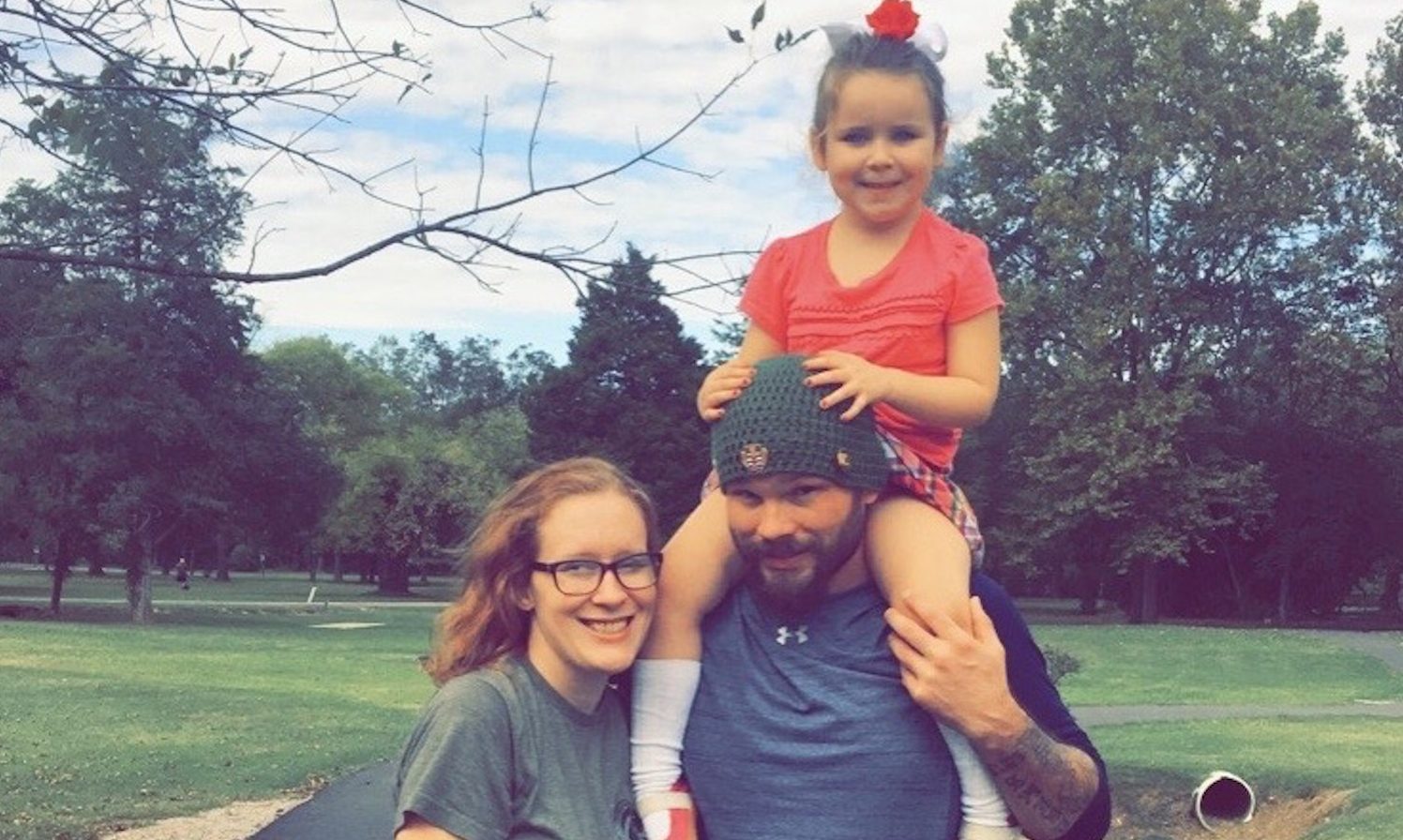
When Amber Faircloth learned Thursday of the first confirmed case of COVID-19 in an Alabama prison, she worried that her husband, who has cancer, could be in jeopardy. 

Her husband, who’s serving time at Limestone prison, is one of more than 1,000 inmates most at risk of serious complications or death if the virus spreads throughout Alabama’s prisons. 

Amber and a group of criminal justice reform advocates have asked the Alabama Department of Corrections to consider releasing inmates who are more at risk from the virus, but the department told APR on Friday that for now, there are no plans to do so. 

Justin Faircloth just had a second round of chemotherapy Wednesday and was told by a doctor before treatments began that his stage-4 colon cancer could take his life within six months. 

“We might as well kiss this world goodbye if it gets in here,” Justin Faircloth said in a phone interview with APR on Saturday, speaking of the virus.

He’d undergone a previous round of chemotherapy before being arrested in December on a probation revocation charge, and once in the state’s custody those treatments stopped, AL.com’s Connor Sheets reported in February   

Treatments have since restarted, but Amber worries that his liver is so damaged and his immune system so weak that he’d surely die if infected with the novel coronavirus that causes COVID-19. She’s asking that he and others in his condition be released before an outbreak occurs. 

ADVERTISEMENT

“Even a common cold can put him in the hospital,” she said. “And it’s not just him.” 

ADOC has a large population of older inmates, and many with serious medical conditions, which experts say puts them at much greater risk for complications and death from COVID-19. The tight quarters and overcrowding in Alabama’s prisons — for which the state has repeatedly been reprimanded by federal courts and the DOJ — make them a particularly dangerous place for a COVID-19 outbreak.

Her husband was in the infirmary Thursday night, she said, but it was so crowded that he had to sleep with two other inmates, inches apart, in what inmates call a “boat,” which are plastic stackable bunks that rest on the floor. 

“He’s on a chemo pump, and he’s on the floor,” Amber said. “That’s inhumane and unsanitary.” 

Public Service Announcement

On Friday, he was moved back to the general population, where the men sleep in cramped, open dormitories close to one another. Prisons are perfect environments for rapid viral outbreaks, health experts say. 

“We’re in such close quarters. We use the same toilets. We use the same sinks. We touch the same handles on the microwave and the same remote controls,” Justin said, adding that correctional officers are just as worried about a breakout inside the prison as the inmates.

Justin said inmates are given the same lye soap bars they’ve always gotten, but said he’s not seen any instructional material to let inmates know about the danger of the virus or how to protect from it.

Justin’s criminal history shows signs of years of struggles with drug addiction. The 34-year-old has been arrested for drug possession, theft, resisting arrest and burglary. 

“I ended up relapsing and did commit a crime,” Justin said. “But I should be able to wear an ankle bracelet or something. Be monitored from my house.”

An administrative employee at a state prison tested positive for COVID-19, and all staff who came into contact with the person are under a 14-day quarantine, the Alabama Department of Corrections announced Thursday. ADOC hasn’t stated in which prison the infected person works. 

ADOC also hasn’t said how many, if any, inmates or other staff have been tested for the virus, but in a statement Thursday, the department said it “has the ability to test inmates within the facilities; however, testing will only occur after the ADPH approves a physician’s order.” 

Alabama’s prisons were at 169 percent capacity in December, before Holman prison closed to almost all inmates and moved the rest to other overpopulated facilities. 

Amber is asking the state to consider releasing her husband, perhaps place him on electronic monitoring, and said those in his condition should be removed from what could quickly become a death trap. 

It’s a call shared by Alabamians for Fair Justice, a group of criminal justice reform advocates and formerly incarcerated people. The group wrote a letter to ADOC commissioner Jeff Dunn on Wednesday that urged the department to act before an outbreak might occur. 

One of the specific recommendations from the group is to release the 1,000 or so inmates who are at high risk of serious complications or death from the virus. 

In this light, the Bureau of Pardons and Parole’s decision to cancel upcoming parole hearings is counterproductive. We call on BPP to work with ADOC to expand upon existing medical parole provisions in order to expedite the release of people from the populations at greatest risk,” the group’s letter reads. 

The group also recommended that ADOC develop reentry plans, identify transitional housing and, where possible, refer the released inmates to outside medical and mental health providers.

In a statement to APR on Friday, an ADOC spokeswoman said, for now, the department doesn’t anticipate any non-routine releases. 

“The ADOC is continuing to work closely with Governor Ivey’s Coronavirus (COVID-19) Task Force, the Alabama Department of Public Health, and infectious disease control experts to mitigate the potential spread of the virus,” the statement reads. “Maintaining the safety, security, and well-being of our inmate population, staff and the public remains the ADOC’s highest priority.”

“The ADOC’s Office of Health Services is working closely with our contracted health services vendor to monitor and protect high-risk inmates, including those with pre-existing medical conditions. At this time, the Department does not anticipate conducting any non-routine releases. We are closely monitoring the spread of COVID-19, and will be making additional operational and preventative decisions as this situation continues to evolve.”

ADOC has taken other steps to mitigate the dangers of a COVID-19 outbreak. The department has suspended visitations, begun screening staff for fever, suspended inmate co-pays and transfers between prisons. 

On Friday, ADOC announced that state prisons would stop taking in new inmates for 30 days.

It’s a move that might help prevent the virus from getting into prisons, but it shifts that danger to county jails, and it’s not sustainable. Prison systems across the country are coming to terms with what could turn into a very deadly situation very quickly. 

In Los Angeles earlier this week, low-level inmates were being released from some jails, The Los Angeles Times reported, and New York City this week began releasing more vulnerable inmates with medical conditions and those serving for minor crimes. 

“I think the threat level is at 10 now,” said Scott Kernan, a former secretary of the California Department of Corrections and Rehabilitation, speaking to ABC News. “The [nation’s] corrections leaders are struggling to figure out what the national response will be.”

Eddie Burkhalter is a reporter at the Alabama Political Reporter. You can email him at [email protected] or reach him via Twitter.

Advertisement

Crime

Pardons and Paroles swears in 31 new probation and parole officers

This is the largest group of probation and parole officers sworn in by the bureau in years.

Brandon Moseley

Published

on

(STOCK PHOTO)

The Alabama Bureau of Pardons and Paroles on Tuesday announced that 31 probation and parole officers were sworn in by new Director Cam Ward. The addition of officers will help the bureau reach its goal of a reduced caseload. The bureau’s goal is one officer per 75 offenders, allowing officers to monitor offenders more closely and maximize rehabilitation efforts.

Ward was recently appointed director of the Alabama Bureau of Pardons and Paroles by Gov. Kay Ivey. This was Ward’s first swearing-in ceremony for the bureau.

“It is an honor to participate in this ceremony and witness the beginning of these officers’ careers,” Ward said.

This is the largest group of probation and parole officers sworn in by the bureau in years.

Ward said that with public safety at the forefront, he wants the bureau to stay focused on the reentry and rehabilitation for parolees and probationers. Probation and Parole Officers are one of the key factors in helping criminals become productive members of society.

The Special Populations Division at the bureau specializes in education, behavioral and treatment programs. It includes the Alabama Certain Enforcement Supervision Program, Day Reporting Centers, Day Reporting Center Lites and other programs. Mental health professionals are staffed to help with program success. The Interdisciplinary Grant Team, another part of Special Populations, coordinates the application and implementation of federal, state and local grants. This allows for the expansion of supervision and rehabilitation programs.

Ward announced that he plans to reopen the LIFE Tech Transitional Center. It was previously scheduled to close. LIFE Tech is a residential intensive reentry and rehabilitation program for male offenders.

ADVERTISEMENT

Since 2013, 2,344 offenders received access to opportunities through LIFE Tech.

Lowering the recidivism rate is a key component of trying to lower the prison population of the Alabama Department of Corrections, which has struggled with overcrowding issues for years. To find out more about Special Populations and other programs at ABPP, click here.

Ward replaced Judge Charlie Graddick who resigned recently. Ward previously had been a State Senator.

Continue Reading

Crime

A retired police investigator explains how cops might view Huntsville altercation

“There’s a lot to unpack in this,” a former law enforcement officer evaluating the incident said.

Micah Danney

Published

on

Huntsville police officers tackled a woman during a Dec. 13 incident following a traffic stop.

It has been almost a month since an altercation between Huntsville police and a local family was captured on video. A spokesman for the Huntsville Police Department said the incident would be investigated, but HPD has not provided further comment on what happened.

The department’s process for reviewing its officers’ actions is a target of local police reform advocates. Leading that charge is the Citizens Coalition for Justice Reform (formerly the Citizens Coalition for Criminal Justice Reform), which sought the input of several people familiar with law enforcement as it drafted its policy goals

One of them, Charles Miller, agreed to evaluate the video of the incident in terms of his training to provide some insight into how a law enforcement agency assesses officer behavior. He is a retired member of the Florida Department of Law Enforcement, where his focus was officer certification and decertification. His work involved sitting in on decertification hearings.

“There’s a lot to unpack in this,” Miller said.

The incident began when police attempted to stop a car driven by 23-year-old Xavier Tate about two miles from his mother’s home, where he was headed. Following his mother’s instructions, which she gave him in light of much-publicized police killings of unarmed Black men, Tate kept driving until he reached the parking lot of her apartment complex. 

That scenario can be interpreted by police as potentially dangerous because officers may think the car is heading to a place where its occupant can call others to get involved, Miller said. Had Tate done what his mother had also suggested and pulled over in front of a public place like a store, his failure to stop immediately might have seemed less threatening, but drivers heading for residential areas can cause officers to suspect that they’re planning to run into a home or get assistance from someone inside, Miller said.

“They’re going to question: ‘Is this guy moving us into a situation where we’re going to be confronted by others?’ And that’s what happened,” he said. “You know, there wasn’t a threat level, but the threat level could be very high in that situation.”

ADVERTISEMENT

As Tate is handcuffed by one officer, his mother and aunt yell at another that he was only trying to stop where he felt safe. Miller said it is never wise for people to try and argue a traffic stop or arrest at the scene, but it is common.

He described the women’s behavior as “belligerent” but said it didn’t appear to be outside of what officers encounter on a regular basis. The second officer looked like he was doing his best to deescalate the situation and seemed to be successful, Miller said. 

When the third officer arrives, he tells Tate’s aunt, Shanika Fletcher, 41, to back away from the vehicle. She responds that she can stand there. The officer grabs her arm and tackles her.

Miller noted that Fletcher didn’t immediately follow the command, but he added that the approaching officer didn’t give her time to. When he grabbed her she resisted a bit, Miller said, but he called that understandable.

Public Service Announcement

“Being grabbed as she was rather than first there being a request for her to stand or kneel on the ground or do something else to indicate she wasn’t a threat — it didn’t appear she had that opportunity,” Miller said.

According to police training that he is familiar with, both women were standing too close to the second officer who had been speaking to them before the third arrived. That was an issue raised by bystander Dantraeon Calvert, 29, when he addressed the Huntsville City Council about the incident. Calvert said that the women were standing between 8 and 12 feet from the car and questioned what they were in violation of if police had not set up a perimeter.

That’s not what matters from a law enforcement perspective, Miller said. He wondered what the third officer heard on the call that brought him to the scene. A newly arrived officer can be expected to assess the situation for immediate threats, he said. A person’s demeanor, physical size, proximity to other officers and any objects they’re holding can all factor into an officer’s perception that a situation is unsafe. 

Despite it appearing that the women were calming down and looking at their phones, even that can be interpreted as dangerous if an officer is worried that they may call others to the scene to confront police, Miller said.

To properly investigate the third officer’s conduct, Miller would want to see his body camera footage to see things from the officer’s vantage point and would want to know what was in the officer’s mind in those moments.

“That’s what would be critical,” he said. “All I can say — it’d be interesting to see how this plays out and how it is disposed of. It’s a tough one.”

Another main complaint of bystanders was that the first officer didn’t ask any questions despite being fresh on the scene before he resorted to physical force. Once he did, the officer who had been deescalating the interaction joined in. Miller said that generally he isn’t aware of policies against an officer escalating an interaction when others are using a different approach, although it raises the question of what differences there were in rank and experience.

“It’s an aggressive move by the officer,” he said of the third officer.

Generally, when an officer becomes aggressive or escalates a situation, it sets the tone for the interaction even if other officers have been refraining from doing the same. That’s basic human psychology, Miller said. Departments don’t generally have policies prohibiting that and officers are allowed a great degree of discretion in how they respond in interactions with the public.

Calvert also took issue with what he felt was that officer’s provocation of him as Calvert yelled at police for getting physical with a woman. The officer tore a Velcro badge off his chest after Calvert insinuated that he was protected by it.

“I’d say that’s over the top,” Miller said. “I would think corrective action would be due there.”

At the heart of the issue, of course, is how police treat Black people. It was why Tate didn’t immediately pull over, according to his mother, and why his aunt reacted emotionally. If her behavior confirmed officers’ concerns about bystanders presenting a threat, their physical reaction confirmed what she was complaining about in the first place.

“If you talk about the context of how officers and particularly white officers are going to act in a predominantly Black area, I mean, you know — we’re back to discussing the whole thing of systemic racism, which is a cultural, society-wide problem that manifests itself pretty strongly in police,” Miller said.

It is difficult if not impossible to prove if a person’s race was a factor in an officer’s treatment of them. Departments can protect against this by having a system for identifying signs of racial insensitivity or bias.

Another piece of context he said would be important to consider is what prior experiences an officer has had in a neighborhood or location. He said that could have been a factor in how the third officer behaved.

“You don’t know what his history was there and whether it was warranted or not, but he certainly seems to have stepped up his machismo,” he said.

Huntsville Police Chief Mark McMurray has touted the department’s training requirements as going above and beyond recommended standards. Training has a lot to do with how incidents like this play out, Miller said, but it has its limits. 

Life-threatening situations are common in law enforcement, but if a training program focuses too much on identifying potential threats, it can lead to officers overreacting, Miller said. 

There’s also the cultural aspect of departments. Concepts involving restraint and respect for the public taught in police academies can be eroded by field training, where veteran officers might supersede those concepts with harsher ideas about the realities of police work. Miller mentioned the movie “Training Day,” in which Denzel Washington negates everything his probationary officer learned in the academy. 

“That’s an extreme example, but things get undone. Riding in the car, doing training with a more senior officer, a lot of cultural things can get transmitted,” he said.

And while officers are trained extensively, members of the public who interact with them are not. There has to be a different level of expectation for residents, Miller said. It’s common for the average person to react emotionally and unwittingly do things that officers have been trained to recognize as potentially threatening.

A main thrust of CCJR’s reform goals is greater transparency by HPD regarding its procedures, officer screening practices and complaint review process. The department began making its written procedures accessible online last month, which CCJR activists had asked for. Knowing the guidelines that officers are trained to follow when interacting with the public can empower residents to do their part in keeping those interactions from going south and help them know when officers have violated policy, according to Angela Curry, CCJR’s founder.

Miller said that more public awareness of how to behave when dealing with police could go a long way in avoiding incidents like the one in question. Calling a local legislator, like Tate’s mother said she would do moments before her sister was tackled, is an appropriate response, Miller said — but better done at a safe distance from police.

As for transparency around complaints against officers, there does not seem to have been any movement. HPD has not responded to requests for its version of the incident or a timeline for the results of its investigation.

Continue Reading

Congress

Falkville man arrested with Molotov cocktails in mason jars near Capitol

Coffman had guns on himself, and more guns and eleven Molotov cocktails in his truck when he was arrested near the Capitol.

Eddie Burkhalter

Published

on

Supporters of President Donald Trump rally at the U.S. Capitol on Wednesday, Jan. 6, 2021, in Washington. (AP Photo/Jose Luis Magana)

Court records unsealed Friday detail the arrest of an Alabama man who brought multiple weapons and homemade Molotov cocktails in eleven“mason jars” to Washington D.C. on Wednesday, the day of the deadly attack on the U.S. Capitol that left five dead, including a Capitol Police officer. 

Lonnie L. Coffman, 70, of Falkville, was arrested by Capitol Police just after 6:30 p.m. while Coffman was trying to return to his pickup truck, which was parked approximately one block from the Capitol, according to the court records

While securing a perimeter around the blocks in the area of the National Republican Club and the Democratic National Committee Headquarters, where police found two pipe bombs, police saw the handle of a firearm in the seat of a red GMC Sierra 1500 pickup truck with Alabama license plates, according to an affidavit signed by Lawrence Anyaso, special agent with the U.S. Capitol Police. 

Police found the handgun in the truck, and in the bed of the truck, covered by a cloth covering, found a “M4 Carbine assault rifle along with rifle magazines loaded with ammunition” and “eleven mason jars containing an unknown liquid with a golf tee in the top of each jar” with cloth rags and lighters nearby. Police determined the liquid was gasoline and the devices were explosive devices known as “Molotov cocktails.” 

At approximately 6:30 a car driven by a woman approached officers and a male passenger told police he was trying to get to his red GMC truck, according to the records. He was identified as Coffman and asked officers whether they “had located the bombs.” Officers later determined Coffman was referring to the two pipe bombs and not the devices in his truck.  

Officers asked Coffman if he had any weapons, and Coffman responded that he had a gun in his right front pants pocket. Police found the 9mm Smith & Wesson handgun in that pocket and a “22 caliber derringer style handgun from his front left pocket.” None of the guns were registered to Coffman, according to the records. 

Coffman told police the mason jars contained “melted Styrofoam and gasoline,” which a Bureau of Alcohol, Tobacco, Firearms, and Explosives officer said has the effect of napalm, helping the flammable liquid to stick to objects it hits. 

ADVERTISEMENT

A review of security footage shows Coffman arriving in the place where he parked at around 9:15 a.m. and around five minutes later one person exited the truck, according to the records. Coffman was arrested Wednesday and charged with carrying a pistol without a license and a charge of having an unregistered firearm (destructive device).

Coffman was in the D.C. Department of Corrections Central Detention Facility Friday afternoon, according to a facility employee who answered the phone.  Coffman has no social media presence, and no criminal record, according to searches of state and federal court records.  

Coffman’s ex-wife told WAAY 31 that she didn’t have anything to say about his arrest, but said,  “Yes, he voted for Trump.”

Wednesday’s riots and insurrection resulted in one woman’s death after she was shot by police while entering the Capitol, and the deaths of three others due to “medical emergencies” during the riot, including one Alabama man, Kevin Greeson, 55, of Athens.

Public Service Announcement

Washington, D.C. police Chief Robert Contee said during a press conference Thursday that all three were found on the grounds of the Capitol during the chaos when they experienced their medical emergencies, according to the Associated Press

U.S. Capitol Police Officer Brian Sicknick died at approximately 9:30 p.m. on Thursday after being injured by rioters during the Capitol siege Wednesday, Capitol Police said.

The FBI is seeking information that will assist in identifying individuals who are actively instigating violence in Washington D.C. The FBI is accepting tips and digital media depicting rioting and violence in the U.S. Capitol Building and the surrounding area in Washington D.C. on Jan. 6, 2021.

“If you have witnessed unlawful violent actions, we urge you to submit any information, photos, or videos that could be relevant at fbi.gov/USCapitol,” the FBI said in a statement.

Use this form to submit any images, videos, or other multimedia files you have related to possible violations of federal law committed, according to the bureau.

“Our goal is to preserve the public’s constitutional right to protest by protecting everyone from violence and other criminal activity,” the FBI statement read.

You may also call ‪1-800-CALL-FBI (1-‪800-225-5324) to verbally report tips and/or information related to this investigation. If you do not have an attachment but have information to provide, submit it at tips.fbi.gov.

Continue Reading

Crime

Alabama AG says he’ll investigate his group’s role in deadly riot

Alabama Attorney General Steve Marshall said he’s unaware the group he leads was involved in the rally.

Eddie Burkhalter

Published

on

Alabama Attorney General Steve Marshall speaking at a congressional hearing.

Alabama Attorney General Steve Marshall in a statement to APR on Friday said he was unaware the nonprofit he leads made “decisions” with regard to the rally that later devolved into an insurrection at the Capitol on Wednesday in Washington D.C. 

Marshall heads the Republican Attorneys General Association’s policy branch, the dark-money nonprofit Rule of Law Defense Fund, which is listed as a participating organization for the March to Save America on the march’s website, as are the groups Stop the Steal, Tea Party Patriots and Turning Point Action.

Prior to the protest, RLDF sent out robocalls detailing when and where citizens should meet, which was first reported by Documented

“We will march to the Capitol building and call on Congress to stop the steal,” the robocall says, as recorded by Documented. “We are hoping patriots like you will join us to continue to fight to protect the integrity of our elections. For more information, visit MarchtoSaveAmerica.com. This call is paid for and authorized by the Rule of Law Defense Fund.” 

Marshall said in a statement:

“I was unaware of unauthorized decisions made by RLDF staff with regard to this week’s rally. Despite currently transitioning into my role as the newly elected chairman of RLDF, it is unacceptable that I was neither consulted about nor informed of those decisions. I have directed an internal review of this matter. As I said yesterday, I condemn, in the strongest possible terms, the actions of those who attempted to storm the U.S. Capitol, a place where passionate but peaceful protestors had gathered and lawmakers debated inside. Our country is built upon the foundation of the rule of law. American democracy guarantees the right of peaceful protest. Those who chose to engage in violence and anarchy should and will be held accountable under the law.”

“We have no further comment,” reads a message from Marshall’s communications director, Mike Lewis, which accompanied Marshall’s statement. 

ADVERTISEMENT

APR’s attempts to contact RLDF and Marshall, through his office, on Thursday were unsuccessful, but RAGA’s executive director, Adam Piper, sent a statement to APR blaming staff for the nonprofit’s role in the rally:

“The Republican Attorneys General Association and Rule of Law Defense Fund had no involvement in the planning, sponsoring, or the organization of yesterday’s rally. No Republican AG authorized the staff’s decision to amplify a colleague speaking at the rally. Organizationally and individually, we strongly condemn and disavow the events which occurred. Yesterday was a dark day in American history and those involved in the violence and destruction of property must be prosecuted and held accountable.”

Wednesday’s riots and insurrection resulted in one woman’s death after she was shot by police while entering the Capitol, and the deaths of three others due to “medical emergencies” during the riot, including one Alabama man, Kevin Greeson of Athens. Another Alabama man, 70-year-old Lonnie Coffman of Falkvillle, was arrested near the Capitol and charged with firearms crimes. The New York Times reported a 70-year-old Alabama man was arrested with a gun and ingredients to make Molotov cocktails. 

U.S. Capitol Police Officer Brian Sicknick died at approximately 9:30 p.m. on Thursday after being injured by rioters during the Capitol siege Wednesday, Capitol Police said. 

Public Service Announcement

The website for the rally — marchtosaveamerica.com — is now down, but from the earliest archived version available, on Jan. 3, RAGA is listed as one of the 10 “coalition partners.” Later that same day, in a separate archived version of the site, RAGA was no longer listed as a participant but was instead replaced with RLDF. 

Marshall isn’t the only state attorney general distancing himself from any connection to planning the rally that resulted in violence and death. Arkansas Attorney General Leslie Rutledge, an executive board member at RAGA, denied any knowledge of the group and its policy arm being involved in the rally, according to the Arkansas Times. 

“I had no knowledge or role regarding any efforts made by RAGA or RLDF as to this issue. Contact RAGA or RLDF for any further questions,” Rutledge told the outlet in a statement. 

Texas Attorney General Ken Paxton, a former RAGA chairman and former RAGA executive committee member, spoke at the Wednesday rally just before riots broke out. 

“The message goes on. We will not quit fighting,” Paxton told the crowd. 

Marshall in a statement on Wednesday condemned the violence at the Capitol:

“I condemn, in the strongest possible terms, the actions of those who today attempted to storm the Capitol, a place where passionate but peaceful protestors had gathered and lawmakers debated inside. Our country is built upon the foundation of the rule of law. American democracy guarantees the right of peaceful protest. Those who chose to engage in violence and anarchy should and will be held accountable under the law. I stand by the brave men and women of law enforcement as they work to restore order. God bless the Capitol Police and all members of law enforcement who, as always, have showed such great courage in protecting their fellow man.”

Marshall was named to RAGA’s executive committee in November 2018,  and became a member of the organization after being appointed the state’s attorney general by Gov. Robert Bentley in February 2017. 

“I am honored to lead RAGA’s policy branch, the Rule of Law Defense Fund, and bring conservative attorneys general together in promotion of federalism, freedom, and the rule of law,” Marshall said in a Nov. 10 statement to RAGA

Continue Reading
Advertisement
Advertisement