



















When Bruce Springsteen released “Streets of Minneapolis,” it did not feel like a response. It felt like a vigil.
The song carries the weight of something said quietly at the edge of a grave — after the cameras are gone, after the statements have been issued, after the language of authority has done its work of blunting what happened. Springsteen does not raise his voice. He does not argue. He remembers. And in America, remembering can be a radical act.
As he sings,
“Oh, our Minneapolis, I hear your voice / Singing through the bloody mist.”
The names Renee Nicole Good and Alex Pretti remain, long after official statements fade, the song bears witness.
Officially, their deaths were immediately folded into the soft language of legality: self-defense, authorized operation, jurisdiction, procedure. The familiar machinery moved quickly, efficiently and without visible sorrow.
That is usually how impunity begins — not with rage, but with calm.
Protest songs exist because there are moments when the law refuses to speak in the human register. When the law retreats into abstraction just as real bodies lie on real streets. When loss is translated into paperwork and grief is told to wait its turn.
Springsteen’s song does not wait. It stands where the law has already stepped back.
America does not lack information in moments like this. What it lacks is moral courage — the courage to say, plainly and without refuge, this should not have happened, even if the rules say it was permitted.
This is where Minneapolis now sits. Not in confusion, but in recognition. Videos circulate. Accounts fracture. Officials argue about access to evidence. State leaders are told they lack jurisdiction over deaths that occurred on their streets. The public is asked, once again, to trust a process designed to move just slowly enough for memory to thin.
The legal structure enabling this outcome is not accidental. Federal immunity doctrines, removal statutes, jurisdictional barriers, and the impossibly high bar for civil-rights prosecutions combine into a system where violence can be public, undeniable and devastating — while remaining functionally unpunishable.
This is not justice delayed. It is justice redirected until it vanishes.
That is why protest music keeps appearing at the same points in American history. Not because artists replace law, but because someone must carry the moral record when law refuses to do so.
This has happened before, in darker times than we like to remember.
When Billie Holiday sang “Strange Fruit,” she was not offering symbolism or metaphor. She was naming a crime the American legal system had decided not to prosecute. Lynching was not hidden. It was spectacle. Accountability was absent by design. Congress debated anti-lynching laws for decades and failed. Local authorities declined jurisdiction. Courts looked away.
The law did not merely fail. It chose absence.
Holiday forced the nation to see what it refused to name:
“Strange fruit hanging from the poplar trees.”
That pattern did not end with Jim Crow. It evolved.
After Brown v. Board of Education, desegregation was ordered “with all deliberate speed,” a phrase that taught Americans how cruelty sounds when it wears the costume of patience. Rights were acknowledged. Remedies were postponed. Lives were told to wait.
That waiting lives inside Sam Cooke’s “A Change Is Gonna Come.” It is not a song of celebration. It is a song of endurance — the sound of someone who knows justice is owed and feels the weight of every day it is withheld.
Cooke’s quiet verdict still hangs in the air:
“It’s been a long time coming.”
In 1970, that exhaustion turned lethal at Kent State. Four students were killed by the Ohio National Guard. The images were undeniable. The legal aftermath dissolved into procedure, intent standards and prosecutorial retreat.
Crosby, Stills, Nash & Young answered with a ledger, “Ohio,” not a metaphor:
“Four dead in Ohio.”
Over time, the pattern hardened. Violence. Euphemism. Delay. Forgetting.
In the modern era, Kendrick Lamar’s “Alright” crossed a final threshold. It became a chant because it had to. When accountability narrows and remedies disappear, survival itself becomes resistance.
Protesters turned Lamar’s refrain into insistence:
“We gon’ be alright.”
Music becomes the moral archive — not because it replaces law, but because it refuses to forget what law has learned to ignore.
This is the lineage “Streets of Minneapolis” enters. It does not ask whether procedures were followed. It asks whether procedure has become a moral hiding place. It insists that names matter, that streets remember, and that the dead do not vanish simply because the paperwork is complete.
America’s tipping points do not come from outrage alone. Outrage is common. They come when those who usually defend the system feel the ground shift under their feet — when legitimacy begins to crack from the inside.
That fracture has not yet arrived.
Much of the response from the political Right remains procedural. Investigate. Review. Wait. Be careful. These words have been spoken at every moment of American reckoning, always by those hoping time will do what conscience has not.
That is not shame. That is insulation.
Shame speaks differently. Shame says this was wrong — even if it was lawful. Shame accepts cost. Shame does not hide behind jurisdiction.
Until voices on the Right are willing to speak in that register, the cycle will repeat. Power will speak in prose. Protesters will march. Songs will remember.
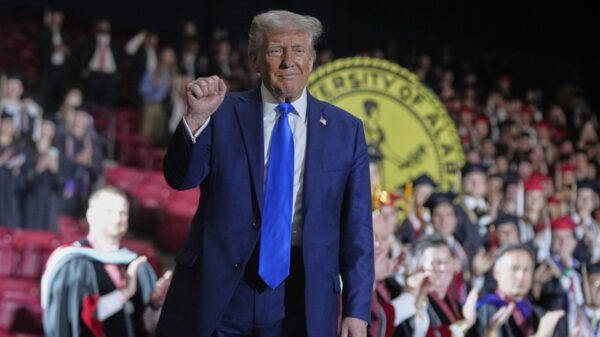
Which brings us, unavoidably, to Donald Trump.
Trump did not create this architecture. He recognized its usefulness. His enforcement posture is not merely aggressive; it is deliberately fortified against moral consequence. Assert authority. Declare legality. Centralize control. Restrict evidence. Exhaust critics with process. Let time erode outrage.
This is not recklessness. It is calculation.
Trump understands something uncomfortable but true about American history: cruelty does not need secrecy if it has legal cover. That the most durable abuses are those wrapped in procedure. That as long as an action can be described as lawful, many will avert their eyes from its human cost.
In that sense, Trump is not a rupture. He is an accelerant.
What protest songs have always exposed is the fragility of that strategy. They do not argue law. They indict conscience. They ask what kind of country requires musicians to keep its moral ledger because its institutions will not.
America does not change because power grows kind. It changes when the sound of its own justifications becomes unbearable — even to those who once repeated them.
That is when songs stop sounding like culture.
That is when they sound like evidence.
And that is when history, finally, moves.