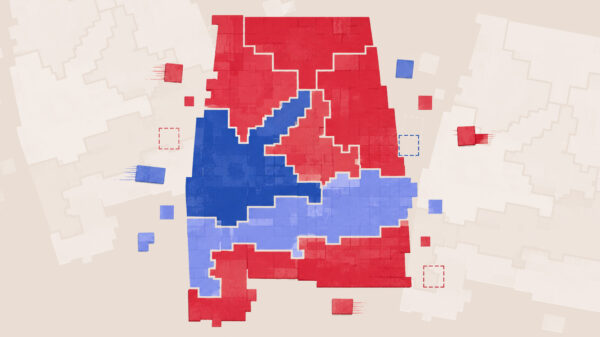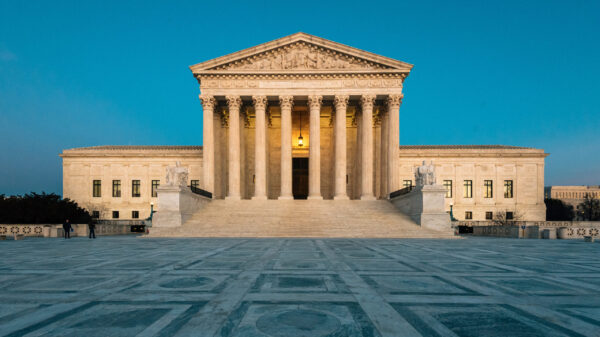



















For the third time in less than a week, Alabama Attorney General Steve Marshall has gone back to court arguing that last week’s U.S. Supreme Court ruling in Louisiana v. Callais fundamentally changed the legal foundation of Alabama’s congressional redistricting fight.
The dispute has moved beyond legal arguments inside federal courtrooms.
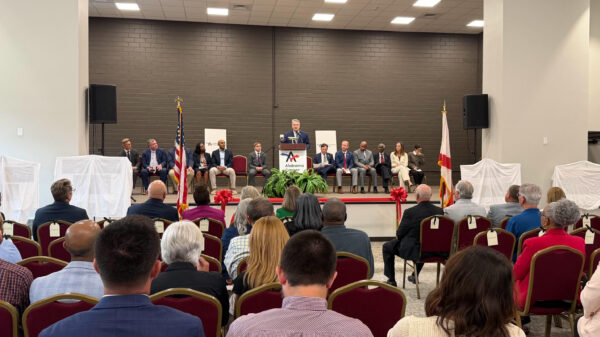
The Alabama Legislature is already in special session, and lawmakers are openly preparing for the possibility that federal courts could allow the state to revert to maps previously blocked under Allen v. Milligan.
That matters because this fight now reaches beyond constitutional interpretation. It is about power, leverage, timing and the increasingly fragile public trust surrounding how elections themselves are governed.
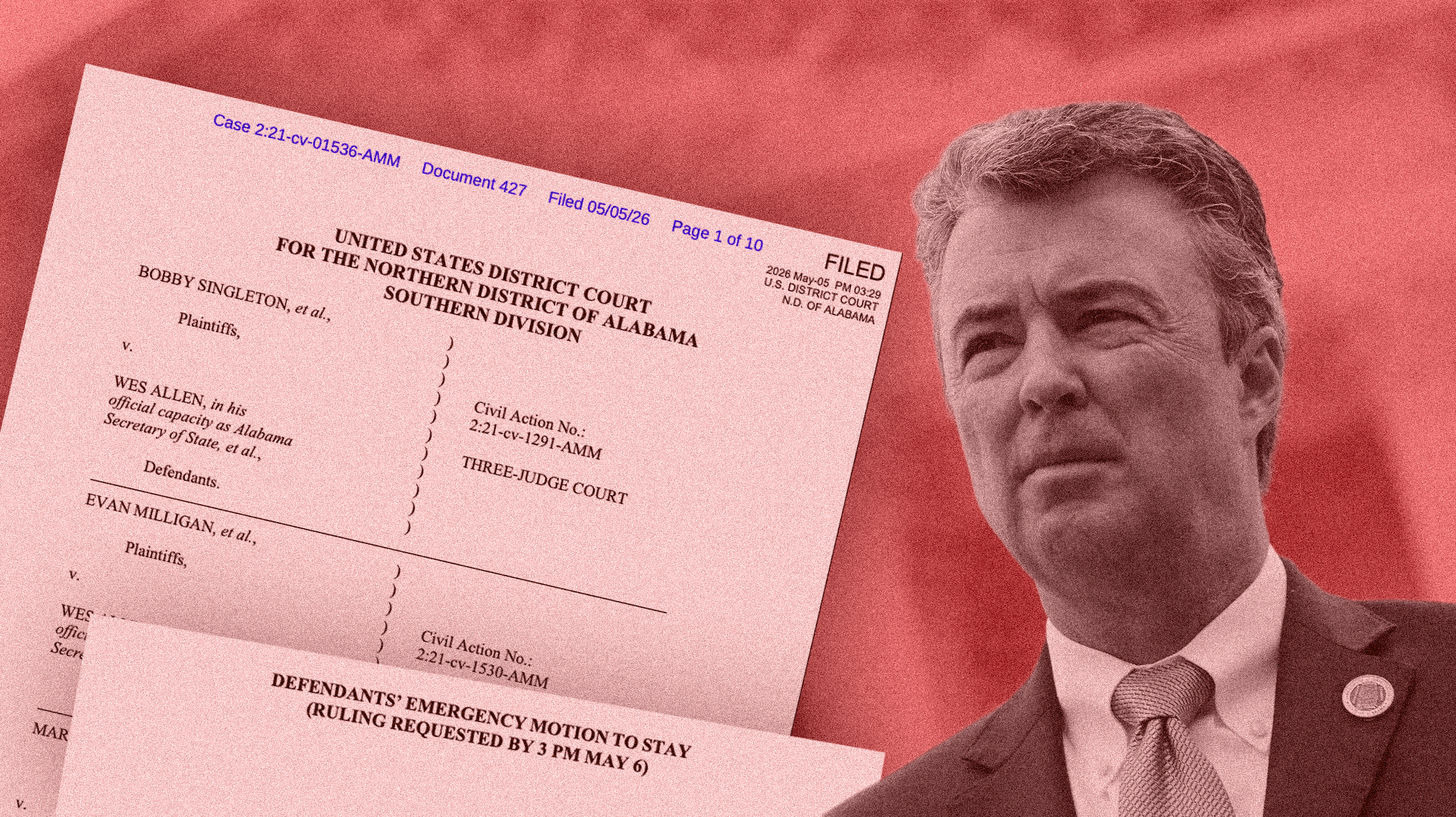
Marshall’s emergency filing asks the three-judge federal panel in Birmingham to stay the injunctions that blocked Alabama’s legislatively enacted congressional map. The state argues the Supreme Court’s decision in Callais “significantly updated the Gingles framework” governing Section 2 Voting Rights Act claims and that the prior legal reasoning used against Alabama’s maps has become legally vulnerable.
At the center of Alabama’s argument is a claim that may reshape voting rights litigation nationwide. The state argues courts should place less weight on racially polarized voting patterns when evaluating district maps. Instead, plaintiffs must now prove race, rather than partisan politics, drove the Legislature’s decisions.
That distinction reaches beyond technical doctrine. It may prove transformative.
For years, Alabama argued against being required to create an additional majority-Black congressional district simply because voting patterns were racially polarized. The Supreme Court rejected that argument in Milligan. Now Alabama believes Callais may have reopened the door, and state officials are moving with extraordinary speed to walk through it.
The filing asks the court to rule by 3 p.m. on May 6 because Alabama’s May 19 primary election is rapidly approaching. Meanwhile, Governor Kay Ivey has already called lawmakers into special session to prepare contingency legislation if courts allow the state to use its preferred map.
The Legislature is positioning itself in advance of a possible court ruling, preparing to move the moment federal courts signal an opening. That reveals how redistricting has evolved from a periodic constitutional exercise into a continuous struggle for political advantage.
And it creates a remarkable contradiction.
State officials argue they are trying to preserve orderly elections and administrative stability while also attempting to alter congressional districts days before a primary. Whatever one thinks of Alabama’s legal position, the tension is obvious. The closer election systems move toward real-time political recalculation, the more public confidence in institutional neutrality begins to erode.
That concern extends far beyond Alabama.
This filing comes after Alabama already asked the U.S. Supreme Court to vacate the congressional injunctions. It follows Marshall’s separate move to lift injunctions involving Alabama Senate districts. And it comes while the state’s political leadership openly signals its willingness to redraw the electoral landscape the moment federal courts allow it.
These legal maneuvers form part of a coordinated effort to fundamentally redefine how the Voting Rights Act functions in modern America, and Alabama, once again, has become one of the testing grounds.
The state’s filing makes clear that it understands Callais to have done more than slightly adjust legal standards. Alabama argues the decision fundamentally changed the framework courts must apply when evaluating Section 2 claims.
If courts ultimately agree, the implications could stretch across the country. States may aggressively revisit maps previously challenged under the Voting Rights Act. Litigation that once centered heavily on racial polarization may increasingly shift toward partisan explanations for voting behavior. And Section 2 cases may become dramatically harder for plaintiffs to win.
For years, courts have struggled with the increasingly blurred line between race and partisanship in American politics. In many Southern states, including Alabama, those categories overlap heavily because Black voters overwhelmingly support Democratic candidates while white conservative voters overwhelmingly support Republicans.
In modern American politics, especially across the Deep South, race and partisanship have become deeply intertwined categories.
Courts may attempt to disentangle them, but political reality often resists that effort.
The Supreme Court now appears increasingly willing to treat that overlap primarily as political rather than racial. That shift could redefine voting rights litigation for decades.
It also exposes a deeper problem in American politics itself.
Both parties increasingly operate within a system where aggressively engineered political maps are accepted so long as the justification can be framed in partisan rather than racial terms. That may satisfy evolving constitutional doctrine, but public confidence is another question.
Eventually, voters begin noticing that elections increasingly look less like communities choosing their representatives and more like representatives choosing their voters.
The immediate question is whether federal courts will move fast enough to let lawmakers proceed with new election plans before May 19. But the bigger question is what remains of the Voting Rights Act once race and politics become legally indistinguishable in the eyes of the courts.
And the greatest danger may lie in what happens when the public begins believing election rules themselves are becoming movable instruments of political power.