













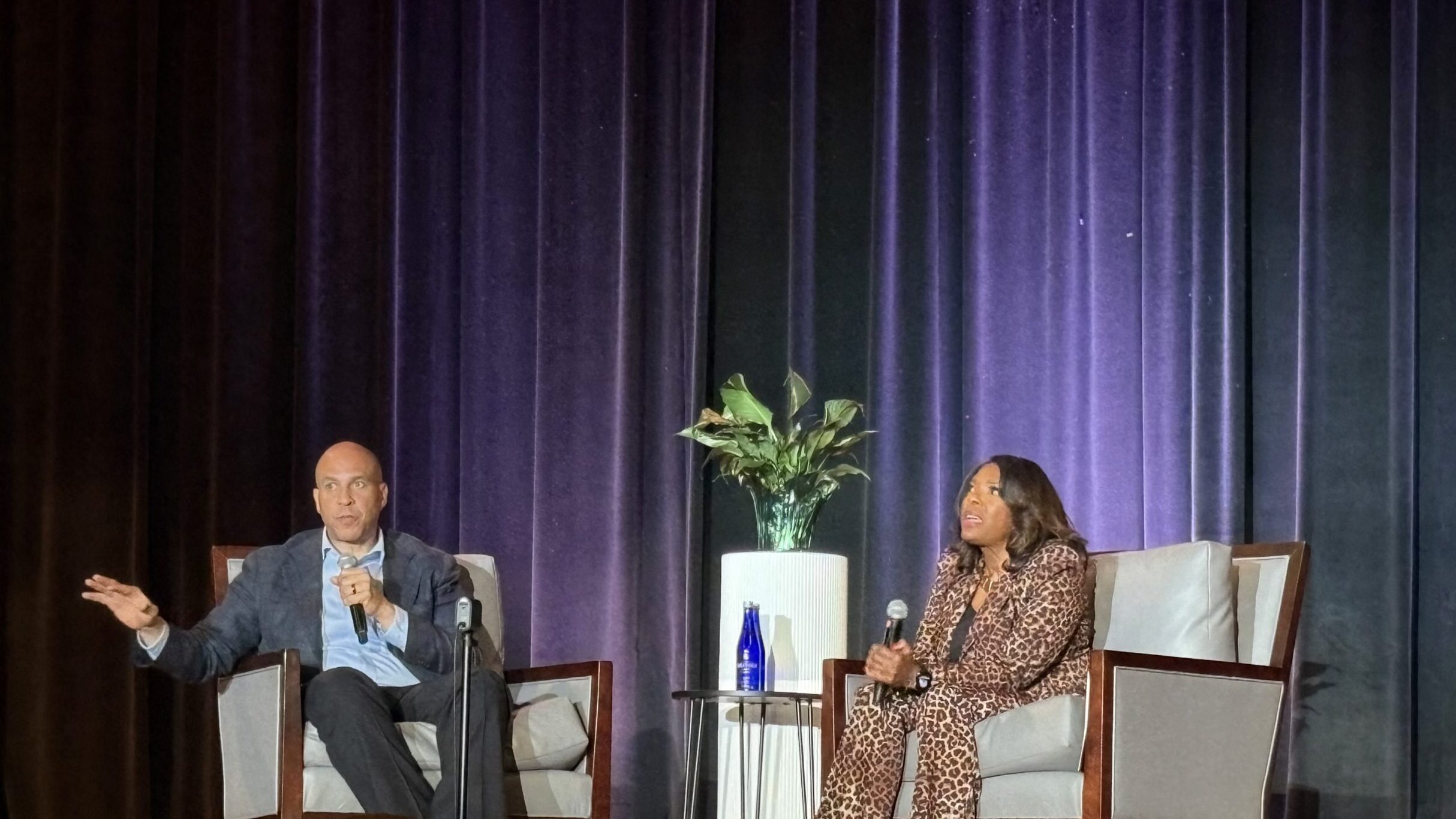
During a town hall held Monday night, Alabama Democrats were joined by U.S. Senator Cory Booker, D-New Jersey, to discuss redistricting, affordability, voting rights and the future of the Democratic Party.
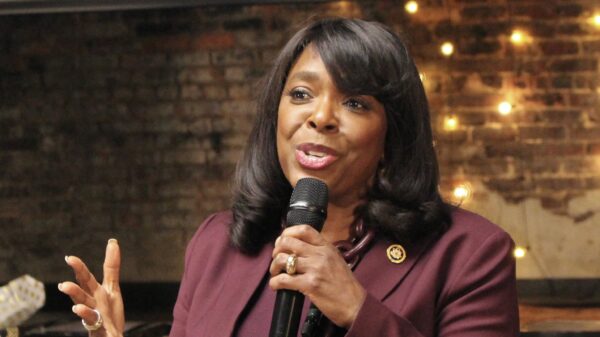
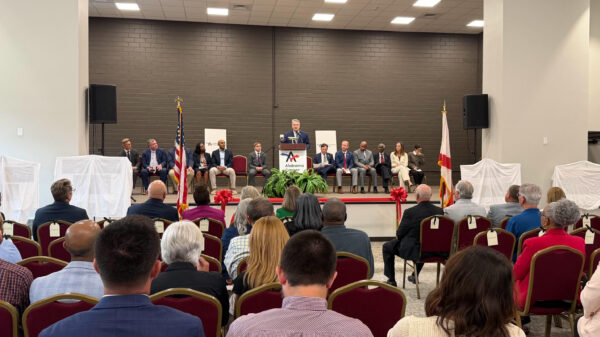
The town hall, held at Birmingham’s Boutwell Auditorium, centered on a conversation between Booker and U.S. Representative Terri Sewell, D-Alabama
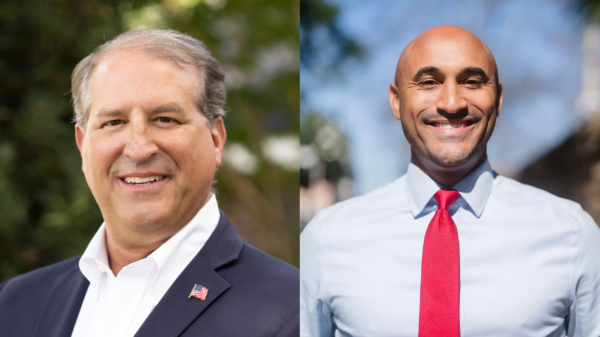
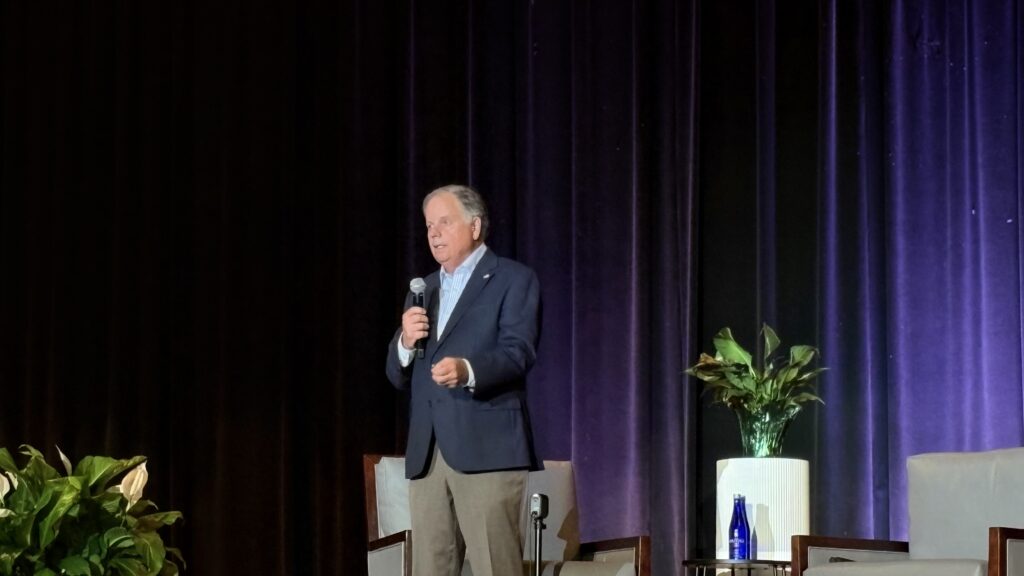
The event, organized by Democratic PAC, Blueprint Alabama, began with opening remarks made by Birmingham Mayor Randall Woodfin and former U.S. Senator and gubernatorial candidate Doug Jones.
Introducing the event, both Jones and Woodfin highlighted and decried the Supreme Court’s verdict in Louisiana v. Callais and the Alabama legislature’s resulting special session to address potential redistricting.
The court’s ruling, made last week, weakened Section 2 of the Voting Rights Act’s protections against racial discrimination, mandating that those who bring suits against states to challenge their electoral maps as discriminatory must prove discriminatory intent.
“The gutting of the Voting Rights Act of last week should be not only a reminder, but a wakeup call, that activism in this city and this state is not something that you will win on social media or sitting on the sidelines,” Woodfin told attendees.
While the Legislature will not be able to draw new congressional and state Senate maps unless federal courts revoke injunctions blocking the state from doing so, state Republican lawmakers and leaders have called for federal and state district maps to be redrawn in light of the Callais decision, with some advocating for a 7-0 Republican congressional map.
Jones, in his opening remarks, pointed to Boutwell Auditorium’s significance to the history of segregation in Birmingham and the South at large.
“In 1948, segregationist Democrats walked out of the Democratic Convention, and formed the Dixiecrats, and they came to Birmingham, and they had their convention right here,” said Jones. “It was right here where Nat King Cole was beaten by Klansmen when he was gonna perform.
Jones highlighted that the auditorium was also the site of a 2009 event celebrating the inauguration of former President Barack Obama.
Discussing the special session, the former Democratic senator called on attendees to organize in opposition to Republican redistricting proposals aimed at gaining more red seats in the state.
“We have seen this playbook in Alabama before,” he said. “We moved past it. It took a lot of blood, sweat, tears and a couple of folks had to die, in order to get those voting rights, in order to get those civil rights. Alabama is ground zero for voting rights, and we’re gonna be ground zero to make sure we retain those voting rights once again.”
Jones denounced Republican calls for redistricting, arguing the current special session is an attempt to wrestle control away from Democratic lawmakers, which will do nothing to address legitimate issues facing everyday Alabamians.
“They are not down in Montgomery trying to give you better healthcare. They’re not down there trying to expand Medicaid. They’re not down there trying to lower your electricity bill. They’re not down there to try and train these young people to deal with AI,” the gubernatorial candidate said.
Sewell and Booker, the event’s headlining speakers, opened their conversation with a discussion of the Callais verdict and the connections between their past work as legislators and the future of the Voting Rights Act.
“When we planned this town hall, the Callais decision had not come out, but I would be remiss if I did not start by talking a little bit about the Callais decision and what’s at stake,” Sewell said. “I believe this is going to unleash the biggest reduction in Black representation across this nation.”
When asked by Sewell to describe the importance of Black representation in government, Booker reflected on work the two legislators conducted following the 2016 presidential election, as well as the Trump administration’s lasting impacts on the Supreme Court.
“We crisscrossed this country, running around trying to tell people that it’s not just the presidency on the ballot, it’s your voting rights, it’s your reproductive rights, it’s your rights to marry who you love, it’s the rights to stop corporate concentration driving up your prices,” he said.
Booker went on to highlight Sewell’s introduction of the John Lewis Voting Rights Advancement Act in 2018, legislation Sewell has continued to carry, which would strengthen enforcement of the Voting Rights Act through provisions such as the reinstatement of preclearance requirements for districts with a history of racial discrimination.
Despite passing in the U.S. House along party lines, the bill was killed by a filibuster led by Senate Republicans.
“That [U.S. House] vote, that would have ended partisan gerrymandering and would have restored Section 3 of the Voting Rights Act—it got every single Democratic to vote yes, and every single Republican to vote no,” he said.
Booker went on to urge attendees to attempt to advance the missions of late Civil Rights Movement leaders such as Fred Shuttlesworth and John Lewis.
“Sometimes people look at a moment, and they think that’s it,” Booker said. “But there would be no 1960s Voting Rights Act, if it was not a 1950s Fred Shuttlesworth standing up.”
“They won a decision. But we get to decide our response,” the senator said of the Callais verdict. “They rendered an opinion, but now we have to render history.”
Citing historical Supreme Court decisions that restricted the rights of American minorities, such as Plessy v. Ferguson and Korematsu v. United States, Booker called on audience members to reflect on and continue the work of activists who challenged the court’s decisions.
“The Supreme Court has never led history in this country,” he said. “It has always been the foot soldiers of democracy, like those that are in this room right now.”
The speakers went on to discuss affordability issues facing residents in Alabama and New Jersey alike, with both Sewell and Booker condemning Trump administration tariffs, the war in Iran, cuts to Medicaid made by the One Big Beautiful Bill Act, and the expiration of COVID-era Affordable Care Act subsidies as avoidable decisions that have deeply cost average Americans.
“The regime now is more extreme,” Booker said of Iran. “The highly enriched fissile material is still in country, and on top of that, they discovered, just like Ukraine did, that you can hold off a much bigger country, you can cause damage to a much bigger country with low-cost drones.”
Sewell, meanwhile, highlighted that the war has impacted not only oil and gas prices but also agriculture, since approximately 20 percent of the world’s fertilizer supply passes through the Strait of Hormuz.
“I can tell you that many of my farmers complain,” she said. “Planting season came and went, where they were not prepared to be paying higher prices for fertilizer.”
During their conversation, both speakers also called for Democratic leaders to advance their policy priorities with more energy and for the party to do more to reach working-class people.
“We should learn a little page from the Republican book,” Sewell said. “When they have power, they seize it, they use it.”
Booker pointed to the period of Democratic dominance in Congress from the 1940s to the 80s, when the party was able to galvanize wide support from working- and middle-class Americans. The senator, in turn, called for the contemporary party to realign itself as a party that vigorously advances the interests of working people.
“What I’m calling for us now is not to define the Democratic party by who we’re against, but what we are for,” Booker said.
Reflecting on the Civil Rights Movement, Booker argued the importance of appealing “to the moral imagination” of the United States.
“To beat ‘Bull’ Connor, they did not bring bigger dogs and bigger firehoses,” Booker said, recounting his response to a campaign rally attendant telling him to “punch Donald Trump in the face.”
“What they did instead is something so much more powerful, is they called to the conscience of a country.”
“If we sit back and let them redraw the maps and we are not using every tool we have—your feet, your mouth—we’ve got to do everything we possibly can to stop this,” Sewell added. “We can’t say we can’t do it because our foremother and forefathers who had it way worse than we did—way worse—made a way out of no way.”
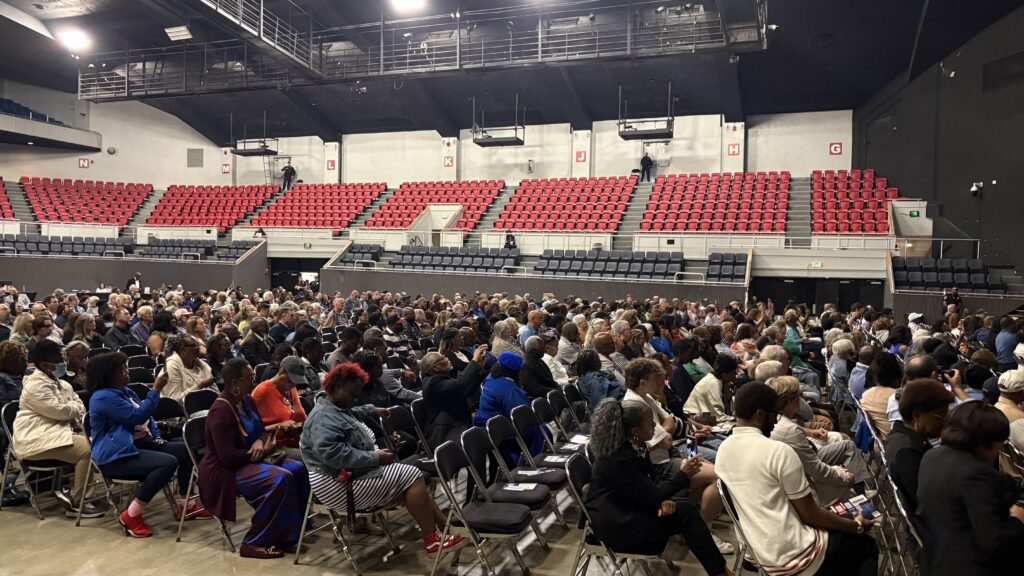
During a press conference held prior to the town hall, speakers expressed their determination to oppose Republican calls for redistricting that have come on the heels of the Callais verdict and their hopes that the event would serve as a call to action for attendees to do the same.
“We are in the fight of our lifetime,” Woodfin said. “I expect everyone to get off the sidelines, get off social media and join in, using your voice, whatever platform you have, and your feet and your voice, to make sure we call out any form of injustice that’s taking place right now, particularly as it relates to this form of political gerrymandering that will dilute minority and Black voices in Congress and in other spaces.”
Sewell cited that Black Alabamians make up more than 27 percent of the state’s electorate, saying, “fairness dictates that we have two seats, not one and not zero. I think it’s really important that we highlight that today.”
“We will not step back. We will fight back. We will do everything in our power to make sure that we are laying bare the injustice of going from a 5-2 congressional delegation to a 7-0 delegation,” Sewell said.