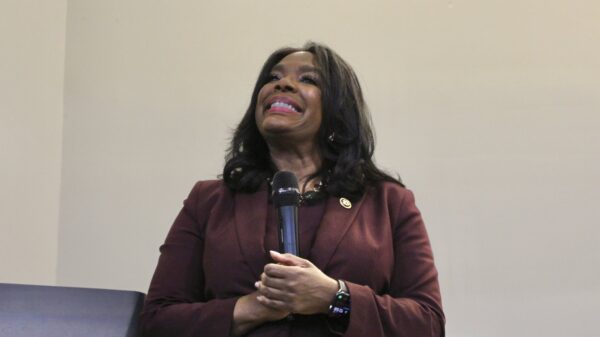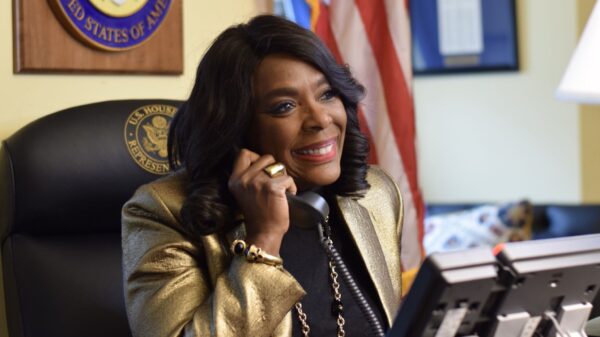



























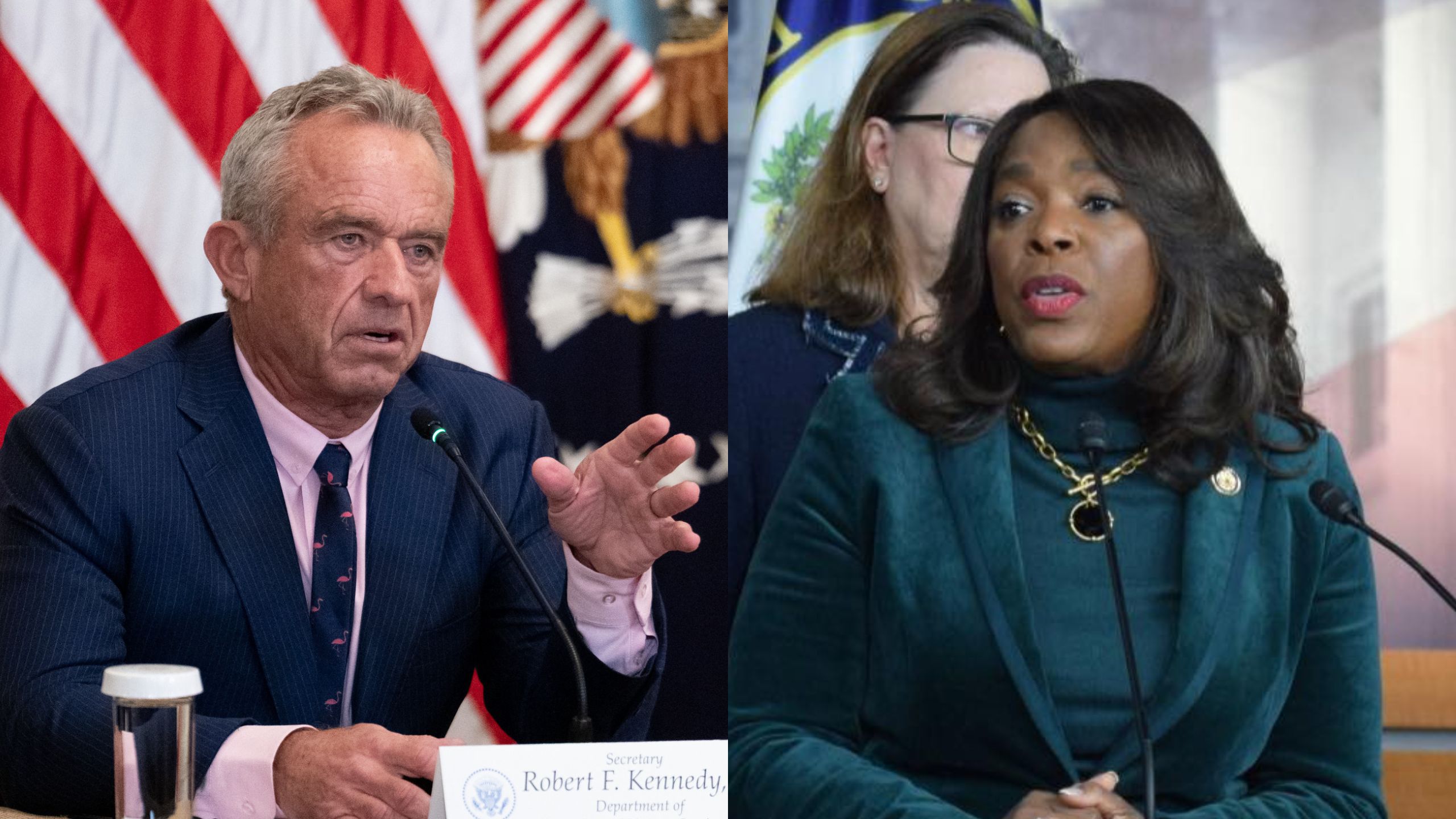
Health and Human Services Secretary Robert F. Kennedy Jr. entered into a heated exchange with U.S. Representative Terri Sewell, D-Alabama, during his testimony before the U.S. House on Thursday.
During the House Ways and Means Committee hearing, Sewell pointed to remarks Kennedy made in 2024 that the health secretary repeatedly falsely denied making.
Sewell highlighted comments made during a podcast interview two years ago in which Kennedy suggested that Black youth prescribed ADHD, antidepressant or benzodiazepine medications be “reparented” through drug rehabilitation programs to take place on “wellness farms.”
“Mr. secretary, you’ve made a number of outlandish, and frankly disturbing, comments both before and during your tenure as secretary of health and human services. I want to draw your attention to one of those times,” Sewell said.
Kennedy’s comments came during an appearance on a podcast hosted by Black influencer and motivational speaker Jibrial Muhammad, who produces wellness and self-help content under the name 19keys.
“My Peace Corps program is going to be wellness farms, rehabilitation facilities,” Kennedy said.
Kennedy described his proposed illegal and psychiatric drug addiction rehabilitation facilities as being modeled after the San Patrignano drug recovery community in Italy. The then presidential candidate said the “wellness farms” would be fully self-sufficient and allow patients to live free of charge for as long as they see fit.
“Every Black kid is now just standard put on Adderall, SSRIs, benzos, which are known to induce violence,” Kennedy said. “And those kids are going to have a chance to go somewhere and get reparented, to live in a community where there’ll be no cellphones, no screens, you’ll actually have to talk to people.”
According to the Centers for Disease Control and Prevention data from 2019, compared to Black and Hispanic children, non-Hispanic white children were more than twice as likely to have taken medication prescribed for their mental health in the past 12 months.
A 2020 study found that 0.6 percent of U.S. patients 19 or younger reported being prescribed benzodiazepines or other anxiolytics, sedatives or hypnotic drugs.
A 2016 medical journal published report found that from 2004 to 2011, white youths were approximately two to nine times more likely to fill a prescription for a stimulant medication such as Adderall and approximately four times as likely to fill antidepressant prescriptions than Black or Latino youths.
Despite a reported 240 percent increase in patients aged 31 to 40 who were prescribed stimulants, another study found that the rate of stimulant prescription from 2012 to 2023 among patients aged 11-20 remained “relatively stable.”
Sewell, whose aide held a poster featuring a transcription of Kennedy’s 2024 remarks, questioned the health secretary’s authority to advocate for reparenting Black youth, which he repeatedly denied having said.
“Mr. secretary, you’ve already admitted that you are not [a] board-certified physician, and you’ve already admitted that you did not go to medical school,” Sewell said. “Have you ever ‘reparented,’ or parented, I should say, a Black child?”
“I don’t even know what that phrase means, and I doubt that I said it,” Kennedy responded. “I’m not going to answer something that I didn’t say.”
“You absolutely said it,” Sewell said.
“I’d like to hear the recording, as it doesn’t make any sense. I don’t even know what it means,” Kennedy told Sewell.
“I don’t either, and that’s why I’m asking,” the congresswoman responded.
Although the congresswoman initially quoted Kennedy as saying Black children facing prescription drug dependency would “have to get reparented,” in the video cited by Sewell Kennedy did not describe whether children would be enrolled in his proposed rehab program on their own volition, or the role of parents in deciding if a child should seek treatment from such a facility.
During another 2024 interview on the podcast, “Latino Capitalist,” Kennedy said the farms would be funded by sales taxes on cannabis products. The candidate indicated that prescription drug users could choose to enroll themselves in the program voluntarily and again used the term reparenting when describing the facilities’ purpose.
“I’m going to create these wellness farms where they can go to get off of illegal drugs, off of opiates, but also illegal drugs, other psychiatric drugs, if they want to, to get off of SSRIs, to get off of benzos, to get off of Adderall, and to spend time as much time as they need—three or four years if they need it—to learn, to get reparented, to reconnect with communities,” Kennedy said.
Sewell continued to question Kennedy on what authority he had to call for Black children to be reparented through his proposed wellness farm program.
“So, you are not a doctor, you have no formal medical training and you never parented a Black child, and yet you are suggesting that the federal government should take Black children away from their families and reparent them and send them off to some wellness farm, instead of providing them with evidence-based medical care?” Sewell asked.
“You’re just making stuff up,” Kennedy interjected.
The congresswoman went on to ask Kennedy what factors he believes the federal government should consider when reparenting Black children on ADHD or ADD medication.
“I don’t know what you’re talking about, congressman. I don’t know what you’re talking about,” Kennedy said. “I don’t know what reparenting even is.”
“I don’t either, but you said that,” Sewell responded. Kennedy again falsely denied making his 2024 comments.
“For Black families in the United States, the issue of family separation is not new. Our nation has a long and painful history of separating Black children from their families,” Sewell told Kennedy.
“During slavery, Black children were taken from their parents and sold with no regard for their humanity,” she continued. “After slavery, Black families continued to face forced separations through Jim Crow laws, discriminatory policing and child welfare systems that too often assumed that Black parents were unfit. Even today, Black children are removed from their homes at higher rates than white children.”
“Those children have parents. And to suggest that they have to be reparented is offensive,” Sewell added.
“I never suggested that,” Kennedy again alleged.
Sewell concluded her comments to Kennedy by urging the health secretary to take greater care to ensure he makes truthful and deliberate remarks as a public figure.
“Mr. secretary, your words matter,” the congresswoman said. “When those words are careless, communities pay the price. When your words are imprecise, they create confusion, and when your words are dismissive, they cause real harm.”
Kennedy interrupted, falsely alleging that Sewell was pointing to remarks “he supposedly said in 2014.”
“I expect, and the American people expect that you choose your words with sincereness and with seriousness—the seriousness that your position demands,” Sewell said. “American lives are at stake, and it’s time that you start acting like it, sir.”
Following Sewell’s questioning, Kennedy’s comments were further condemned by the nonprofit, Protect Our Care.
“RFK Jr. can run from his despicable views that black children on ADHD medication should be taken from their parents, but he can’t hide from the video receipts,” said Kayla Hancock, director of Protect Our Care’s Public Health Project.
“This is classic RFK Jr.–make reckless and unfounded claims like impugning vaccine safety and then take no responsibility when it comes back to haunt him,” Hancock added. “The problem is, when someone of Kennedy’s celebrity and power as Health Secretary carelessly spews discredited myths and blatantly racist rhetoric, it matters and hurts a lot of people.”
A statement sent to APR on Friday, by HHS spokesperson William Maloney said the remarks, made prior to Kennedy’s time as health secretary, described “spaces where individuals, particularly young people facing alienation, mental health challenges, and rising rates of despair could undergo a form of ‘reparenting.’”
“In psychotherapy terms, reparenting involves developing the emotional regulation, discipline, boundaries and self-worth that may not have been established in childhood, through consistent care, accountability and supportive relationships,” the department stated.