



















The U.S. Supreme Court on Monday effectively erased a federal court’s 2023 ruling on Alabama’s congressional map — a ruling this same incarnation of the high court once upheld — handing Alabama Republicans a major legal victory and signaling a dramatic new turn in the nation’s battle over voting rights and redistricting.
In a brief, unsigned order, the Court vacated the judgment of the three-judge federal panel in Allen v. Milligan and remanded the case for reconsideration in light of the Court’s recent decision in Louisiana v. Callais.
In practical terms, the Supreme Court’s order wipes away the lower court ruling as though it never existed, taking it with the congressional maps that a court-appointed special master drew for the state in 2023. It also removed the injunction that had prevented Alabama from using maps that both the lower court and the Supreme Court had found to be illegal racial gerrymanders.
Unless the lower court intervenes again, Alabama may now proceed under that map while the litigation continues.
The ruling comes just days before Alabama’s primary elections and after state officials asked the Court for emergency relief following its April decision in Louisiana v. Callais, which significantly altered the legal framework surrounding race and congressional redistricting.
The decision marks another dramatic chapter in one of the most consequential voting-rights cases in decades.
In 2023, the Supreme Court surprised much of the legal and political world when Chief Justice John Roberts and Justice Brett Kavanaugh joined the Court’s liberal justices in ruling that Alabama’s original congressional map likely violated Section 2 of the Voting Rights Act by diluting Black voting strength. That ruling forced Alabama to redraw its congressional districts and ultimately led to the creation of a second district where Black voters held substantial electoral influence.
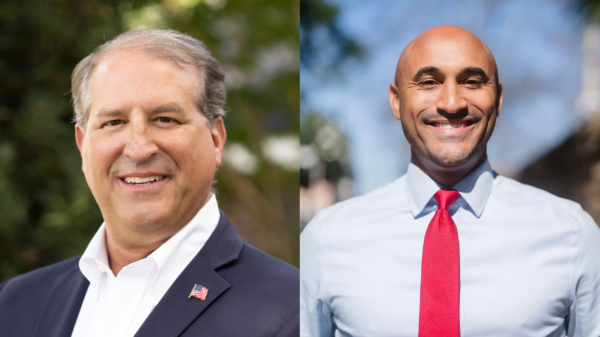
The court-drawn map used during the 2024 election cycle reshaped Alabama’s congressional delegation and helped elect Democrat Shomari Figures in the newly configured 2nd Congressional District alongside longtime Democratic Congresswoman Terri Sewell in the 7th District.
But the legal ground beneath congressional redistricting has shifted rapidly since then.
In Louisiana v. Callais, decided last month, the Court ruled Louisiana’s second majority-Black congressional district was an unconstitutional racial gerrymander. The decision intensified a growing constitutional tension between the Voting Rights Act’s requirement that minority voting strength sometimes be considered in redistricting and the Equal Protection Clause’s limitations on race-based government action.
Alabama officials quickly argued that the reasoning in Callais undermined the lower court rulings in Allen v. Milligan and asked the Supreme Court to step in before the 2026 election cycle moved further forward. It seemed an improbable ask, considering that the majority opinion in Callais specifically noted that the Allen decision remained good law.
Monday’s order suggests the Court agreed the lower courts must now reconsider Alabama’s case under the constitutional framework established in Callais.
The Court’s three liberal justices dissented sharply.
Justice Sonia Sotomayor, joined by Justices Elena Kagan and Ketanji Brown Jackson, argued the Court improperly discarded extensive lower court findings that Alabama lawmakers intentionally discriminated against Black voters when adopting the 2023 map.
The three-judge panel previously concluded — after an 11-day trial involving dozens of witnesses and hundreds of exhibits — that the Legislature intentionally designed districting criteria making it “mathematically impossible” to create a second opportunity district for Black voters.
Sotomayor argued those findings involved constitutional questions under the Fourteenth Amendment that were separate from the Voting Rights Act issues addressed in Callais. She also warned that the Court’s action risks confusion because Alabama’s election process is already underway.
The Supreme Court did not directly rule Monday on whether Alabama’s map is ultimately lawful. Instead, it vacated the prior ruling and sent the matter back to the lower courts for further proceedings.
That distinction matters legally.
The lower court could still revisit portions of the case, including findings related to intentional discrimination. But by vacating the prior order, the Supreme Court removed the immediate legal barriers preventing Alabama from using the 2023 map.
State Republican leaders praised the ruling as a victory for the state. Voting-rights advocates, meanwhile, warned the decision further weakens protections that for decades formed a cornerstone of the Voting Rights Act.
Beyond Alabama, the ruling carries potentially enormous national implications.
For decades, federal courts relied on the Voting Rights Act to require states with significant minority populations to create districts where minority voters had a meaningful opportunity to elect candidates of their choice. But recent Supreme Court decisions increasingly suggest those same race-conscious remedies may themselves face constitutional limits.
The result is a rapidly evolving legal landscape where states, federal courts and voters are left navigating competing constitutional commands with fewer clear rules than existed only a few years ago.
For now, however, the Supreme Court’s message appears unmistakable: the constitutional boundaries governing congressional redistricting are changing quickly, and the legal framework that once protected minority voting power is entering a far more uncertain era.