
























It has been said that a prosecutor can indict a ham sandwich. Apparently, the way to do so is with pure bullsh*t.
We know this to be true because the Trump Department of Justice, using grade-A BS, managed to sucker a Montgomery grand jury into a multi-count indictment alleging fraud, conspiracy and wire fraud against the Southern Poverty Law Center on Tuesday.
To put that another way, the guys who don’t have time to bring charges against a single human male for the multitudes of child rape allegations contained in the Epstein files, managed to find a conspiracy to promote racism perpetrated by SPLC because it paid confidential informants who were members of hate groups.
In so many ways, it is the absolute pitch-perfect encapsulation of the white, male victimhood that has defined MAGA.
For years now, the SPLC has exposed thousands of individuals and groups for their hateful, disgusting behavior, and has helped pull the curtain back on the underground organizations that have fueled some of America’s most hateful groups. Tuesday’s indictment was nothing more than sympathizers of those groups punching back.
And then holding a press conference to heap more BS on top of the already smoldering pile of BS.
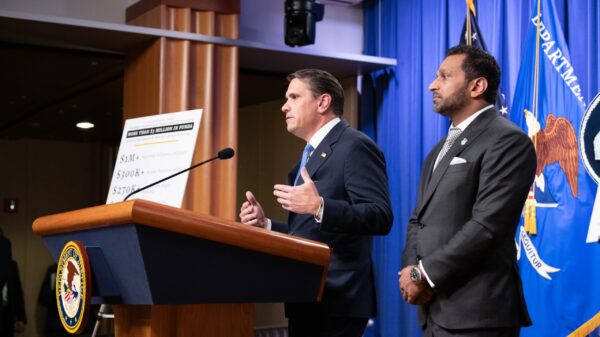
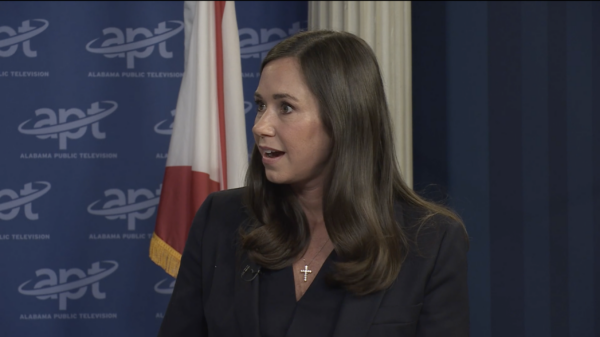
To be absolutely crystal clear, despite what the head of the FBI and the acting U.S. attorney general said on Tuesday, the SPLC did not use donated funds to “manufacture extremism” or “stoke racial hatred.” Making such a claim, as both Kash Patel and Todd Blanche did, is something akin to accusing the FBI of manufacturing loan sharking because it paid informants and infiltrated organized crime.
That’s essentially what the SPLC was doing. Using a series of dummy companies, the organization paid informants who were high-ranking members of various hate groups, including the KKK, Aryan Nation and others, to provide information and documents so the SPLC and its various publications could expose the groups’ activities.
This isn’t exactly a secret. Some of the organization’s most famous cases utilized documents and information gained from inside sources. Did anyone actually believe that these sources weren’t getting paid for their information? Did anyone think that the sources weren’t being paid to infiltrate these organizations?
These were dangerous, life-changing risks that were being taken.
It’s probably also worth mentioning here that for all of the bluster of Patel and Blanche, there is no detail in the actual indictment of the SPLC for manufacturing extremism or paying anyone to stoke racial hatred.
Instead, the indictment itself meanders through a long list of actions that appear to sit in a legal gray area but certainly do not come close to the fantastic headlines of the SPLC essentially paying people to be racists so it could either report on those actions or litigate against the group.
For example, in the indictment’s lengthiest entry, it accuses the SPLC of paying an informant who infiltrated the neo-Nazi group the National Alliance and provided a trove of information over more than a decade. In one instance, this individual, who isn’t identified in the indictment, stole 25 boxes of documents from the group’s headquarters, copied them all, provided the copies to the SPLC and then quietly returned the original documents to the headquarters.
The SPLC, the indictment said, used that information for stories on the group. It paid the informant roughly $100,000 per year to provide information.
Am I supposed to be mad about that? Is anyone, aside from the National Alliance, Kash Patel and Todd Blanche, mad about that?
The bulk of the DOJ’s case against the SPLC relies on a broad catch-all charge meant to ensnare fraudsters and other scam artists who flirt with the edges of the law to pull off scams. It’s a law that makes it a crime to knowingly provide false information to a federally insured lending institution. Over the years, the charge has been broadened from providing information to gain a loan or other benefit to include providing the institution with basically any false information.
The SPLC set up a number of what appear to be phony businesses and used the business names to establish bank accounts. Those accounts were then used to pay off the informants in order to mask the payments. Because it wouldn’t look great if the guy in the National Alliance was getting checks from the Southern Poverty Law Center.
The indictment calls those instances in which the SPLC used the dummy companies to set up bank accounts crimes. That might be the case, although one exception to the law is if the party has control of the entity it used to set up the accounts. So, if those companies were real on paper, that’s not a crime. There are also a couple of other exceptions that could be leaned on, so we’ll see.
Regardless, though, that’s about the bulk of it. The SPLC paid bad people to give good information on other bad people and bad organizations. Or to put it another way: It did exactly what we all thought the SPLC has been doing for years.
And really, that’s what this is all about—hitting back at an organization that has litigated against hatefulness, discrimination and bigotry. Because we have the absolute worst people imaginable in charge of our justice system.
They are on a rampage against decency and against any group of people who dared stand up for it. The SPLC has long been a shining star for exposing hateful groups and awful humans.
That made it the biggest target.