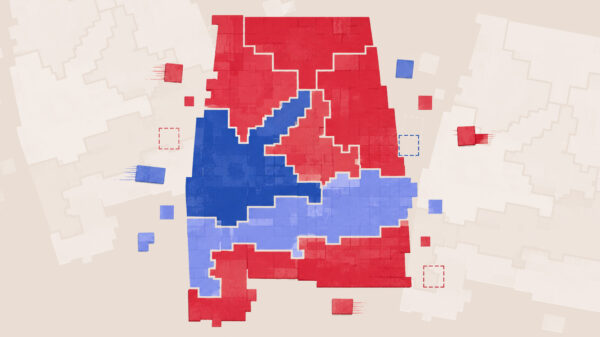























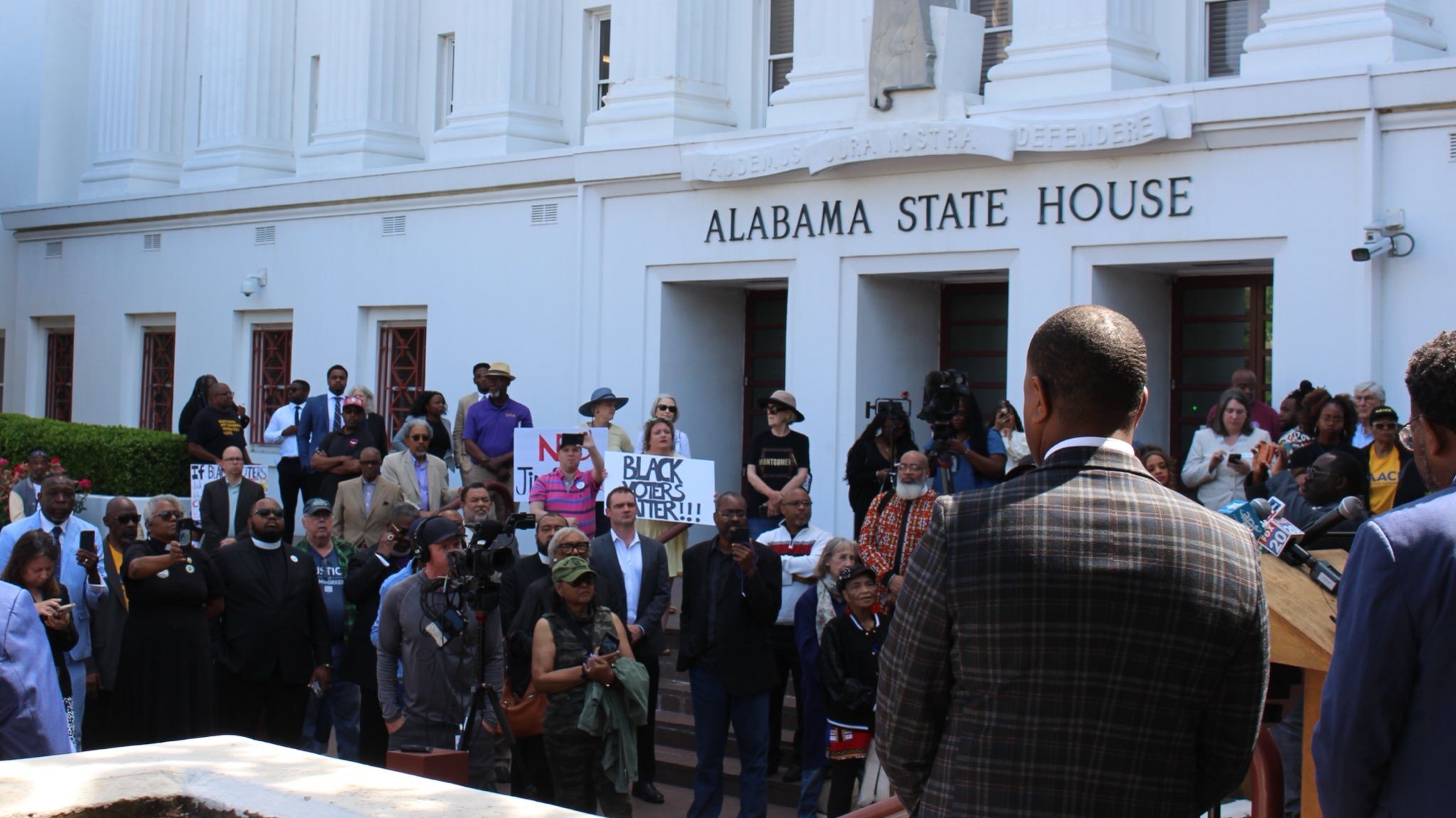
The plaintiffs in the redistricting case Caster v. Allen will request a preliminary injunction during a hearing in the Northern District of Alabama on Friday.
First filed in 2021, the complaint in Caster v. Allen charged the Congressional maps passed by Alabama’s state legislature after the 2020 U.S. Census were in violation of Section 2 of the Voting Rights Act.
Following the Supreme Court’s affirmation of a trial court injunction in the case in 2023 and of a similar ruling in Allen v. Milligan, Alabama was eventually ordered to adopt a new Congressional map drawn by a special master with an additional Black-majority district. However, the Supreme Court’s April decision in Louisiana v. Callais upended traditional interpretations of the Voting Rights Act.
The Callais decision dramatically reduced the scope of the Voting Rights Act by limiting Section 2 to just circumstances where state actions can be more directly attributed to intentionally disenfranchising minority voters.
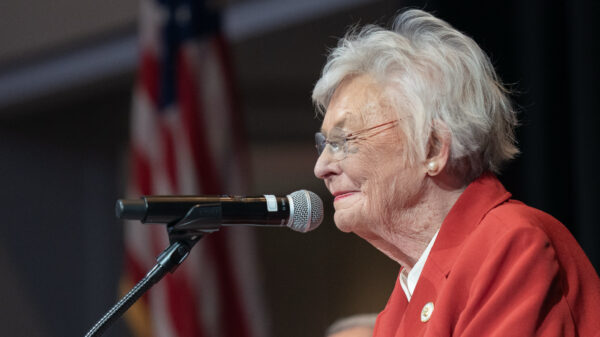
After the Supreme Court’s ruling, Governor Kay Ivey called a special session to prepare for the state potentially returning to its original post-Census redistricting maps. Secretary of State Wes Allen sought to have the state’s Senate maps returned to the 2021 redistricting plans.
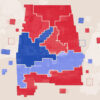
A request for a preliminary injunction filed by the plaintiffs in Caster v. Allen earlier this month argues that even under the new post-Callais status quo, the maps proposed in 2021 and 2023 remain unlawful under the Voting Rights Act.
“Here, unlike in Callais, the record shows that Plaintiffs’ experts did not inappropriately use race in drawing their illustrative maps, and it is undisputed that the remedial districts were drawn race-blind by the special master,” one section reads.
The request also asserts that “Defendants face no conceivable harm by allowing the 2026 congressional elections to proceed under the Special Master Plan, as they have long planned.”
During a press call on Thursday, National Redistricting Foundation executive director Marina Jenkins said the plaintiffs are “asking the court to put and to allow Alabama’s primary election to stand under the special master’s map.”
“Since Callais, pundits and politicians have been quick to declare section 2 of the Voting Rights Act dead,” Jenkins said. “But our filing with the court has a clear response: Cancel the burial. Callais narrowed section 2, yes, but it did not kill it.”
Outlining the additional restrictions on Section 2 claims required following the majority’s decision in April, she asserted that the redistricting process in Alabama fulfilled all of them.
“Alabama is asking the court to throw out already cast ballots and hold an entirely new primary in August under a map a federal court has already found to be unconstitutional,” Jenkins stated. “Alabama should be held to its word. When plaintiffs sought to replace the 2021 map with a lawful one in January of 2022, Alabama argued that changing the map at that point in time would almost certainly obstruct the state’s upcoming elections and throw the current election into chaos.”