

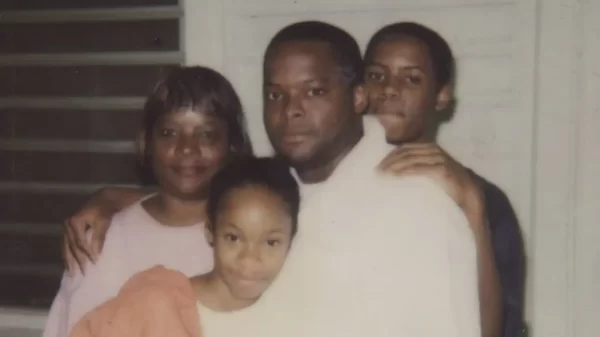






















From November 20 to December 25, 2025, Kenneth Shaun Traywick did not eat.
Traywick is a prison reform advocate also known as Swift Justice, and his 35-day hunger strike came in response to an incident at Bullock Correctional Facility in which ADOC correctional officer Darius A. Glover pepper-sprayed Traywick from behind. According to Traywick, the assault came as retaliation for Traywick’s own advocacy on behalf of other inmates who were also being assaulted by Bullock staff.
His hunger strike now over, Traywick spoke with APR from inside Bullock to share his experience and how he plans to continue fighting for reform.
“Physically… I’m still having issues with my stomach, but that’s to be expected,” Traywick said of how he has been feeling following the strike. “Mentally, emotionally… I’m pretty stressed out that I didn’t accomplish anything outside of getting a little bit of media attention. As far as accomplishing what I wanted to accomplish, to me it’s a failure.”
While on strike, Traywick made several demands of ADOC, including transfer out of Bullock; the end of “retaliatory and excessive force practices;” the ability to send and receive written mail; a meeting with ADOC Commissioner John Hamm and an investigation “into CERT Officers Glover and Bowen as well as any other officer accused of excessive force or retaliatory discipline/citation write ups.”
According to Traywick, ADOC met none of those demands before medical complications with his kidneys forced him to end the strike.
“One of the issues I’m having now is how easily ADOC ignored my strike and the fact that I was willing to go to the extreme just to be heard,” Traywick told APR. “They’re sending me a message and that, to me, is emotionally draining after so many years of us peacefully protesting in nonviolent ways and trying to reclaim our humanity so-to-speak instead of acting like animals, which is what we used to have to do to get the public to hear us.
“They’re sitting there saying they’re not going to pay me any attention or address the issue—or even just listen to the issue… they just ignored it, so, they’re basically telling us they don’t care about us acting like human beings,” he continued.
Traywick also told APR that ADOC had not discussed the possibility of transferring him from Bullock to a different correctional facility per his demands. However, he said that he is fine staying in Bullock for now, as it could give him another opportunity to shed light on malpractice and mistreatment within the facility.
“If I can’t have all of my demands met, then I don’t want not one of them met,” Traywick said. “Matter of fact, the longer I stay here, the more likely [Glover] is to mess up again and do something again, so I’d much rather just stay here… even since I’ve been out, he’s been aggressive and been taunting me… eventually I expect him to wind up blowing and playing into my hand.”
According to Traywick, the only communication he had with ADOC officials during the course of his hunger strike was with a warden who would simply ask Traywick if he was ready to end his strike.
“The warden would only come around and ask me, ‘when are you coming off the strike?’” Traywick said. “He wouldn’t even engage in why I was on strike.”
Traywick said that ADOC did allow him to file an official grievance related to the assault by Officer Glover, but that grievance was dismissed with ADOC declaring that the officer’s actions were justified. However, Traywick noted that he was able to have disciplinary infractions related to the incident dropped from his record.
Even though he expressed disappointment at the lack of tangible results from his hunger strike, Traywick told APR that he will continue to advocate for reforms in any way he can—including by drafting legislative proposals.
“One of the things I want to do is continue to show the public and our lawmakers the issues inside ADOC,” Traywick said. “One of the things me and my team are doing right now is drafting a piece of legislation and that’s something we’d like to see get [bipartisan sponsorship] dealing with the oversight of ADOC.”
Traywick and his nonprofit organization, Unheard Voices of the Concrete Jungle, UVOTCJ, shared with APR a draft of the legislative proposal he and other inmates are currently working on and hoping to find sponsorship for.
The proposal, which has been titled the “Alabama Correctional Transparency, Accountability, and Risk-Reduction Act,” looks to establish an Independent Oversight Authority, IOA, that would operate outside of ADOC. The IOA would be led by a director selected through a “merit-based process administered by the Alabama Personnel Board” and confirmed by the Alabama Joint Prison Oversight Committee.
Under the proposal, no more than one-third of IOA staff would be allowed to be former ADOC employees or contractors, and any such individuals would need to be separated from ADOC for at least two years before joining the IOA. The body would be tasked with reviewing use of force incidents within ADOC; analyzing systemic trends related to use of force, training, staffing and facility conditions; and issuing reports on their findings, both to the public and to the Joint Prison Oversight Committee.
Additionally, the proposal outlines standards for preserving evidence related to reported incidents of misconduct or harm within ADOC, and includes provisions for the implementation of body-worn cameras, BWCs, in ADOC facilities.
“My goal isn’t to take away any of the authority of ADOC, but at the same time we’re going to have to have independent oversight,” Traywick explained, arguing that the current lack of independent prison oversight in Alabama allows ADOC officials to skirt accountability and squash calls for reform.
“The only thing that anybody can go by is what ADOC says… and there is no independent oversight in this,” Traywick continued. “We actually need [independent oversight], not only to expose any kind of corruption, but to look after the taxpayer and the public. The simple fact is we’re spending millions, hundreds of millions of dollars in settlements every year in lawsuits, and that’s not even counting the hundreds of millions of dollars we’re paying these lawyers to represent the ADOC. So, we’ve got a huge cost that’s being impacted on the taxpayers just to fuel the corruption that’s going on on the inside.
“You’ve got ADOC investigating ADOC actions and nobody else can go against what ADOC tells them,” he added.
Traywick said he believes there is no one better suited to draft prison reform legislation than the incarcerated individuals themselves who experience the conditions inside ADOC facilities firsthand.
“I want, not only our legislators, but I want the public to know this: these pieces of legislation are coming from guys on the inside, and who better else is there to know the situation or the problems than the ones that are closely, directly involved in the problem?” Traywick said.
Traywick concluded our interview by stressing that his advocacy, including his 35-day hunger strike, is not motivated by self-interest, but by a desire to stand up for the dignity of all ADOC inmates. In Traywick’s view, the fact that ADOC refused to negotiate with him during the strike despite his notoriety signifies just how powerless Alabama’s prison population truly is.
“What I need the public to understand is that I have had a media platform, and when lawmakers and ADOC have heard my name in the past, it raises the hair on their arms because they don’t like that my voice has carried a long ways in the past,” Traywick explained.
“But for these individuals in the ADOC to turn around and say, ‘we don’t give a damn who you are, or what kind of support you have, or who you might think you are. We don’t care enough about what you’ve got to say, we’re going to silence you just as much as we’re going to silence everybody else,’” he continued. “If they’re going to silence and overlook me, with the name that I have earned over the past few years, imagine the problems these individuals in here with no name whatsoever—no family, no friends and no support out there in the world—how helpless do you think these individuals are?
“For me, it’s not about me. And when I place myself into this position, I know what I’m doing, and I just go by the soldier mentality that I have. These are my comrades and it doesn’t matter what they’re in prison for or how long they’ve been in prison, to me they’re in the same shoes, they’re in the same clothes that I am, so I have to unite with these individuals as family. I think it’s my duty, just as I think it’s the nation’s duty, to stand up for the individuals who can’t stand up for themselves.”
Traywick is currently serving a 25-year sentence after being convicted on charges of first-degree robbery and first-degree sodomy in 2009. He has maintained his innocence since his conviction, leading him to become an outspoken advocate for prison reform in Alabama—including by writing several opinion pieces published by APR. The Alabama Board of Pardons and Paroles denied Traywick’s latest parole application in June of 2024, with his next parole hearing set for 2029.