













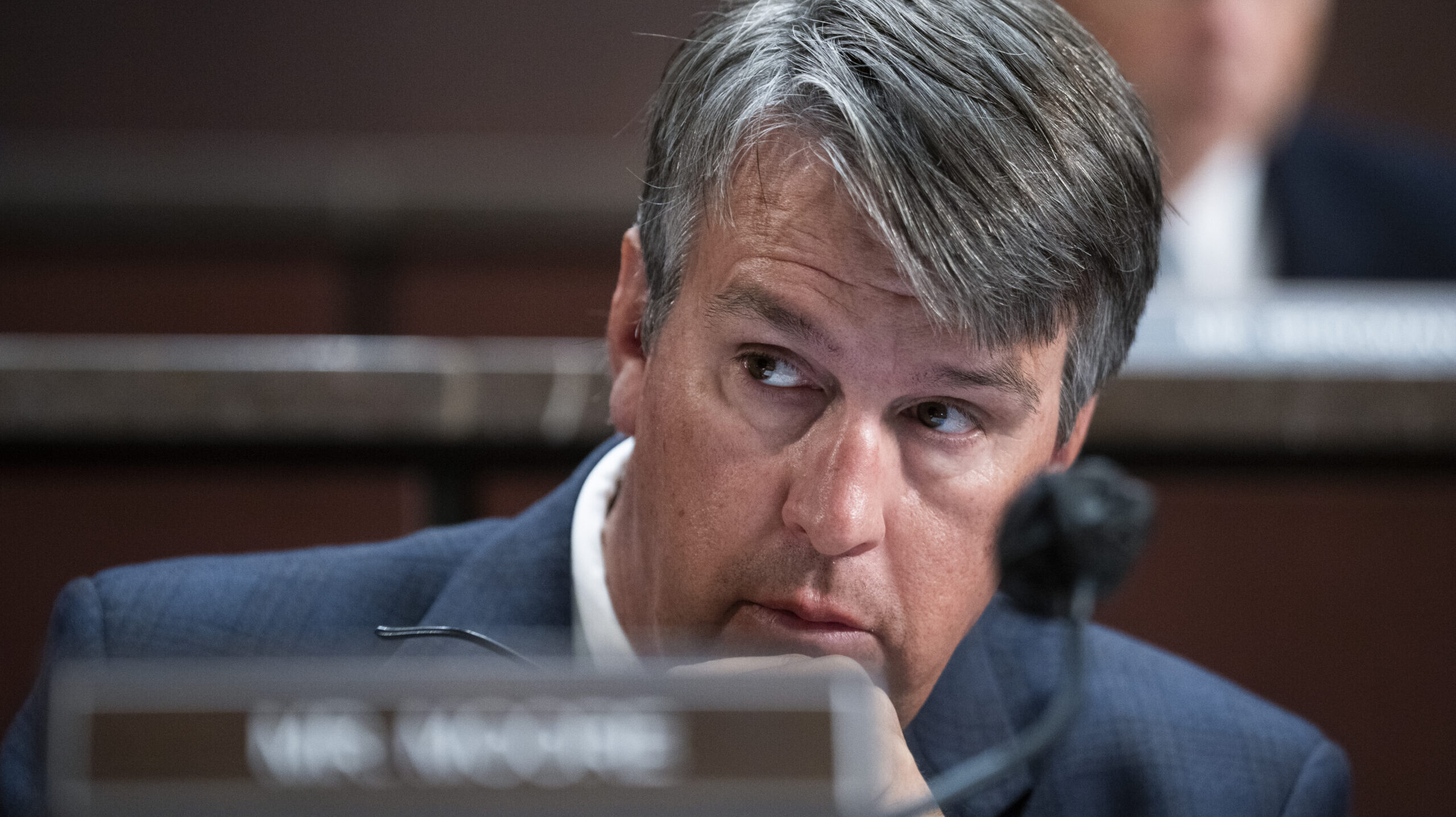
U.S. Representative Barry Moore, R-Alabama, filed legislation last week that would require individuals to denounce Sharia law to receive certain visas.
The Countering Radicalism Under Sharia and Defeating Extremism, or CRUSADE Act, would require applicants for EB-4 special immigrant visas to take an oath to uphold the U.S. Constitution and disavow Sharia law.
The EB-4 visa is an employment-based visa for “special immigrants,” including religious workers, certain broadcasters, certain physicians, or individuals who have assisted state or federal law enforcement by supplying information concerning criminal or terrorist organizations or enterprises.
“America is built on the rule of law and the supremacy of the Constitution—not foreign legal systems that conflict with our freedoms and values,” Moore said in a written statement describing why he filed the bill.
“The CRUSADE Act makes clear that anyone seeking entry into the United States as a religious worker must affirm their commitment to the Constitution and reject the extremist practices found in sharia law that have been used to justify persecution, violence, and the suppression of basic human rights,” Moore continued.
“Religious liberty is one of our nation’s founding principles, but it cannot come at the expense of the constitutional order that protects all Americans,” he added.
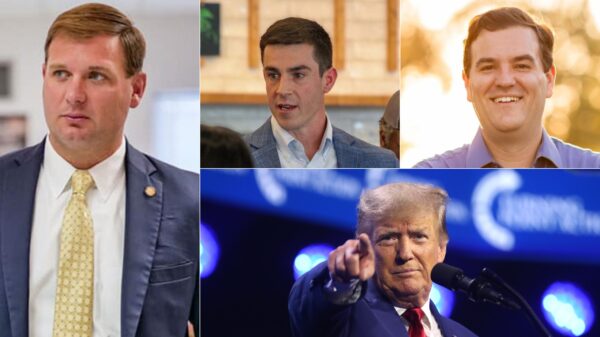
Cosponsors of Moore’s bill include Representative Clay Fuller, R-Georgia, Representative Andy Ogles, R-Tennessee, and Representative Josh Brecheen, R-Oklahoma.
All cosponsors of the bill have been vocal in their claims that certain Muslim Americans wish to impose Sharia law over the U.S. Constitution and are members of the Sharia-Free America Caucus.
During an interview on Friday, Britton O’Shields, staff attorney for the Alabama Council on American-Islamic Relations, expressed concerns that the legislation asks Muslims to denounce their beliefs in order to enter the U.S.
O’Shields emphasized that, rather than a literal governmental or legal theory, Sharia is a code of ethics that guides how Muslims live their daily lives within their faith and is more akin to religious codes of ethical conduct observed in Christianity and Judaism.
Western definitions of Sharia law, however, commonly associate the term with the contemporary legal interpretation and application of Sharia in the judicial systems of Islamic countries, a separate practice known as Fiqh.
“Putting additional measures in place, limiting their ability to follow Sharia is duplicative and doesn’t really accomplish anything new,” O’Shields said. “Additionally, I just don’t know any Muslims who are looking to establish Sharia law as the law of the land.”
“I’ve never heard, one time, somebody talking about instituting Sharia law over the law of the United States or, you know, instead of the Constitution,” she added of her interactions with Alabama’s Muslim communities.
O’Shields went on to argue that American “lawmakers have more in common with Muslim communities than they might think,” encouraging Moore to visit an Alabama mosque as part of his U.S. Senate campaign.
“We’ve extended opportunities to several local leaders to visit a mosque, to meet with their Muslim constituents, and I think there’s a real opportunity for collaboration and for real growth, through those relationships,” she said.
When asked to describe her reaction to the legislation’s title, O’Shields said she “was not encouraged” by the bill’s reference to the Crusades, expressing concerns that by doing so, the bill casts Islam as diametrically opposed to Christianity.
“A lot of Islamophobic rhetoric centers around crusader imagery, right?” she said. “Which presents Islam as something to be liberated from or conquered. So, the title itself is promoting these Islamophobic ideals.”
Messages were left with Moore’s office on Monday requesting additional comments responding to O’Shields’ remarks on the bill.