



















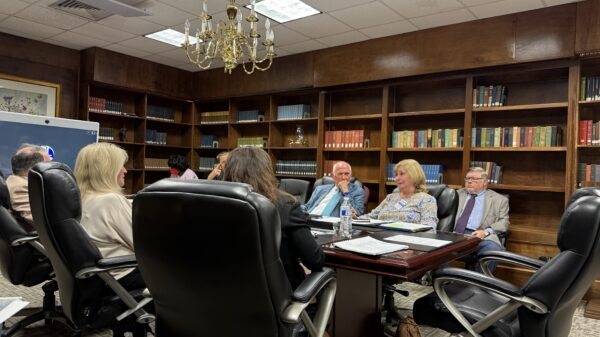








The Alabama Environmental Management Commission heard public comment earlier this year on proposed updates to the state’s water toxicity standards, drawing differing perspectives from environmental advocates and industry representatives.
The proposed changes, developed by the Alabama Department of Environmental Management, would have revised human health and aquatic life criteria for 12 toxic substances, six with updated cancer potency factors and five with updated oral reference doses. The changes would’ve allowed much lower limits for toxic pollutants in water.
Following the public comment period, ADEM reviewed the input and provided a recommendation to the Commission, which has final authority over whether to adopt the proposed rule changes.
The updates, intended to reflect more recent federal guidance and scientific assessments, were unanimously rejected by AEMC.
Supporters of the revisions told AEMC during the meeting’s public comment period that Alabama’s current standards rely on outdated toxicity values and should be updated to better reflect current science.
Katie Holmes, program director for Blackwarrior Riverkeepers, argued that adopting newer criteria would strengthen protections for public health and water quality.
“The well-being of our entire state depends on the people in this room. It pains me to say this, but you all have abandoned your biggest responsibility: to protect Alabamians,” Holmes said.
Opponents of the proposal, including representatives of industry and municipal interests, raised concerns about the potential cost and implementation of the updated standards.
Others expressed concern that adopting stricter criteria could increase compliance costs for wastewater systems and industrial facilities, and could place Alabama at a disadvantage compared to neighboring states.
Manufacture Alabama released a statement after the proposed rules were rejected, praising the decision on behalf of Alabama’s regulated communities.
“Given the significant concerns raised regarding the feasibility and cost impacts of these revisions, we believe this is the appropriate outcome and one that reflects the importance of hearing directly from Alabama’s regulated community,” the statement reads.
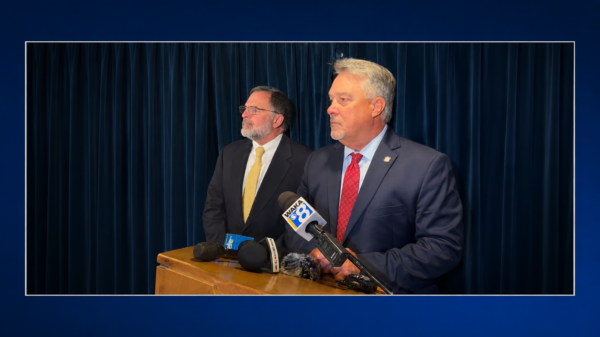
Jon Barganier, president and chief executive officer of Manufacture Alabama, spoke at the AEMC meeting on Friday, praising the common-sense approach that the commission took when considering the proposed rules.
“As a regulated industry, we certainly scratch our heads at some of the measures that were being proposed from a viability and reality standpoint,” Barganier said.
The discussion came as lawmakers passed bills during the legislative session related to how state agencies adopt regulations that may be more stringent than federal standards, an issue raised by several speakers during the hearing.
David Ludder, attorney with the Environmental Defense Alliance, spoke to the consequences of locking policies into narrow interpretations, calling it a “significant departure from historical practice.”
“Subsection C prohibits the adoption of newer or revised water quality criteria unless the scientific and technical information relied on to support the standard established by the rule is based on best available science and the weight of the evidence. Those terms are defined very restrictively in the statute,” Ludder said.