



























Democracies rarely become unstable all at once.
More often, instability grows slowly, as more citizens begin losing faith not merely in politicians but in the fairness of the system itself. The rules still exist. Elections still happen. Courts still issue opinions. But over time, more Americans begin believing the outcomes were shaped long before the votes were cast.
That is why the U.S. Supreme Court’s recent redistricting decisions involving Louisiana and Alabama matter far beyond the Deep South.
On the surface, the debate appears technical, even obscure. Courts are wrestling with competing constitutional principles involving race, representation, partisan politics and congressional maps. But beneath the legal language lies something much larger: the growing belief among millions of Americans that the institutions governing political power are becoming increasingly difficult to separate from partisan outcomes.
For decades, federal courts attempted to balance two competing constitutional ideas. First, the Constitution and the Voting Rights Act sought to prevent racial discrimination in voting and ensure minority voters had meaningful representation. Second, the Equal Protection Clause increasingly pushed courts toward the principle that government should not classify citizens primarily by race.
Those principles were never easy to reconcile, particularly in the Deep South, where race and politics have been intertwined for generations—not theoretically, but structurally, historically and demographically.
The political geography of states such as Alabama and Louisiana did not emerge in a vacuum. It was shaped by Reconstruction, Jim Crow, the civil rights movement, racially polarized voting patterns and the eventual partisan realignment of the South itself.
That history matters because modern redistricting law increasingly asks courts to separate race from politics in places where the two often overlap almost completely.
The Supreme Court’s recent decision in Louisiana v. Callais signals the court is moving toward a doctrine giving legislatures broader latitude to defend maps as political rather than racial exercises. Conservatives argue this restores constitutional neutrality and returns authority to elected legislatures rather than unelected federal judges. Critics see something very different: a legal framework increasingly allowing partisan logic to accomplish indirectly what earlier courts prohibited explicitly.
To many Americans, these rulings no longer feel like distant constitutional debates argued inside law schools or federal courtrooms. They feel like deeply personal decisions shaping who holds power, whose communities matter, whose votes carry influence and whether the political system still appears open to everyone equally.
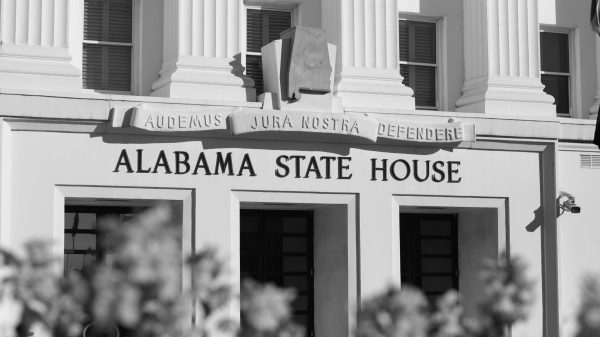
That debate now sits directly over Alabama.
Following Allen v. Milligan, federal courts imposed a congressional map containing two districts where Black voters had meaningful electoral opportunity. That map produced a congressional delegation more reflective of Alabama’s demographic realities.
Now, after Callais, Alabama Republicans appear increasingly likely to pursue some version of the Livingston maps, configurations designed to restore a likely 6-1 Republican congressional advantage. Some Republicans increasingly argue Alabama’s congressional delegation should mirror the state’s overwhelming Republican electoral dominance.
Supporters view those maps as lawful exercises of political authority and traditional districting principles. Many Black Alabamians and Democrats view them as evidence that representation secured through decades of Voting Rights Act litigation may now be increasingly fragile.
And that is where the deeper danger emerges.
America has survived fierce disagreement before. The nation survived the Civil War, the turmoil of Reconstruction, the violence of the civil rights era and the distrust that followed Watergate. Democracies can survive conflict.
What they struggle to survive is the slow erosion of legitimacy itself.
The greater danger comes when citizens begin viewing every election as existential, every defeat as illegitimate and every institution—courts, elections, Congress, even truth itself—as merely another weapon in a permanent political war.
Few constitutional systems remain stable for long under those conditions.
Americans have watched Senate norms collapse, Supreme Court confirmations become partisan trench warfare, congressional maps repeatedly redrawn through litigation and constitutional rulings increasingly interpreted not through principle but through the question of which side benefits.
With each escalation, trust weakens a little more.
At the same time, social media outrage, partisan media ecosystems and political tribalism have amplified the belief that every institutional fight must end in total victory or total defeat. Once every political loss becomes viewed as a national catastrophe, compromise itself begins to look like surrender.
History teaches that republics survive only when enough leaders and citizens place legitimacy above total victory. The unsettling question facing the country now is whether enough Americans still believe preserving the system matters more than defeating the other side.
The greatest threats to constitutional systems are not always dramatic or immediate.
Sometimes the danger emerges slowly, through accumulated distrust, escalating retaliation and the gradual disappearance of the civic restraint that once held political conflict within accepted boundaries.
But constitutional systems ultimately depend on something more fragile than laws alone. They depend on restraint, trust and the willingness to lose an election without believing the country itself has been lost.
That civic understanding once acted as an invisible guardrail inside American democracy.
Today, that guardrail appears increasingly weakened.
Because once citizens stop trusting the rules, they eventually stop trusting one another. And when that happens, politics stops being a contest over ideas and becomes a struggle for survival instead.
Republics were never designed to endure indefinitely under those conditions.