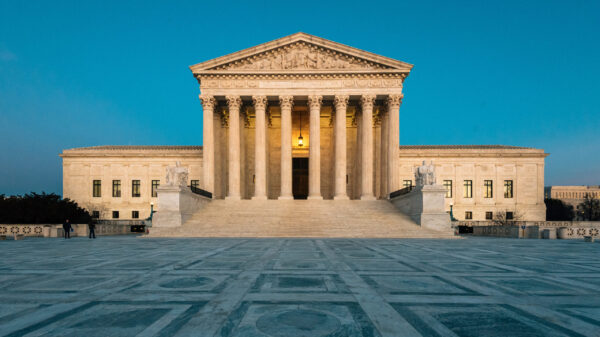
















Alabama officials are again turning to the U.S. Supreme Court in the fight over the state’s congressional maps, arguing that a new high court decision has changed the legal landscape.
Attorney General Steve Marshall filed three emergency motions seeking to lift federal injunctions blocking Alabama’s 2023 congressional map. The request at the heels of the Court’s ruling in Louisiana v. Callais, a decision state leaders say warrants swift reconsideration of Alabama’s case.
The filings seek relief from lower court orders that prevented Alabama from using a Legislature-drawn map and instead required the use of a court-ordered plan for recent elections. Marshall argues that the reasoning in the Callais decision undercuts the basis for those injunctions and justifies restoring the state’s authority over its district lines.
Secretary of State Wes Allen, the named appellant in the redistricting litigation, separately asked the Supreme Court to expedite consideration of the case. In a statement, Allen said he is working in cooperation with Marshall to secure “quick and decisive action” from the justices.
“As the appellant in Alabama’s redistricting case, I have taken the legal measures necessary, in cooperation with Alabama’s Attorney General Steve Marshall, to ask the U.S. Supreme Court to take quick and decisive action which will allow Alabama to pursue congressional maps that reflect the will of the people. It is my hope that our right as Alabamians to draw districts will be swiftly restored and that the days of court-appointed mapmakers will be behind us,” said Allen.
The state’s redistricting battle stems from earlier rulings in Allen v. Milligan, in which the Supreme Court upheld findings that Alabama’s 2021 congressional map likely violated Section 2 of the Voting Rights Act by diluting the voting strength of Black Alabamians.
After the Legislature adopted a revised map in 2023, a three-judge federal panel concluded it still failed to comply with the Voting Rights Act and imposed a remedial map drawn by a court-appointed special master.
That court-ordered map created a second congressional district in which Black voters have an opportunity to elect a candidate of their choice, which reshaped the state’s political landscape in the 2024 election cycle.
In the new emergency motions, Marshall argues that the Callais decision calls into question the standards applied by the lower court in blocking Alabama’s map. He is asking the justices to lift the injunctions and allow Alabama to reinstate its Legislature-passed plan while the broader legal issues are resolved.
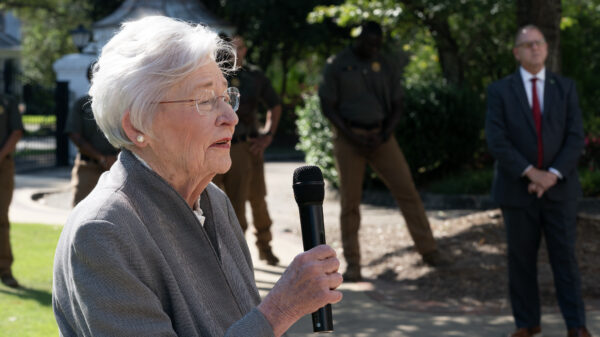
Governor Kay Ivey publicly backed the filings on Thursday, praising both Marshall and Allen for acting quickly.
“I applaud Attorney General Steve Marshall and Secretary of State Wes Allen for quickly filing emergency motions at the Supreme Court regarding Alabama’s redistricting case. As I have said time and again, Alabama knows our state, our people and our districts better than the federal courts or activist groups. I remain hopeful that Alabama receives a favorable ruling from the Supreme Court,” said Ivey.
The trio of emergency filings asks the Court not only to lift the injunctions but to move the case more quickly. State officials contend that clarity is needed well in advance of future election cycles.