















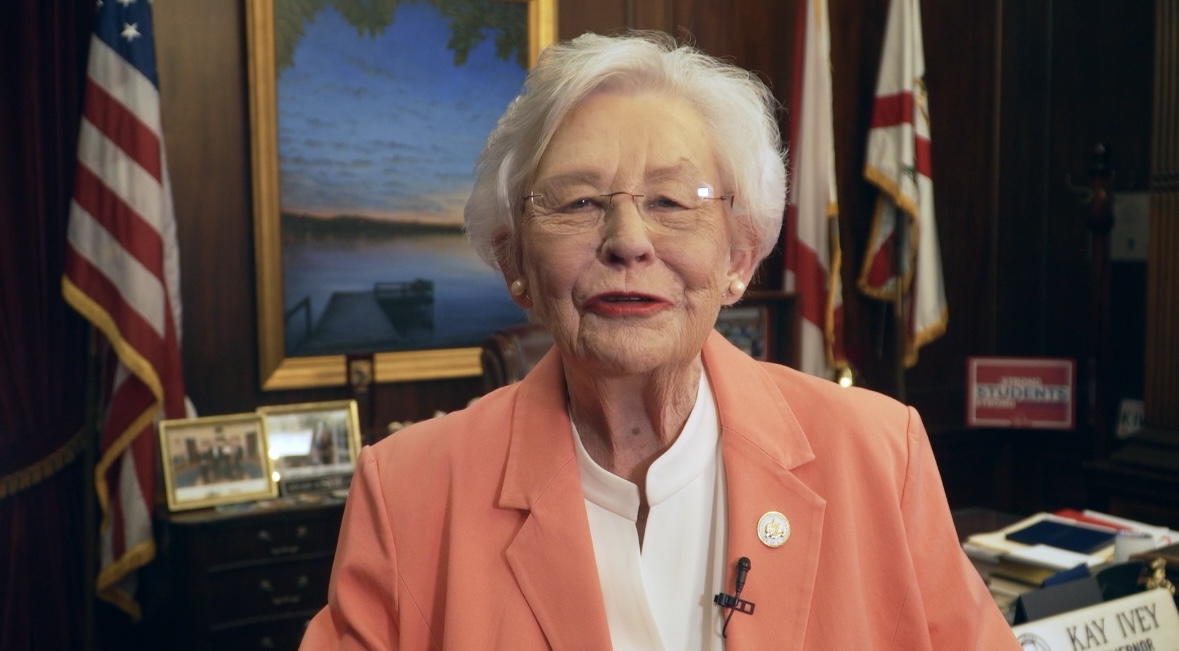
Alabama’s long-running congressional redistricting war entered a new phase Friday as Governor Kay Ivey called lawmakers back to Montgomery in hopes the U.S. Supreme Court has handed Republicans an opportunity to reclaim control of the state’s congressional maps—and potentially reshape Alabama’s role in the battle for control of Congress.
The special session will begin May 4 at 4 p.m., following this week’s U.S. Supreme Court ruling in Louisiana v. Callais, a decision many conservatives across the South view as a significant victory in the growing national fight over race, redistricting and political power.
The ruling significantly narrowed how race can be considered in congressional redistricting cases—a shift that could trigger new map fights across the country ahead of the 2026 midterm elections.
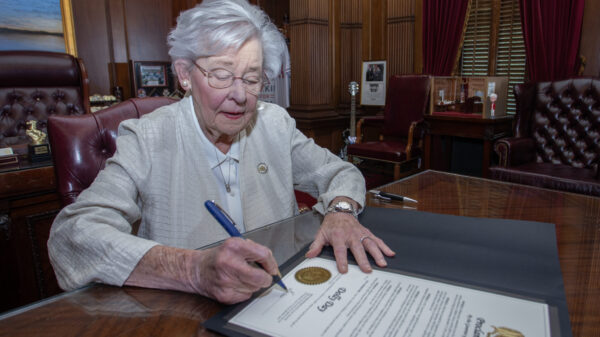
In a statement Friday, Ivey said Alabama must be prepared should the courts move quickly enough to allow previously enacted legislative maps to return for use during the current election cycle.
“Following the successful 2020 census, Alabama maintained our representation in Congress, and I called a special session to redraw our maps,” Ivey said. “Since then, we have been battling federal courts and activist groups who think they know Alabama better than Alabama.”
Ivey again framed the legal challenge as a conflict between Alabama’s elected leadership and federal courts backed by voting-rights organizations.
“Earlier this week, however, the U.S. Supreme Court issued a positive decision in the Louisiana v. Callais case, which I said was encouraging for our own pending litigation,” Ivey said.
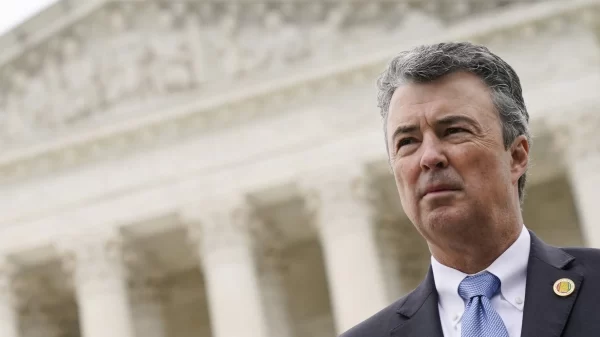
Immediately after the ruling, Alabama Attorney General Steve Marshall filed emergency motions with the U.S. Supreme Court seeking relief in Alabama’s redistricting case.
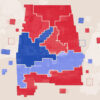
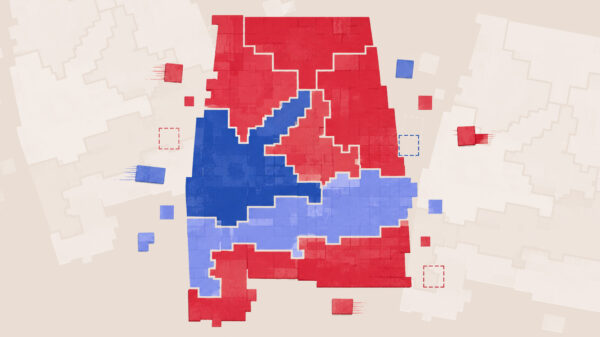
At issue is Alabama’s congressional map, which federal courts previously ruled likely violated the Voting Rights Act by failing to create a second district in which Black voters could elect a candidate of their choice. A court-ordered map has been in place since 2023, creating a newly competitive 2nd Congressional District.
Under that court-drawn map, Democrat Shomari Figures won election, giving Democrats a rare congressional pickup in Alabama and ending what had been for years a six-to-one Republican congressional advantage.
Republican leaders now hope the Supreme Court’s Louisiana ruling could ultimately weaken or overturn the legal reasoning underpinning Alabama’s current court-ordered map.
Alabama has spent decades battling federal courts over voting rights and redistricting issues, but the current fight has become one of the nation’s most closely watched cases because of its potential impact on how the Voting Rights Act is interpreted moving forward.
Ivey said the special session is designed primarily to establish election procedures in the event the courts lift existing injunctions before the 2026 election cycle fully unfolds.
“By calling the Legislature into a special session, I am ensuring Alabama is prepared should the courts act quickly enough to allow Alabama’s previously drawn congressional and state senate maps to be used during this election cycle,” Ivey said.
If the injunction is lifted, Alabama would revert to congressional maps passed by the Legislature in 2023 and state Senate maps approved in 2021.
The governor said lawmakers are specifically being asked to pass legislation allowing special primary elections in districts affected by court action.
“I expect the Legislature to address this call in fast order and be completed within five days,” Ivey said.
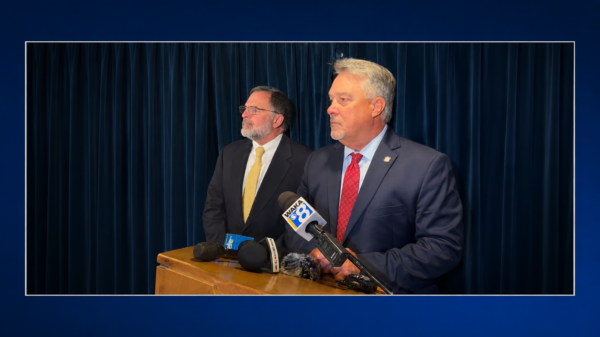
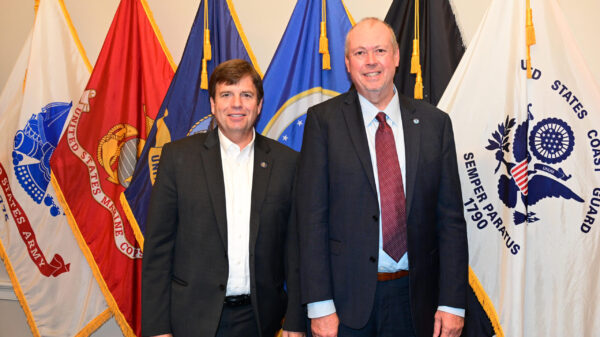
House Speaker Nathaniel Ledbetter and Senate President Pro Tem Garlan Gudger issued a joint statement supporting the governor’s move and framing the issue as part of a broader national political battle over congressional control.
“After extensive dialogue and careful planning among Alabama’s legislative leadership and Governor Ivey, we are grateful for the opportunity to convene in a special session to address the issue of redistricting,” the statement said.
The two Republican leaders described the Supreme Court’s ruling in Callais v. Louisiana as a “landmark victory for conservatives.”
The statement also made clear the political objective behind the special session: Restoring a congressional map Republicans believe would likely return Alabama to an all-Republican congressional delegation.
“While there are no guarantees that Alabama’s now unlawful, court mandated roadblock will be removed in time, we have a responsibility to give our state a fighting chance to send seven republican members to Congress,” the statement said.
The two leaders also acknowledged the broader national stakes, noting that “control of the U.S. House of Representatives could come down to just a handful of seats.”
The special session announcement comes as Alabama once again finds itself at the center of the nation’s escalating redistricting wars—a fight increasingly shaping not only Southern politics, but control of Congress itself.
What happens next could determine far more than Alabama’s congressional boundaries. The outcome may help decide whether states across the country redraw maps more aggressively in pursuit of partisan advantage—and whether the courts remain willing to intervene when race and political power collide.