























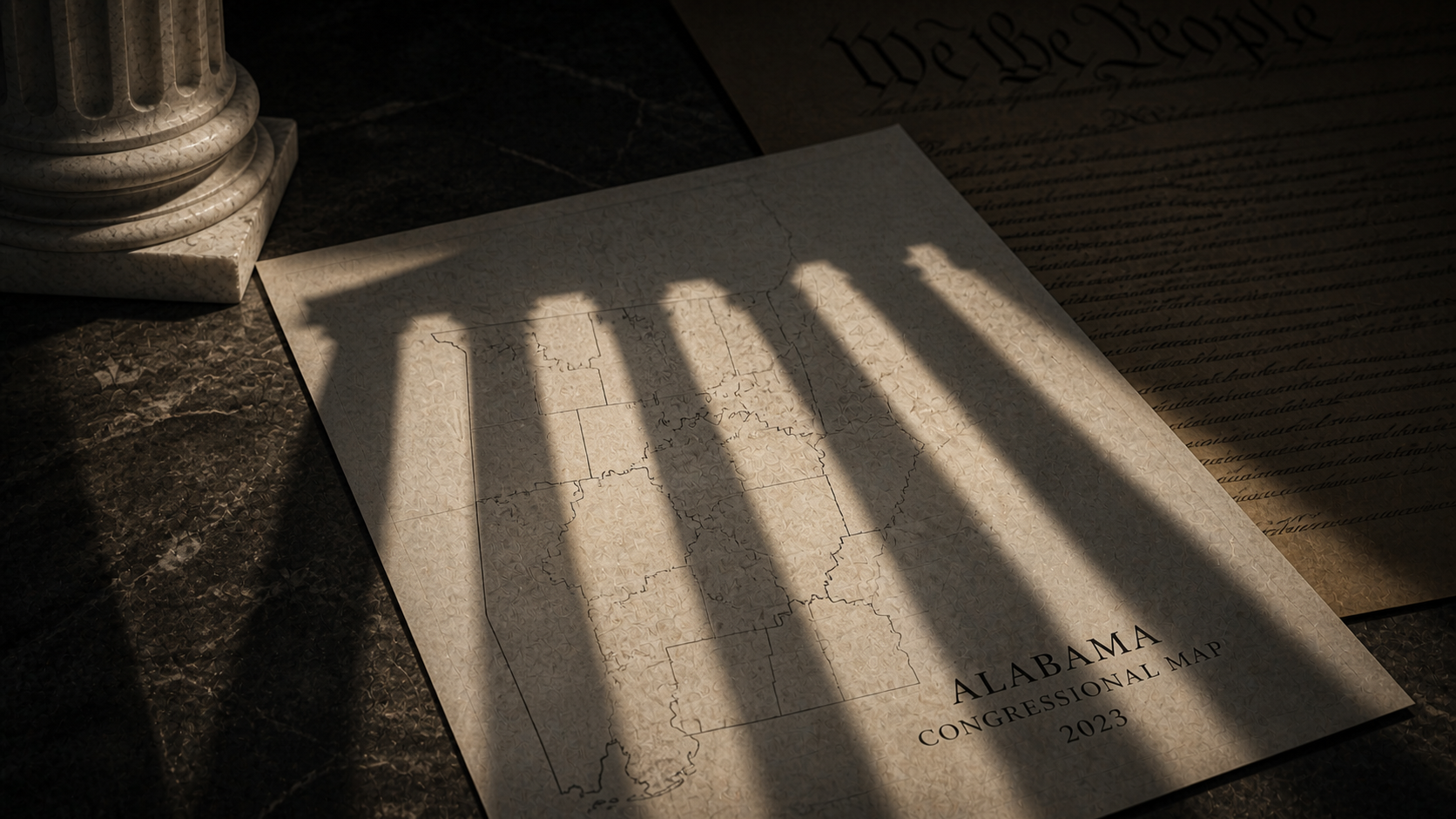
The Supreme Court increasingly finds itself trying to reconcile two principles that may no longer fit comfortably together.
The law may require states to consider race in order to prevent minority vote dilution. The Constitution increasingly warns states not to consider race too much.
Alabama’s latest challenge in Allen v. Milligan now places that tension directly before the Court. And notably, the Court itself appears aware of the contradiction emerging within its own jurisprudence.
In Louisiana v. Callais, Justice Samuel Alito insisted the Court had “not overruled Allen.” But the majority also declared that “race and politics must be disentangled” and warned that if Section 2 claims are used “as a tool for advancing a partisan end, the VRA’s noble goal will be perverted.”
That language now sits at the center of Alabama’s latest filings.
Following the Supreme Court’s decision in Callais, Alabama officials returned to the Court arguing that the ruling significantly altered the legal standards surrounding congressional redistricting and Section 2 of the Voting Rights Act.
Attorney General Steve Marshall and Secretary of State Wes Allen filed emergency motions asking the justices to quickly reconsider lower court injunctions that blocked Alabama’s Legislature-drawn congressional map.
The filings matter not simply because Alabama seeks to redraw districts, but because they expose a deeper tension within modern voting-rights law itself.
At the center of that debate are two competing principles.
Section 2 of the Voting Rights Act sometimes requires states to account for race in order to prevent minority vote dilution.
The Equal Protection Clause of the Fourteenth Amendment, however, limits the extent to which race may predominate in government decision-making, including congressional redistricting.
For decades, courts attempted to balance those competing obligations.
But the Supreme Court’s modern redistricting jurisprudence has increasingly moved in two directions simultaneously: preserving voting-rights protections formally while subjecting race-conscious districting to heightened judicial scrutiny.
That tension did not emerge overnight.
In Shaw v. Reno, the Court warned against race predominating in redistricting decisions. In Shelby County v. Holder, the Court invalidated key portions of the Voting Rights Act’s federal preclearance system. Then came Allen v. Milligan, which appeared to reaffirm Section 2’s continuing force.
Now, Callais may signal renewed limits on how those protections are implemented.
But the deeper question facing the Court is whether the law can realistically address racial vote dilution while increasingly treating race and politics as though they exist in separate worlds.
In theory, the distinction sounds manageable.
In practice, especially in much of the Deep South, it becomes extraordinarily difficult.
For generations, voting patterns in states like Alabama have reflected persistent racial polarization. Black voters have overwhelmingly supported Democratic candidates. White voters have overwhelmingly supported Republican candidates.
Courts did not invent that reality. Election results revealed it repeatedly over decades.
That history matters because the Voting Rights Act was born from lived reality.
From literacy tests, poll taxes, racial intimidation, selective enforcement of election laws, racial bloc voting, and district lines drawn not merely to organize political power, but to contain it.
The Court did not create that history, and it cannot escape it, either. Doctrine simply declare it resolved.
The Act was not enacted because Congress believed race improperly influenced politics in the South. It was enacted because race and political power were deeply intertwined throughout much of Southern history.
That reality is impossible to fully separate from the questions now confronting the Court. Which is why the Court’s modern jurisprudence increasingly reveals an unresolved tension within itself.
In Shelby County, Chief Justice John Roberts famously wrote that “our country has changed,” concluding that the federal oversight known as preclearance imposed on parts of the South under the Voting Rights Act could no longer be justified based on decades-old conditions.
But just a decade later, in Milligan, the Court itself concluded Alabama’s congressional maps likely diluted Black voting strength in violation of Section 2.
Those conclusions are increasingly difficult to reconcile.
If the conditions justifying extraordinary federal protections have fundamentally changed, then why did the Court later conclude Alabama’s maps likely violated the Voting Rights Act in the first place?
Yet if racial vote dilution remains a genuine concern, how can courts meaningfully address it while increasingly insisting race and politics must be cleanly disentangled?
That is the contradiction emerging beneath the doctrine.
It is historical, institutional, and ultimately moral.
Because the law does not operate in a vacuum. The Court may seek race-neutral principles, but the political and social realities underlying these disputes were not themselves race-neutral.
The Court is attempting to construct race-neutral doctrine in a political landscape shaped by generations that were anything but race-neutral.
That does not mean every modern districting dispute is evidence of intentional discrimination. Nor does it mean states lack legitimate interests in preserving traditional districting principles, regional communities or political boundaries.
Can the Constitution prohibit race from predominating in redistricting while still allowing the law to address racial vote dilution in places where race and political identity remain deeply connected realities?
That balance now sits at the center of Alabama’s filings.
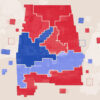
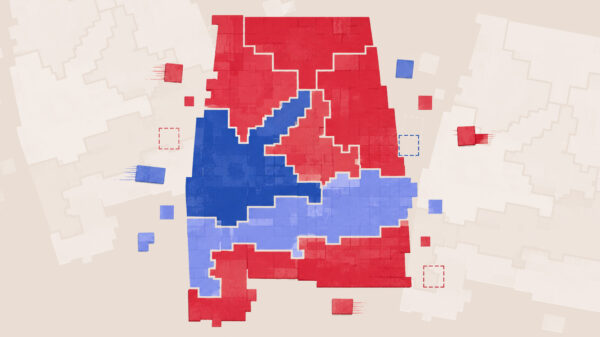
The state argues the lower federal court improperly required Alabama to subordinate race-neutral districting principles—including preserving Gulf Coast communities of interest and keeping Mobile and Baldwin counties together—in order to create a second majority-Black district.
The lower court, however, concluded Alabama’s 2023 map still diluted Black voting strength because alternative maps showed a second opportunity district could be drawn consistent with Section 2.
Alabama now contends that reasoning cannot be reconciled with Callais.
The Court’s newest language explains why.
While the majority insists Allen still stands, it is simultaneously signaling increasing skepticism toward maps and legal claims where race and partisan advantage substantially overlap.
And in states like Alabama, where racial polarization and political identity have remained deeply connected for generations, that overlap becomes extraordinarily difficult to separate in practice.
In practical terms, the Court is increasingly asking whether a district exists because of race itself or because of ordinary political behavior and geographic realities.
The dilemma is becoming increasingly apparent: States may face liability if they fail to consider race and liability if they consider it too much.
If the Court moves further in that direction, future Section 2 claims could become substantially more difficult to prove.
That does not mean Section 2 disappears.
Nor does it necessarily mean Milligan is overturned.
But it does suggest the legal environment surrounding voting-rights enforcement may be shifting in important ways.
The procedural posture of Alabama’s filings reinforces that possibility.
The state is not simply pursuing ordinary appellate review. Instead, it is seeking expedited consideration, immediate relief from existing injunctions, and in one case certiorari before judgment—asking the Supreme Court to bypass the normal appellate process entirely.
Such requests are rare and typically reflect a belief that immediate clarification is necessary.
At a minimum, Alabama clearly believes Callais significantly changed the governing legal landscape.
Critics of Alabama’s position argue the practical effect of the state’s approach could substantially narrow voting-rights protections by making it increasingly difficult to challenge maps that dilute minority voting strength.
Supporters, however, contend that states must retain the ability to pursue traditional districting principles and political considerations without race becoming the predominant factor in mapmaking.
That debate is likely only beginning.
The difficulty facing the Court is that history and doctrine do not always move at the same pace.
The Supreme Court has spent decades attempting to balance two principles that may be growing increasingly difficult to reconcile: preventing racial vote dilution, while prohibiting race from predominating in public policy.
Alabama’s challenge may ultimately require the Court to define where that balance rests.
And the answer may determine whether the remaining protections of the Voting Rights Act can continue to function within the framework the Court itself is creating.