














There was a time in American politics when attacking someone’s religion was understood to be disqualifying. Americans may not have always agreed on faith. But the standard existed because they agreed on something more fundamental—that belief itself was not a political weapon.
That boundary is now giving way.
What began as broad, often careless political attacks on Islam—usually dressed up in the language of security or cultural concern—has expanded into something far more revealing. When rhetoric turns toward figures like Pope Leo XIV, the spiritual head of a church followed by millions of Americans, the argument is no longer about fear of the unfamiliar. It is about whether any faith is off-limits at all.
And once that question is asked, the answer is usually the same.
No.
America has been here before, and it is not a part of our history anyone should be eager to revisit. Native Americans saw their beliefs dismissed as primitive. Jews were excluded from civic life. Baptists were jailed. Mormons were driven out. Catholics were treated as suspect. Quakers were persecuted. Each moment came with its own justification. Each was defended by people convinced they were protecting something larger.
They weren’t. They were eroding it.
America is not always perfect. Still, we have learned—slowly, unevenly, but decisively—that religious exclusion is weakness disguised as certainty. And so we drew a line, not perfectly but clearly enough to matter, and we called it tolerance.
That line is now being tested.
Because over the last decade, parts of the political right—often the same voices that claim to speak most loudly for faith—have abandoned any consistent standard of tolerance. Religion is defended when it aligns, and attacked when it does not. It is invoked when useful, and dismissed when inconvenient.
This is where the argument collapses.
You cannot defend religious liberty selectively.
You cannot claim faith as a moral authority while using it as a political tool.
And you cannot pretend this is about principle when it so clearly follows power.
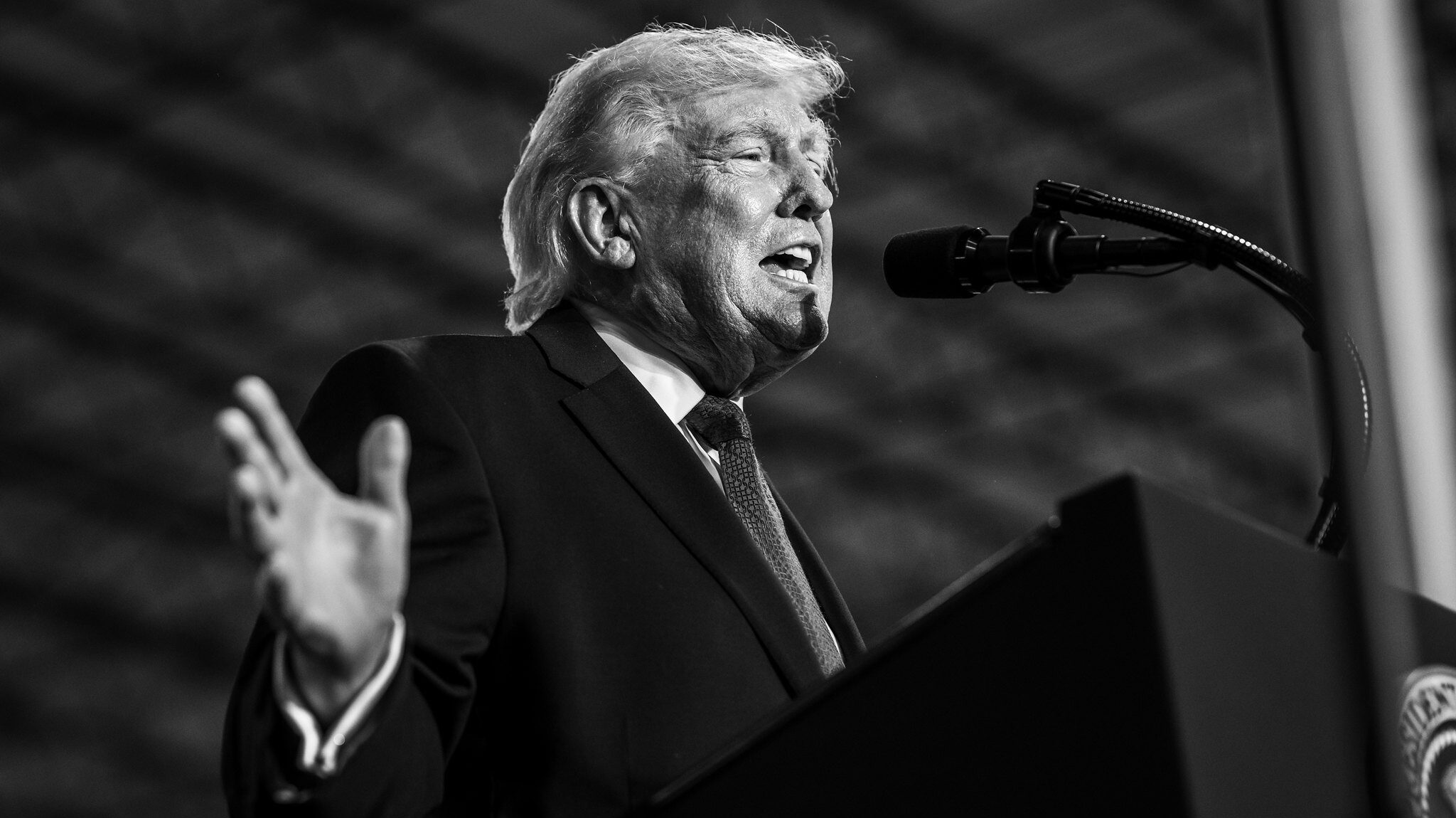
Under President Donald Trump, that shift has been far from subtle. Trump has not just crossed lines; he has made crossing them routine. He has created a political culture where no institution, not even religious ones, is beyond attack if it stands in the way. The criticism of the pope is a warning rather than an outlier.
The American system was designed with that reality in mind. The First Amendment does not favor one religion over another, nor does it merely tolerate belief. It removes religion from the reach of political power altogether. It draws a boundary not between faiths, but between belief and authority, because the Founders understood what we seem to be forgetting: Once power begins deciding which beliefs are acceptable, liberty becomes conditional.
And conditional liberty does not last.
History moves in patterns. It begins with someone—someone easy to dismiss, someone politically convenient, someone others are willing to ignore. And then it expands. Not because it must, but because no one stops it when it starts.
That is where we are now.
Not at the end of the story, but at the point where it can still be changed.
And that is where the obligation becomes unavoidable.
Because this is no longer just about what politicians say.
It is about what citizens accept.
It is about whether people who claim to value faith are willing to defend that principle when it applies to someone else’s belief, not just their own.
It is about whether there is still enough honesty left to say that a line is a line—even when it is being crossed by those you support.
That is not politics.
That is character.
It requires something we do not talk about enough anymore.
It requires courage.
The willingness to say this is wrong, even when it is politically useful.
The willingness to defend a principle before it disappears.
The willingness to understand that the rights you excuse being diminished today will not be there for you tomorrow.
This is not about Islam.
It is not about Catholicism.
It is not about Judaism.
It is about whether faith itself is still beyond the reach of power.
Because once belief becomes something to be approved or rejected by politics, it’s relegated to the status of a privilege instead of a right. And history is clear about what happens next.
Privileges can be taken. Rights are supposed to be defended.
The question is whether we still know the difference—and whether we have the courage to act on it.