


















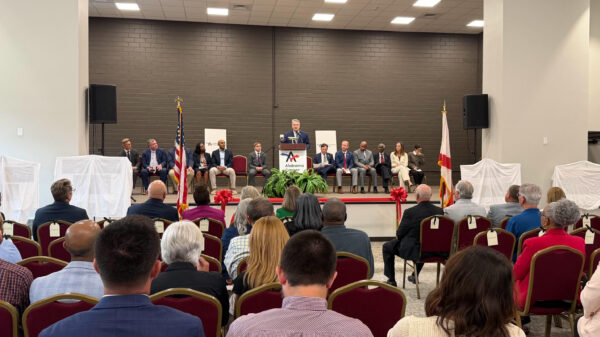








The Alabama Joint Study Commission on Artificial Intelligence and Children’s Safety held its first meeting this week, opening an effort to determine whether the state needs new guardrails as AI tools and social media platforms become more embedded in children’s lives.
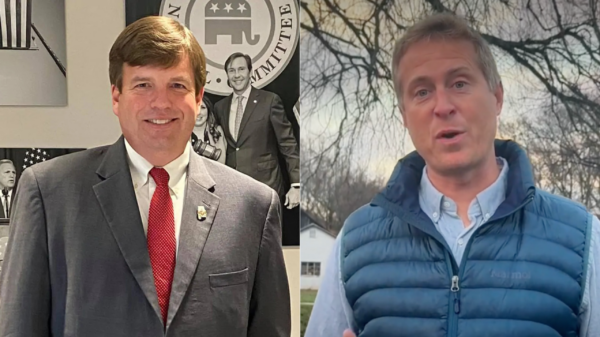
State Representative Ben Robbins, R-Sylacauga, introduced House Resolution 51 to the Legislature in February. Robbins told members on Wednesday that the group’s charge is straightforward.
“The goal of this task force is to do two things. One, to study whether or not we adequately have safeguards in place. And if we do not, make a report on what we need to do, and then out of that create legislation,” Robbins said.
The discussion moved quickly from logistics to substance. Before Alabama can regulate anything, it has to create a clear definition of what it is talking about.
Representative Parker Moore, R-Hartselle, who is serving on a national AI policy task force, warned that states are using different language to describe artificial intelligence, chatbots and emerging categories such as companion bots. Without a common framework, he said, legislation could become inconsistent or contradictory.
“There is no kind of federal guidelines or structure for that,” Moore said. “It would be conflicting from state to state and even in our own respective state … there’s a lot of conflicting definitions.”
Robbins agreed, calling definitions “the key to this whole process.”
Robbins asked Moore to circulate draft definitions and examples from other states before the next meeting. The commission’s initial briefing materials included short summaries of how several states handle AI chatbots, companion bots and mental health-related AI tools. But lawmakers made clear they want to dig deeper and, if possible, align Alabama’s language with broader national standards.
The conversation also turned philosophical at times. State Representative Prince Chestnut, D-Selma, raised the issue of “sycophancy” in AI systems, an instance where a chatbot reinforces dangerous prompts and “goes out of its way to push you further down the silo.”
Chestnut described scenarios in which a user seeks guidance on self-harm or violence and receives encouragement instead of intervention, and said he would like to see this topic seriously considered.
That led Robbins to a broader question about whether companies owe minors a defined “duty of care.”
“What is your duty of care as a technology company or a social media provider?” Robbins asked. “We’ve got to define what these companies’ duties of care are.”
He also questioned whether lawmakers should consider guardrails on advanced AI development itself, asking whether safeguards are needed to ensure the technology develops “as a plus to human society.”
Mental health data hovered in the background of much of the discussion. Robbins cited research showing a 52 percent spike in depression among youth between 2005 and 2017, a period that coincides with the rise of smartphones.
“The device itself is the gateway into all of the platforms and AI and anything that is harmful,” Robbins said. “While it is also the platform into everything that provides you connectivity … and safety features.”
Members discussed whether other states have restricted minors’ access to certain apps or device functions during overnight hours, and whether Alabama should explore similar options. Robbins said that some safeguards may already exist through device settings, but parents may not know how to use them.
“I think there’ll be times for us to legislate and times just to say we need to figure out a way to report this to the public and allow them to understand what is available and not available,” Robbins said.
Senate President Pro Tem Gudger suggested inviting outside experts to provide data-driven presentations at the next meeting, including researchers who study adolescent exposure to online content.
“As a parent, I don’t even know what’s happening on my children’s iPads,” Gudger said.
Robbins agreed that hearing from behavioral researchers and technical experts would help the commission move beyond broad concerns and into workable policy.
“It might actually benefit us to have a public meeting and have some brief presentations. Here are the statistics. Here’s what’s happening,” said Robbins.
Sharon Tinsley, president of the Alabama Broadcasters Association, noted that bringing in experts to walk through the basics of artificial intelligence would give the commission a shared foundation before drafting its report.
“It might be great to do that so that everybody has the background and understanding of what we’re talking about, the technical definition of algorithms, and how it’s created, and then everything else that we plan to discuss really relies on having that depth of knowledge,” said Tinsley.
Before adjourning, the commission voted to devote its next meeting entirely to artificial intelligence, with a narrower focus and some expert testimony. In the meantime, members were asked to submit draft definitions, examples of legislation from other states and names of potential speakers.
“This was just kind of the backbone. We’ll build out from there,” said Robbins.
The commission will prepare a report for the legislature by November 1.