
























On Wednesday, the U.S. Supreme Court issued a 6-3 decision in the voting rights case Louisiana v. Callais. The decision was split along party lines, with Republican-appointed justices all in the majority and all three Democrat-appointed justices signing onto the dissent written by Justice Elena Kagan.
The majority opinion significantly decreased the scope of Section 2 of the Voting Rights Act, which has historically been interpreted as requiring states to create and maintain “majority-minority” districts, which allow minority groups able to elect candidates of their choice.
In 2024, the Fifth Circuit court mandated that Louisiana redraw its Congressional districts to add a second Black-majority district. A group of “non-African American” voters filed a challenge to the new law, describing it as unconstitutional racial gerrymandering.
Justice Samuel Alito, writing the majority opinion, stated that the new map was indeed “an unconstitutional gerrymander, and its use would violate the plaintiffs’ constitutional rights.”
Wednesday’s ruling does still allow courts to impose restrictions on states that engage in racial gerrymandering, when that is congruent with what Alito describes as the Fifteenth Amendment’s “prohibition on intentional racial discrimination.”
The majority opinion states that Section 2 of the Voting Rights Act “imposes liability only when the evidence supports a strong inference that the State intentionally drew its districts to afford minority voters less opportunity because of their race.” In a concurrence, Justice Clarence Thomas fully agreed with the majority opinion but argued Section 2 should not be read as applying to redistricting at all.
“The new Callais requirements will effectively insulate any practice, including any districting scheme, said by a State to have any race-neutral justification,” Kagan wrote in her dissent. The dissenting opinion was joined by Justices Ketanji Brown Jackson and Sonia Sotomayor.
She explained that “assuming the State has left behind no smoking-gun evidence of a race-based motive (an almost fanciful prospect), Section 2 will play no role.” Attorneys for voting rights groups like the NAACP Legal Defense Fund and former President Barack Obama also argued that it will be almost impossible to pursue Section 2 cases in the hours after the decision was published.
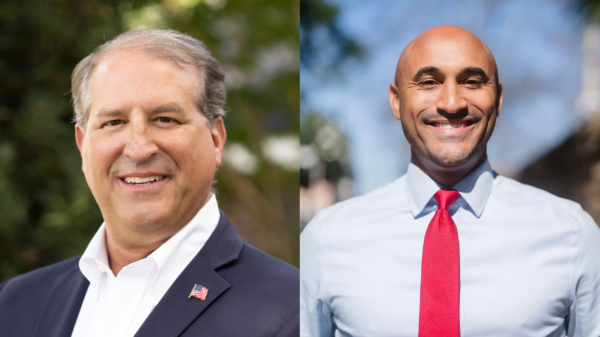
Alabama Attorney General and candidate for U.S. Senate Steve Marshall praised the Supreme Court’s ruling in a statement on Wednesday.
“Alabama has been fighting this battle for many years, and today the Supreme Court confirmed our long-held argument that States must not use race, either to help or to harm particular voters, when drawing voting districts,” Marshall wrote. “The Court rightly acknowledged that the South has made extraordinary progress, and that laws designed for a different era do not reflect the present reality.”
He also said that “we will act as quickly as possible to apply this ruling to Alabama’s redistricting efforts and ensure that our congressional maps reflect the will of the people, not a racial quota system the Constitution forbids.” Congressman and fellow Republican Senate candidate Barry Moore called for “the Alabama legislature to begin the process of redistricting” as well.
In a statement, though, Governor Kay Ivey said the state is “not in a position to have a special session at this time,” while explaining that she supports the decision and hopes it aids Alabama in court.
Last year, Secretary of State Wes Allen filed an appeal in the case Allen v. Milligan, a challenge to Alabama’s 2023 Congressional redistricting which resulted in a federal court redrawing the state’s districts. Democratic Congressman Shomari Figures was elected and became the second Democratic member of Alabama’s Congressional delegation due to the resulting changes to the boundaries of the 2nd District.
Civil rights groups and Democratic politicians have widely condemned the ruling as setting the stage for a dramatic reduction in the number of districts where Black voters are able to elect candidates of their choice.
Former Senator and Democratic candidate for governor, Doug Jones declared that the ruling is a “catastrophic setback to voting rights in this country” in a public statement.
“Only three years ago, in Allen v. Milligan, this Supreme Court ruled Alabama’s congressional map unlawfully diluted Black voting power and required a second Black opportunity district in a state that is nearly 27 percent Black,” Jones wrote. “Now, the Callais decision gives Alabama Republicans a chance to undo that progress. All Black elected officials, whether Congresswoman Sewell, Congressman Figures, or any of our state representatives, are now at risk of their districts being redrawn.”
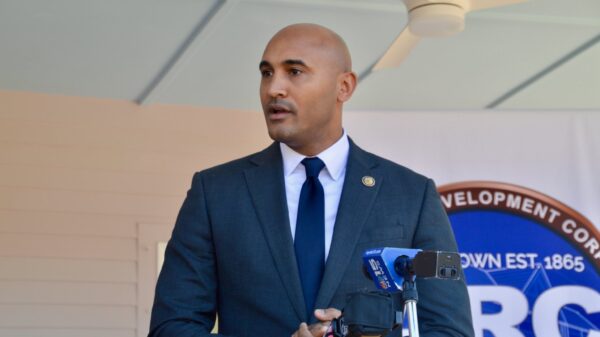
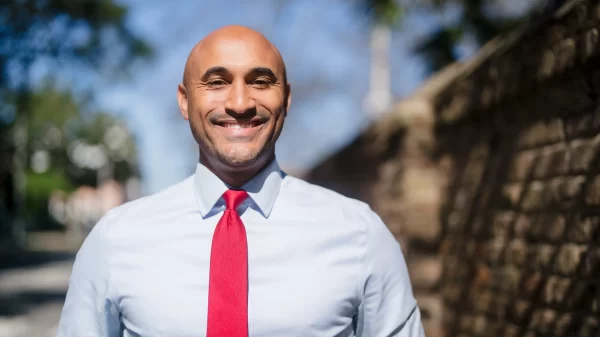
Both Sewell and Figures released statements on Wednesday decrying the decision as a major setback and warning about potential future redistricting reducing Black representation in elected office.
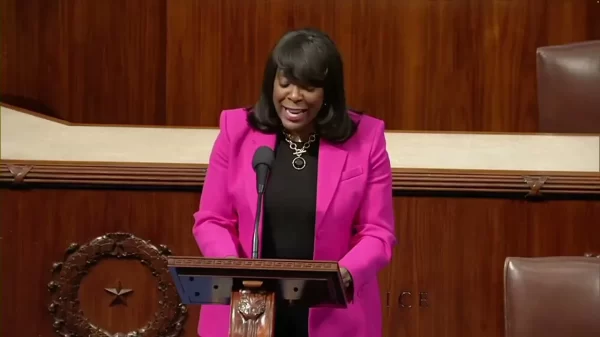
Sewell, who held a shadow hearing on voting rights earlier this week, called the ruling a “death sentence” for the Voting Rights Act. During a press conference in D.C., she stated that “the extremists on the Supreme Court have completed their decades-long crusade to gut the Voting Rights Act of 1965.”
Randy Kelley, the chairman of the Alabama Democratic Party, said that Republicans’ “40-year systematic plan to capture the Supreme Court enables [them] to undermine the power of Black, Latino, Asian and Pacific Islander, Native American voters in their states. Because in their minds, hundreds of years of racial oppression has been cured by 60 years of less than equal rights.”
State Representative and House minority leader Anthony Daniels similarly argued that the court’s ruling “gives further license to those who seek to racially gerrymander districts for their own political purposes.”
While, given Governor Ivey’s statement ruling out a special session, it presently appears unlikely Alabama’s Congressional districts will be redrawn before the midterms, other states with Republican legislatures and governors may still take advantage of the decision to change their maps and remove majority-minority districts. Marsha Blackburn, a senator from Tennessee and Republican candidate for governor there, already posted a call for her state’s legislature to reconvene and draw a map with only Republican-leaning districts.
Since the Texas Legislature redrew its maps to eliminate several Democratic-leaning districts last year, many states have followed suit, most recently Virginia and Florida.
If additional state legislatures respond to the ruling by engaging in further partisan gerrymandering by removing majority-minority districts, it could make it markedly harder for Democrats to regain the majority in the House of Representatives this year.