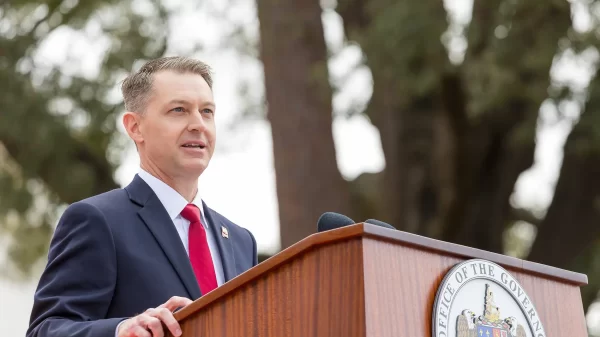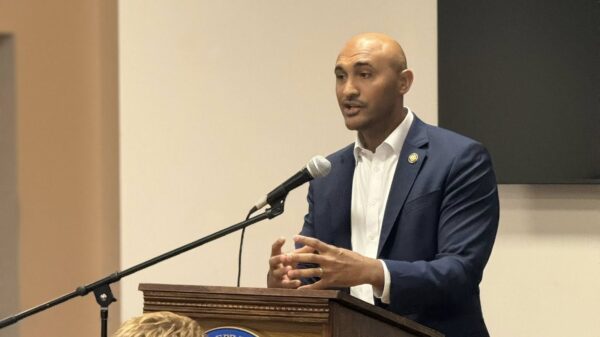









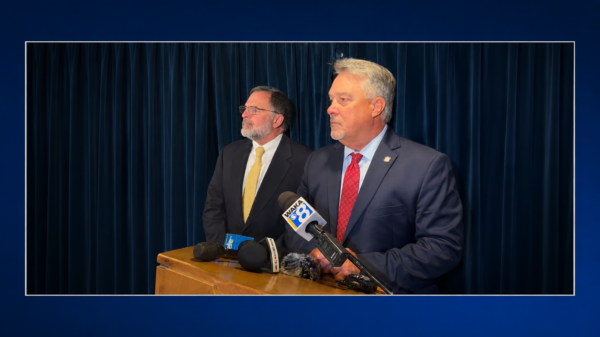















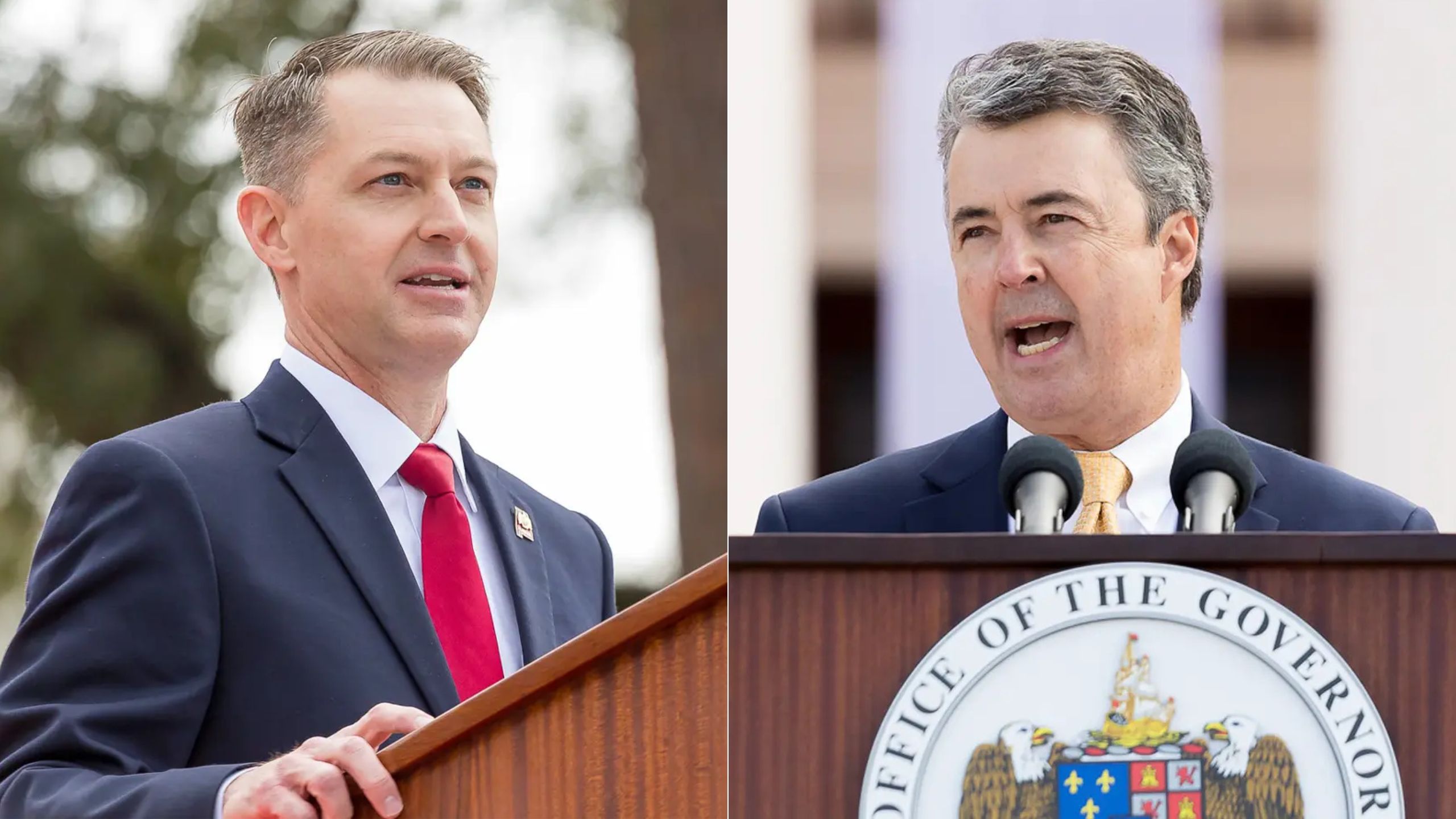
Alabama Secretary of State Wes Allen and Attorney General Steve Marshall have asked a federal appeals court to speed up reconsideration of Alabama’s state Senate redistricting dispute.
Allen urged the 11th Circuit Court of Appeals to take up the case Alabama State Conference of the NAACP v. Alabama Secretary of State.
Plaintiffs in the case argued the state’s 2021 state Senate district map violated the 14th Amendment and the Voting Rights Act by diluting Black voting power in the Montgomery and Huntsville regions.
The Northern District of Alabama ruled against the map in August 2025, forcing the state to adopt a remedial state Senate district map.
Allen and Marshall, in an emergency motion filed Monday, urged the court to stay or vacate the district court’s injunction, which blocked the state from using its 2021 Legislature-drawn state Senate map.
“As the appellant in both of Alabama’s redistricting cases, I am taking decisive legal action, in coordination with Attorney General Steve Marshall, to seek expedited judicial review,” Allen said in a written statement Monday.
“Timely resolution is critical to provide clarity and stability for Alabama’s election process. The state has a primary role in drawing its legislative districts through its elected representatives, and continued delay prolongs federal court oversight beyond what is necessary,” Allen added.
The push to allow redrawing Alabama’s state Senate map comes after the Supreme Court’s ruling in Louisiana v. Callais. The majority ruling significantly weakened Section 2 of the Voting Rights Act, making it more difficult to challenge districts on the basis of racial discrimination.
Beyond signing the filing, Marshall also urged the court to reconsider the case before the end of the week in a statement released Monday.
“Time is of the essence. We immediately filed a motion with the circuit court, urging a decision by May 8, because Alabamians deserve to vote using their own maps in our upcoming primary,” Marshall said.
“The South has changed, and the courts have acknowledged as much. We cannot be held indefinitely to a framework rooted in 1965. With the Callais decision now in place, we are confident our race-neutral districts can serve as the foundation for all future redistricting.”
Although the Callais ruling drew distinctions between the facts of Callais and those of Alabama’s recent Supreme Court congressional redistricting case, Allen v. Milligan, Allen and Marshall also called on the U.S. Supreme Court last week to lift an injunction barring the state from redrawing its U.S. congressional district map until 2030.
The injunction came after the court’s ruling in Milligan, which upheld the findings of a federal panel of three judges appointed by President Donald Trump that ruled the state’s proposed 2023 congressional map was unconstitutional.
The federal courts ordered the state to enact a map containing one minority-majority district, which the state has had since the 1990s, and an additional minority-majority or near-majority district.
The three-judge panel again ruled that the Legislature’s map submitted in 2023 defied federal court rulings and ordered the state’s current congressional map to be drawn by a court-appointed special master.
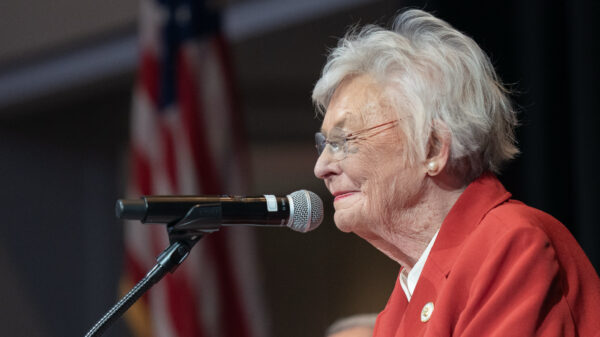
Governor Kay Ivey, following pressure from state Republicans after the Callais ruling, called the Alabama Legislature into a special session beginning Monday.
“Alabama stands ready to move forward,” Allen said. “With the governor’s special session underway, we are prepared to act promptly to implement state Senate maps consistent with governing law and return map-drawing authority to the Legislature.”
As of Monday, the Supreme Court and the 11th Circuit had not responded to the secretary of state’s and attorney general’s filings.